
Zet AI‑inzichten om in gerichte actie

Trending
Categories
Major US Air Taxi Charging Network Targets 250 Airports by 2030
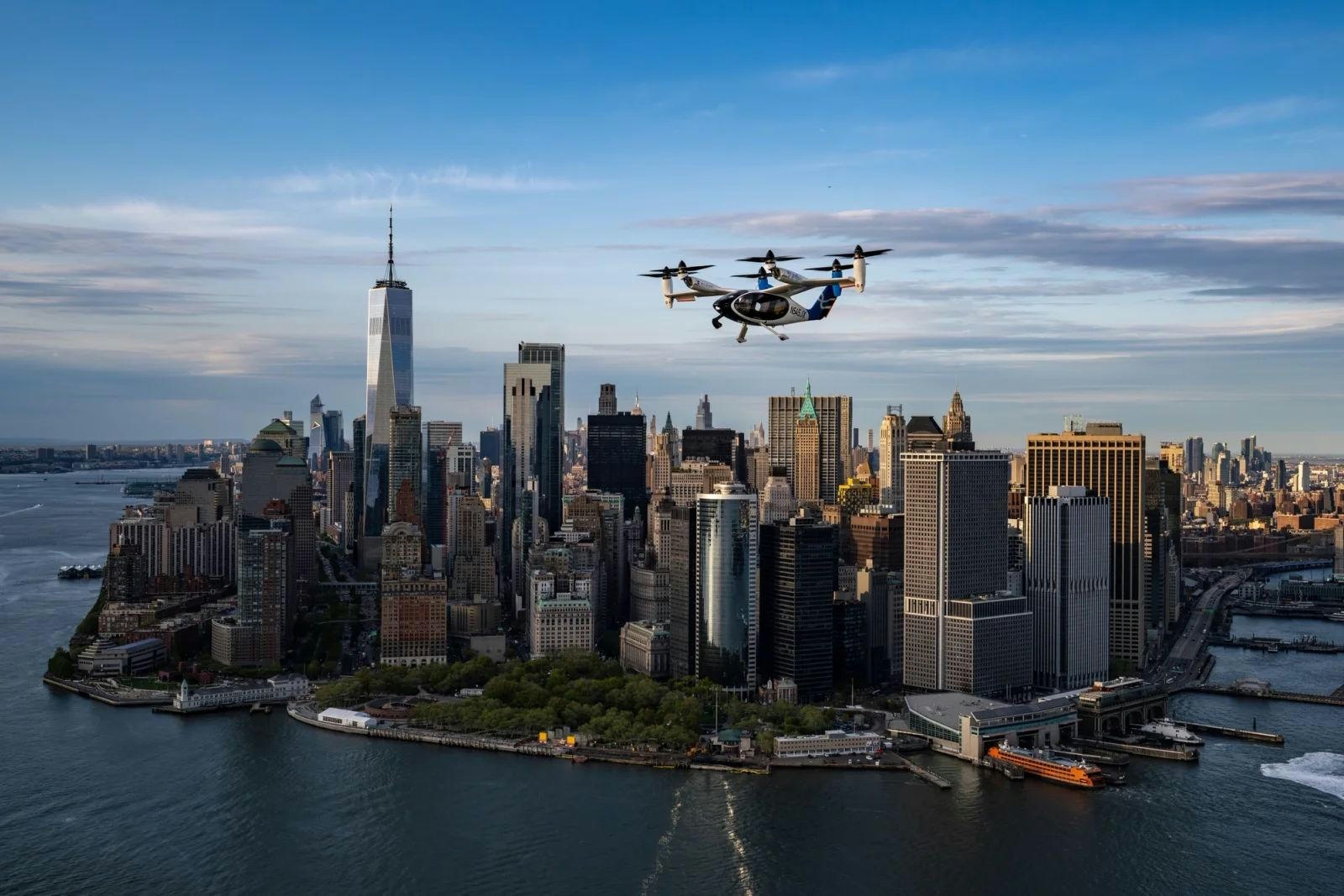
Major US Air Taxi Charging Network Targets 250 Airports by 2030
Partnership to Build Nationwide Electric Aircraft Charging Infrastructure
Three leading aviation companies—Archer Aviation, BETA Technologies, and Macquarie Capital—have announced a strategic partnership to develop a standardized network of electric aircraft charging stations across the United States. Operating under the banner of America’s Consortium for Electric Skyways (ACES), the initiative aims to establish charging hubs at 250 airports and vertiports by 2030. This ambitious infrastructure rollout will focus on key metropolitan regions and primary airport hubs in states such as California, Texas, Florida, and New York, supporting the growing commercial operations of Electric Vertical Takeoff and Landing (eVTOL) aircraft.
BETA Technologies will be responsible for manufacturing and delivering the high-voltage charging units at each site. These chargers utilize the Combined Charging Standard (CCS) technology, an open and universal plug system endorsed by the General Aviation Manufacturers Association (GAMA). The adoption of this standardized technology is intended to prevent the proliferation of proprietary charging stations, which could lead to inefficiencies and congestion at busy airfields.
Operational Roles and Infrastructure Development
Archer Aviation will spearhead initial demand for the charging network by operating scheduled passenger air taxi services, primarily targeting high-density urban corridors during peak commuting hours. Concurrently, BETA Technologies plans to utilize the shared charging infrastructure for medical transport and cargo logistics, while also powering airfield ground service vehicles. This multi-use approach is expected to enhance overall facility efficiency and maximize the utility of the charging stations.
Macquarie Capital will oversee the financial and strategic aspects of the nationwide buildout. The firm will manage site acquisition, negotiate municipal leases, and structure project financing across all targeted cities, ensuring the smooth execution of the consortium’s expansion plans.
Regulatory and Technical Challenges
Federal aviation authorities are closely monitoring the development of this ground infrastructure. The Federal Aviation Administration (FAA) has established the eVTOL Integration Pilot Program (eIPP) to facilitate the safe operational integration of eVTOL aircraft within controlled airspace. Meanwhile, civil engineering teams have commenced site assessments and power grid evaluations at selected regional airfields.
Significant upgrades are required to support the high-power demands of rapid aircraft charging. These include the enhancement of sub-station transformers, installation of high-capacity power lines, and construction of reinforced concrete landing pads at vertiports. Municipal planning departments in major urban centers are reviewing zoning applications, with particular attention to noise mitigation, structural load capacities, and emergency power cut-off systems before issuing building permits.
Specialized electrical contractors will be tasked with installing advanced energy storage units at remote locations. These battery banks are critical for stabilizing local utility grids during peak charging periods. Additionally, construction will encompass passenger terminals, secure boarding corridors, and safety perimeter fencing around landing zones. Each site will be equipped with weather-resistant power distribution cabinets and fire suppression systems designed specifically for the safe management of high-capacity lithium-ion batteries.
Industry Impact and Future Prospects
Industry analysts highlight that the shared infrastructure model significantly reduces entry barriers for emerging air mobility companies by distributing capital expenditures among multiple operators. This collaborative approach is expected to accelerate the scaling of flight operations across interconnected regional corridors. Airport operators also view the standardized charging network as an opportunity to modernize ground support equipment, including the adoption of electric baggage tractors and other electric vehicles, further enhancing operational sustainability.

Hong Kong's Five-Year Plan Includes Andrew Fan's Aircraft Parts Processing Hub Proposal

ACIA Aero Leasing Delivers ATR72-600 to Air Nostrum

RTX Appoints Jill Albertelli as Head of Pratt & Whitney

TAT Technologies Joins Beyond Aero Hydrogen Aircraft Program

AURAK Study Highlights Barriers to Air Taxi Adoption in Emerging Economies

Xiamen Air Selects Altitude for 787 Maintenance at Heathrow

Etihad and Swissport Extend Global Partnership
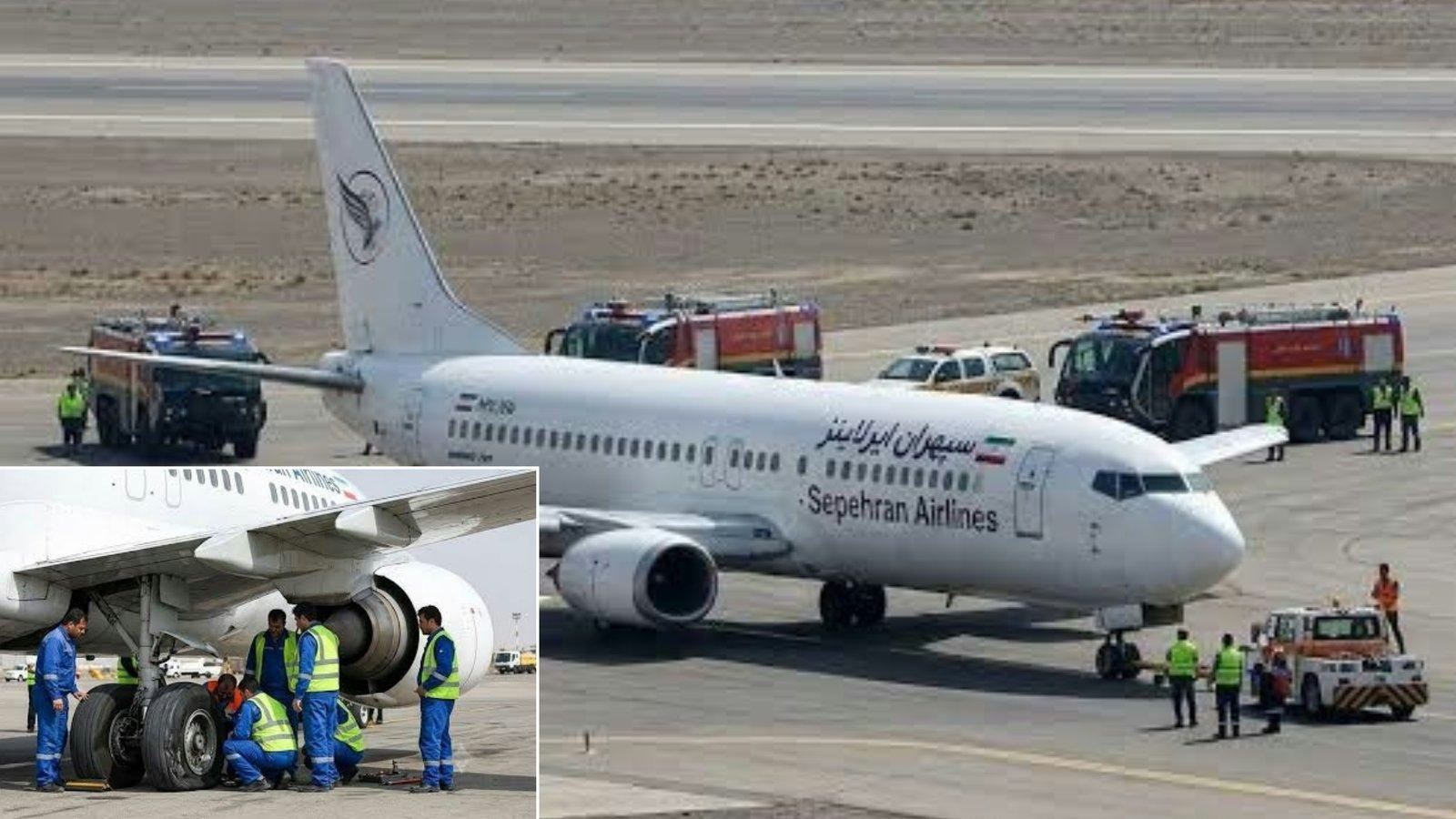
Sepehran Airlines B737 Returns to Mashhad After Tyre and Engine Issues

Etihad Deploys Widebody Fleet to Meet Strong Demand

Korean Air Finalizes $36.2 Billion Deal with Boeing
