
Zet AI‑inzichten om in gerichte actie

Trending
Categories
Merlin Advances Autonomous Flight System Toward Certification
Merlin Advances Autonomous Flight System Toward Certification
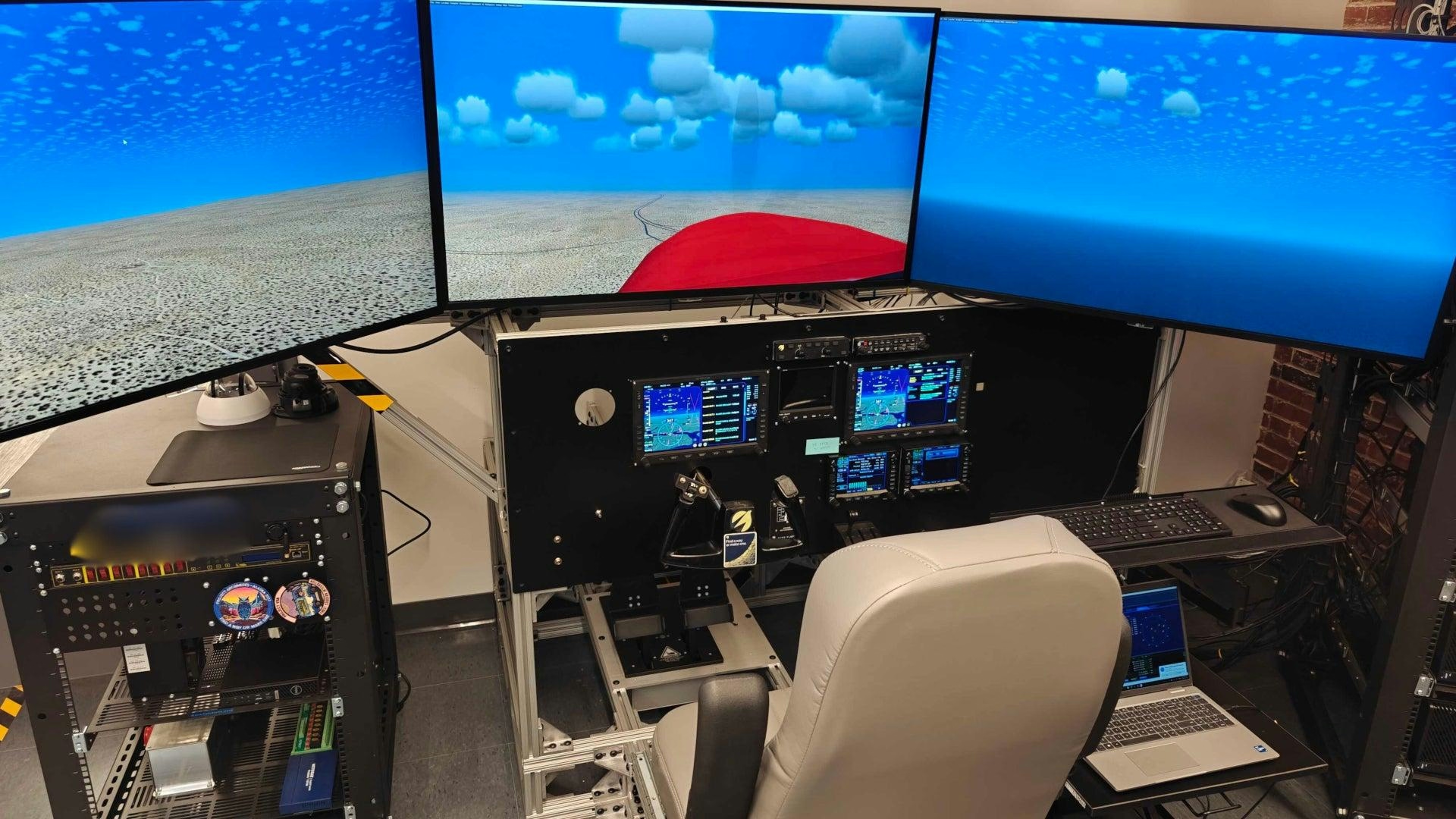
Merlin has announced the successful completion of the third Stage of Involvement (SOI 3) review for two critical components of its Merlin Pilot autonomous flight system, marking a pivotal advancement in its pursuit of regulatory approval. The Civil Aviation Authority of New Zealand (CAA NZ) conducted a thorough evaluation of the system’s Flight Control Computer, responsible for managing the aircraft’s flight path, alongside the Automated Communication System, which processes spoken air traffic control instructions and generates corresponding responses. This communication system is designed to translate commands related to heading, altitude, and airspeed into executable directives for the flight control mechanism.
Progress in Certification and Regulatory Collaboration
The SOI 3 review concentrated on confirming that the software adheres to the requirements established earlier in the certification process and has undergone extensive testing. Merlin had previously completed SOI 1 in 2023, when regulators approved its software planning documentation, and announced the completion of SOI 2 for the flight-control computer in October 2025. The certification process is being led by CAA NZ in collaboration with the U.S. Federal Aviation Administration (FAA) under a bilateral aviation safety agreement. This arrangement allows the New Zealand authority to oversee the program while the FAA participates in the review, facilitating potential validation for the U.S. market.
A significant milestone in this phase was the resolution of an issue paper concerning the artificial intelligence and machine-learning technologies employed for natural-language processing within the automated communication system. Merlin and CAA NZ have reached consensus on the evidentiary standards required to assess these AI-driven functions. The overarching Part 23 program aims to enable fully autonomous flight operations from takeoff through landing, advancing beyond current pilot-assistance capabilities.
Challenges and Industry Context
Despite these advancements, Merlin continues to face considerable challenges on the road to full certification and commercial deployment. Regulatory obstacles remain substantial, particularly in obtaining approval for autonomous systems on commercial cargo aircraft. The integration of AI-powered autonomy into existing aviation frameworks presents complex technical difficulties. Furthermore, market reception has been varied, with some traditional aviation stakeholders expressing reservations about the reliability and safety of autonomous flight technologies.
The competitive environment in autonomous aviation is intensifying, with companies such as Vertical Aerospace accelerating their own development programs. This heightened competition is driving increased investment in research and development across the sector, as firms vie to secure certification and establish leadership in autonomous flight technology.
While the completion of SOI 3 marks a major software review milestone for Merlin, it does not represent final certification of the Merlin Pilot system. The company remains committed to working closely with regulators to fulfill remaining requirements as it progresses toward the commercial deployment of autonomous flight operations.

Etihad Airways Suspends Airbus A380 Flights on Key Route

Aditya Birla Group Seeks Approval for Aircraft Leasing in GIFT City

Qatar Airways Highlights Innovation and Connectivity at Arabian Travel Market 2026

Hong Kong's Five-Year Plan Includes Andrew Fan's Aircraft Parts Processing Hub Proposal

ACIA Aero Leasing Delivers ATR72-600 to Air Nostrum

RTX Appoints Jill Albertelli as Head of Pratt & Whitney

TAT Technologies Joins Beyond Aero Hydrogen Aircraft Program

AURAK Study Highlights Barriers to Air Taxi Adoption in Emerging Economies

Xiamen Air Selects Altitude for 787 Maintenance at Heathrow

Etihad and Swissport Extend Global Partnership
