
Zet AI‑inzichten om in gerichte actie

Trending
Categories
More Than 90% of Boeing 737-900ER Fleet Remains in Service
More Than 90% of Boeing 737-900ER Fleet Remains in Service
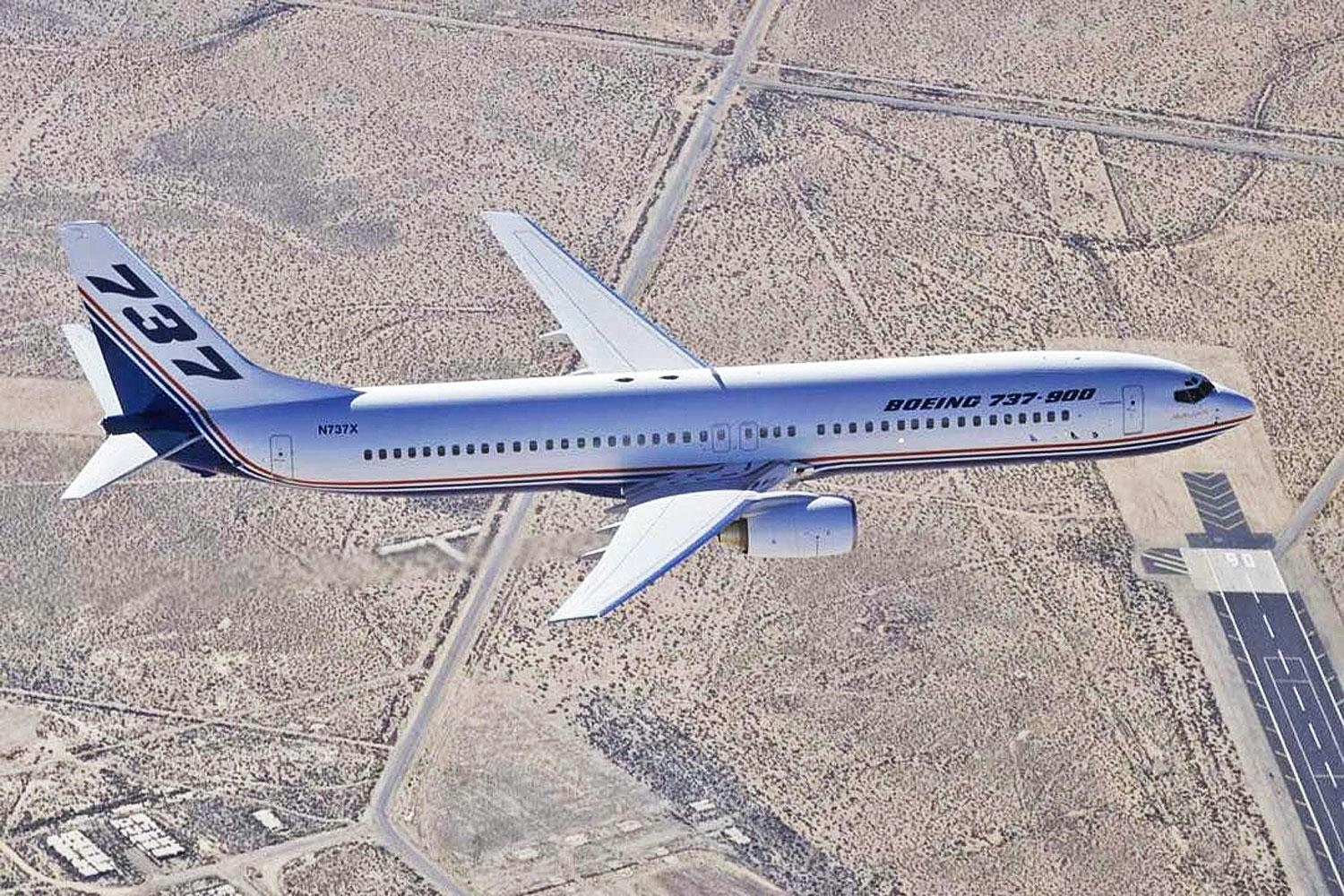
New data from aviation intelligence firm IBA reveals that over 90% of the global Boeing 737-900ER fleet remains active, underscoring the aircraft’s sustained market strength. This enduring presence is supported by high utilization rates, stable lease values, and consistent operator confidence. According to IBA’s latest Aircraft Market Intelligence Report (AMIR), the 737-900ER continues to demonstrate robust operational and value performance, despite limited trading activity in the secondary market.
Dominance of North American Operators and Market Valuation
North American carriers lead the 737-900ER segment, with 381 of the 503 aircraft currently in service worldwide. Delta Air Lines, United Airlines, and Alaska Airlines collectively operate 76% of the active fleet, with 163, 136, and 79 units respectively. IBA’s analysis indicates that both market values and lease rates for the 737-900ER have remained steady through 2025. A 2019-built aircraft is valued between US$32 million and US$34 million, while a 2011 model has experienced moderate appreciation, now valued at US$21.5–22.5 million. Monthly lease rates range from US$298,000 to US$307,000 for newer jets and US$223,000 to US$252,000 for mid-life aircraft.
Future Prospects and Competitive Challenges
The long-term outlook for the 737-900ER is further strengthened by planned freighter conversion activity. Aeronautical Engineers Inc. (AEI) has announced a 737-900ERSF freighter programme, with FAA certification anticipated in 2029. These conversions are expected to extend the operational lifespan of the type as passenger fleets gradually retire. This initiative aligns with sustained demand in the air cargo sector, driven by e-commerce growth and the need to replace ageing freighters. The success of the 737-800SF conversion programme and Boeing’s forecast of more than 1,700 global freighter conversions over the next two decades highlight the 737-900ER’s continued relevance.
Nevertheless, Boeing faces increasing challenges in maintaining market share as Airbus’s A320 series surpasses the 737 in deliveries. Airbus is capitalizing on Boeing’s recent production difficulties and expanding its A320 family, particularly with the longer-range A321LR and A321XLR variants, which are attracting significant airline interest. As the 737-900ER fleet ages, concerns over reliability and rising maintenance costs may influence operator decisions, especially as newer Airbus models enter service.
Despite these competitive pressures, demand for serviceable CFM56-7B27 engines remains strong, supporting asset values across the 737NG family. This sustained demand, combined with the aircraft’s solid operational record and emerging freighter conversion opportunities, ensures the 737-900ER continues to be a dependable performer in both passenger and cargo markets.

Etihad Airways Suspends Airbus A380 Flights on Key Route

Aditya Birla Group Seeks Approval for Aircraft Leasing in GIFT City

Qatar Airways Highlights Innovation and Connectivity at Arabian Travel Market 2026

Hong Kong's Five-Year Plan Includes Andrew Fan's Aircraft Parts Processing Hub Proposal

ACIA Aero Leasing Delivers ATR72-600 to Air Nostrum

RTX Appoints Jill Albertelli as Head of Pratt & Whitney

TAT Technologies Joins Beyond Aero Hydrogen Aircraft Program

AURAK Study Highlights Barriers to Air Taxi Adoption in Emerging Economies

Xiamen Air Selects Altitude for 787 Maintenance at Heathrow

Etihad and Swissport Extend Global Partnership
