
Zet AI‑inzichten om in gerichte actie

Trending
Categories
MQ-25 Stingray Begins Taxi Tests
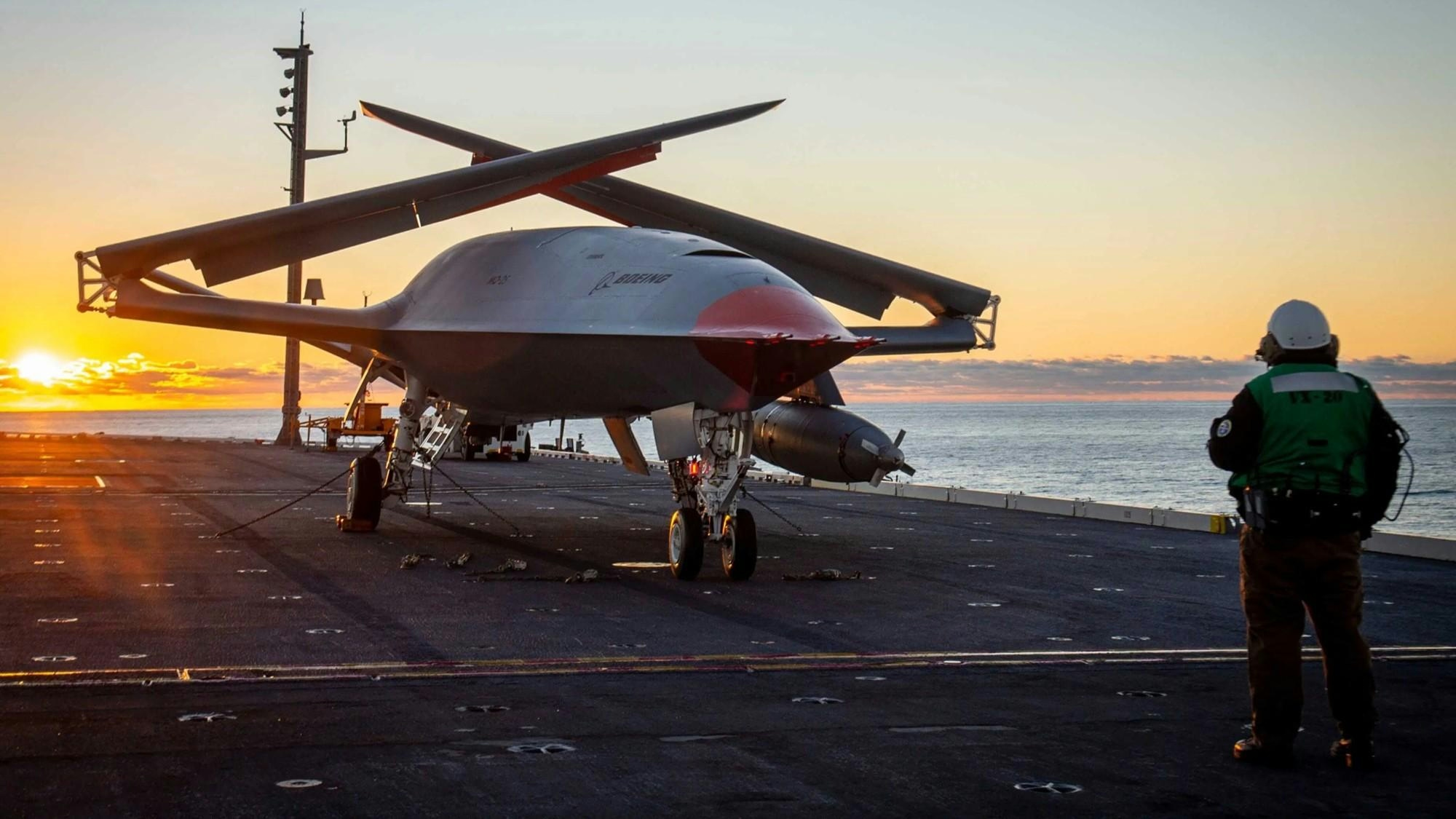
MQ-25 Stingray Completes Initial Taxi Tests, Advancing Toward U.S. Navy Deployment
The U.S. Navy’s MQ-25 Stingray, its first production-representative unmanned aerial refueling tanker, has successfully completed its initial low-speed taxi test. Conducted at Boeing’s facility at MidAmerica Airport near St. Louis, Missouri, this milestone represents a crucial step forward in the program’s development. The test paves the way for the drone’s anticipated first flight, now scheduled for early this year following a delay from the Navy’s original target of late 2025.
Testing and Operational Validation
The taxi test involved Navy personnel from Air Test and Evaluation Squadron 23 (VX-23) and the uncrewed systems-focused Squadron 24 (UX-24). Air Vehicle Pilots remotely controlled the MQ-25 as it autonomously taxied and performed a series of maneuvers designed to validate its ground handling capabilities and system functionality. Taxi testing, which requires the aircraft to move under its own power on the runway, is a vital precursor to flight, ensuring safety and operational readiness.
Although the exact date of the test was not disclosed, Boeing had announced the commencement of ground testing for the production-representative MQ-25 last summer. The program has benefited from extensive prior testing with the T1 demonstrator, a prototype that, while valuable, does not fully represent the production-standard aircraft.
Design Features and Program Evolution
Boeing released footage highlighting the MQ-25’s distinctive design elements, including its top-mounted ‘flush’ air inlet and inset engine exhaust. These features suggest some low observable characteristics, although stealth is not the primary focus of the program. The MQ-25’s design draws on concepts from the Navy’s earlier Unmanned Carrier Launched Airborne Surveillance and Strike (UCLASS) program, which aimed to develop a stealthy, carrier-based drone capable of strike and intelligence missions. However, the Navy ultimately redirected its efforts toward the MQ-25’s role as an uncrewed aerial refueling tanker.
Challenges and Industry Impact
As the MQ-25 progresses toward its first flight, several challenges remain. Integrating the drone into existing aircraft carrier operations will require meticulous coordination to ensure safety and reliability, particularly during autonomous taxiing and refueling procedures. Additionally, technical challenges related to the drone’s autonomous systems and refueling capabilities must be resolved to meet operational standards.
The MQ-25’s advancement has attracted significant attention within the defense sector. Market interest in competing drone systems, such as those developed by Lockheed Martin, has increased, potentially influencing future defense spending priorities. Other industry players, including General Atomics Aeronautical Systems, continue to develop their own unmanned aerial vehicles like the MQ-9B and MQ-20 Avenger, reflecting a broader shift toward autonomous military aviation platforms.
With the successful completion of its taxi test, the MQ-25 Stingray moves closer to becoming the first operational carrier-based uncrewed tanker, a development that promises to reshape naval aviation and the integration of unmanned systems.

Bangladesh Launches Initiative to Become Regional Aviation Hub
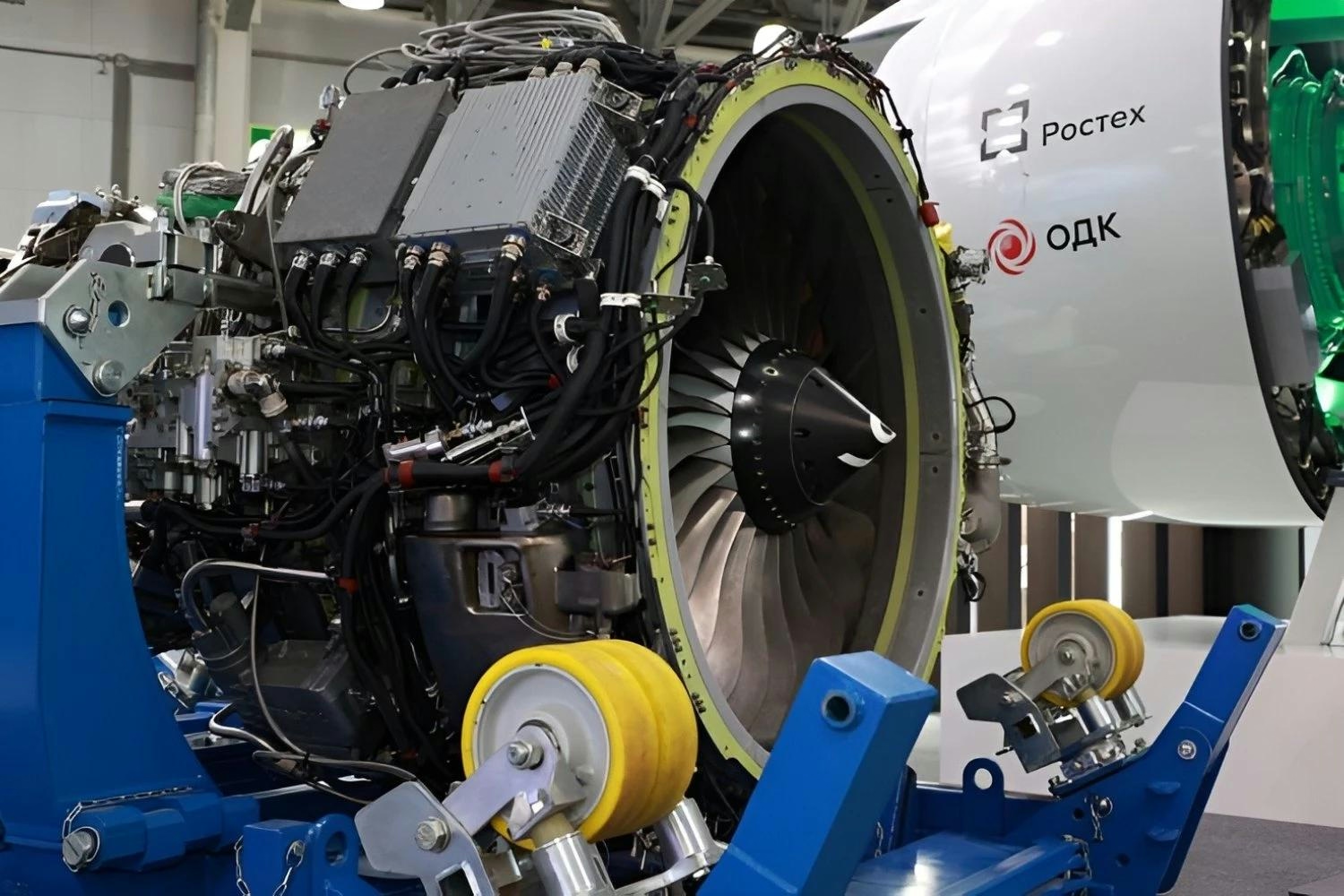
Russia Transports PD-8 Engine to India for International Certification

Kyrgyzstan to Adopt EMPIC GmbH Software for Flight Safety Oversight

Why Hawaiian Airlines Is Waiting Until 2028 To Add A Premium Economy Cabin To Its Airbus A330 Fleet

Engine Fault Causes Royal Navy Helicopter Crash Fatality

Joby Aviation Begins Texas Air Taxi Test Flights Amid Stock Decline

Iberia Receives Full Approval for Airbus A350 Heavy Maintenance

NetJets to Construct Terminal and Hangar at Dallas Love Field

Using AI in Aircraft Purchases

CIAM Unveils RPD-150T Engine to Replace Rotax 150 hp Model
