
Zet AI‑inzichten om in gerichte actie

Trending
Categories
Oman Air Plans to Expand Outsourced Freighter Operations
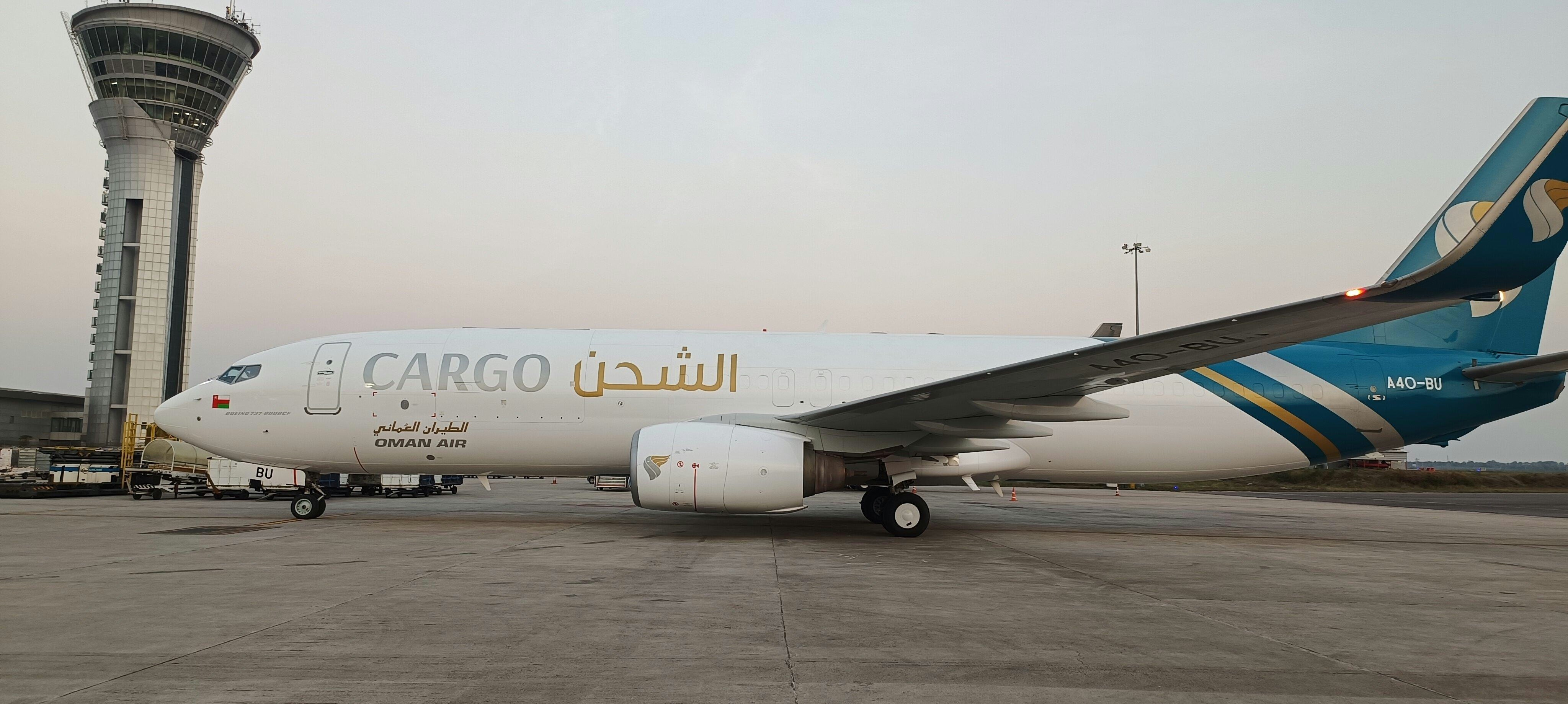
Oman Air Plans to Expand Outsourced Freighter Operations Amid Rising Regional Competition
Oman Air is actively pursuing new partnerships with international carriers to rebuild its dedicated freighter capacity through outsourced arrangements, opting for a lower-risk strategy rather than immediate investment in its own cargo aircraft. Mike Duggan, the airline’s head of cargo, revealed that ongoing discussions involve potential partners from India, Africa, Asia, and Europe, reflecting a broad geographic focus to support this initiative.
Strategic Shift to Outsourced Freighter Capacity
The initial phase of Oman Air’s plan centers on establishing block-space agreements, although specific details remain undisclosed. This approach follows the airline’s decision to sell its sole Boeing 737-800 converted freighter (BCF), registered A4O-BU, in May 2025. This move marks a clear transition from insourced to outsourced freighter operations. Despite this shift, Oman Air remains committed to maintaining substantial freighter capacity, particularly through main-deck feeder services that complement its passenger belly cargo network. These services are especially significant on routes connecting Muscat with the Indian subcontinent.
Duggan has highlighted the airline’s ambition to forge partnerships that link Asia, Africa, and Europe via Muscat, with potential cargo flows involving major hubs such as Hong Kong International Airport, Vietnam, and Thailand. He further indicated that future collaborations may extend beyond block-space agreements, with Oman Air taking an active role in routing and scheduling decisions. This collaborative model could eventually enable the airline to reintroduce its own widebody freighter operations, contingent on the success of these partnerships.
Competitive Pressures and Market Dynamics
Oman Air’s expansion plans unfold amid intensifying competition in the regional air cargo market. Rival airlines, including SalamAir and AirAsia, are simultaneously expanding their cargo operations, which may influence cargo routing preferences and customer loyalty. These competitors are likely to respond by enhancing their cargo services or negotiating more advantageous leasing terms, potentially challenging Oman Air’s market position.
Despite these competitive pressures, Oman Air benefits from the increasing cargo throughput at SOHAR Port, which bolsters its logistics network and provides a strategic advantage within the region. The airline experienced a decline in cargo yields of approximately 15% to 20% between 2024 and 2025, primarily due to increased passenger belly capacity on key markets such as India and Thailand. Nevertheless, overall cargo tonnage increased as aircraft utilization improved, with cargo load factors remaining steady in the mid-70% range.
As Oman Air advances its outsourced freighter strategy, the evolving competitive landscape and the development of regional logistics infrastructure will be critical factors influencing the future trajectory of its cargo operations.

Etihad and Swissport Extend Global Partnership

Sepehran Airlines B737 Returns to Mashhad After Tyre and Engine Issues

Etihad Deploys Widebody Fleet to Meet Strong Demand

Korean Air Finalizes $36.2 Billion Deal with Boeing

Australia’s RFDS Queensland Section Orders Six King Air 260Cs

Korean Air Finalizes Order for 103 Boeing Jets and Engines

Embraer E195-E2 Features Distinctive Engine Placement Among Regional Jets

What Passengers Can Expect on Boeing’s New 777X Jet

How Ethiopian Airlines Became Africa’s Leading Carrier Amid Gulf Competition

Joby Aviation Extends Autonomous Flight Capabilities with Cross-Country Tour
