
Zet AI‑inzichten om in gerichte actie

Trending
Categories
Ontic COO Discusses Building Resilient Aviation Supply Chains
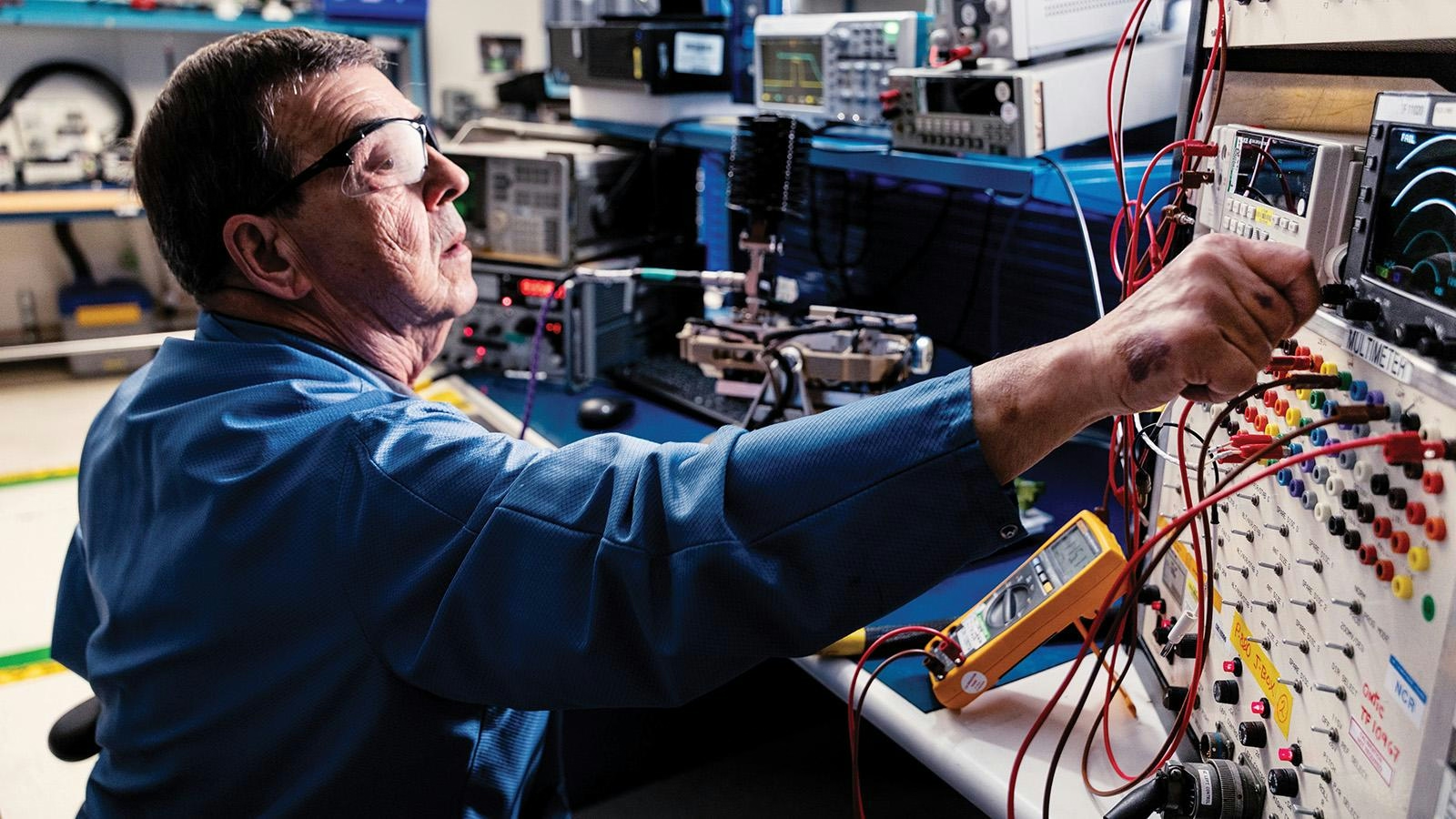
Ontic COO Discusses Building Resilient Aviation Supply Chains
Navigating Increasing Pressures on Aviation Supply Chains
In the contemporary aviation sector, the resilience of supply chains has become as vital as operational efficiency. Brian Sartain, Chief Operating Officer at Ontic, underscores the growing challenges confronting aviation supply chains and details how Ontic is striving to secure long-term reliability for its clientele.
The aviation supply chain is currently experiencing sustained pressure from multiple sources. Demand has surged sharply, with production volumes in many areas now meeting or surpassing pre-pandemic levels. This heightened demand is placing unprecedented strain on suppliers, many of whom are tasked with delivering quantities beyond their previous experience. Specialized suppliers, in particular, face the difficult task of supporting both established and emerging platforms while contending with limited resources and minimal capacity for rapid expansion.
These challenges are further exacerbated by inflationary trends. Rising costs for materials, energy, labor, and logistics have complicated procurement processes. Aerospace components often require mature material specifications, rare alloys, or restricted minerals, making sourcing increasingly complex and costly. Currency fluctuations affect purchasing power, while volatility in raw material prices leads to unpredictable component costs. Additionally, fuel procurement remains a significant financial burden for airlines, adding another layer of economic pressure.
Regulatory, Geopolitical, and Talent Challenges
Beyond economic factors, geopolitical shifts and evolving regulatory frameworks contribute to the complexity of maintaining resilient supply chains. Aviation regulations are particularly stringent, often necessitating months or even years to navigate. The substantial time and investment required to rebuild or adapt supply network capacity leave little room for rapid adjustments. Unlike other industries, aerospace cannot easily switch suppliers or redesign components without incurring significant costs, delays, and regulatory obstacles. The imperatives of performance, certification, and safety are non-negotiable, rendering resilience a strategic imperative.
Talent shortages compound these difficulties. The industry depends on highly specialized skills, including machinists capable of working to exacting tolerances, technicians proficient in programming legacy equipment, and engineers knowledgeable in both traditional and modern technologies. Experts in supply chain risk management are also scarce. As these critical skills become increasingly rare, supplier capacity tightens, lead times lengthen, and overall supply chain resilience diminishes.
A Strategic Approach to Long-Term Resilience
Economic pressures demand continuous adaptation from aviation businesses. For operators and original equipment manufacturers (OEMs), the challenge extends beyond securing parts to ensuring sustained confidence in supply. Resilience now requires a proactive and flexible strategy that aligns suppliers with the unique demand profiles, technical complexities, and life-cycle expectations of each platform.
Sartain emphasizes that these challenges represent a structural transformation rather than temporary disruptions. Building resilient aviation supply chains involves long-term engineering—anticipating risks, investing in talent, and developing sourcing strategies capable of withstanding economic, regulatory, and geopolitical shocks. For Ontic and the broader industry, resilience is not merely an objective but an essential condition for delivering a lifetime of flight.

Etihad Airways Suspends Airbus A380 Flights on Key Route

Aditya Birla Group Seeks Approval for Aircraft Leasing in GIFT City

Qatar Airways Highlights Innovation and Connectivity at Arabian Travel Market 2026

Hong Kong's Five-Year Plan Includes Andrew Fan's Aircraft Parts Processing Hub Proposal

ACIA Aero Leasing Delivers ATR72-600 to Air Nostrum

RTX Appoints Jill Albertelli as Head of Pratt & Whitney

TAT Technologies Joins Beyond Aero Hydrogen Aircraft Program

AURAK Study Highlights Barriers to Air Taxi Adoption in Emerging Economies

Xiamen Air Selects Altitude for 787 Maintenance at Heathrow

Etihad and Swissport Extend Global Partnership
