
Zet AI‑inzichten om in gerichte actie

Trending
Categories
Poland Receives First Three F-35A Jets to Strengthen NATO Deterrence
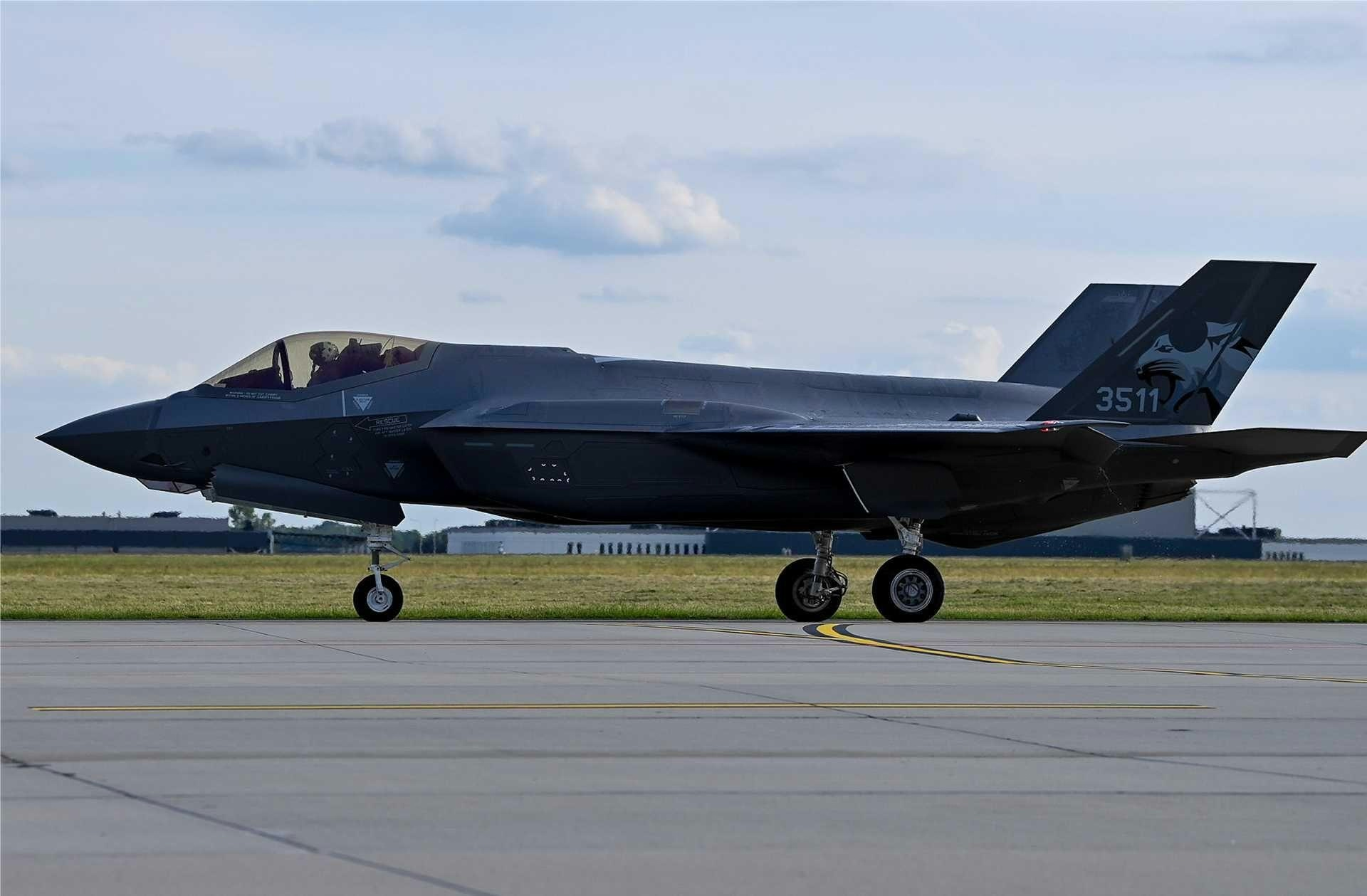
Poland Receives First Three F-35A Jets to Strengthen NATO Deterrence
Warsaw / Łask, 22 May 2026 – Poland has taken a significant step in modernizing its air capabilities with the official delivery of its first three F-35A “Husarz” fighter jets at the Łask tactical air base. This milestone, confirmed by the Polish Ministry of National Defence and the F-35 Joint Program Office, marks the beginning of Poland’s integration into fifth-generation air combat technology. The delivery is part of a 2020 government-to-government contract with the United States for 32 F-35A aircraft, with Lockheed Martin serving as the prime contractor.
Enhancing NATO’s Eastern Defense Posture
The introduction of the F-35A jets into the Polish Air Force represents a rapid and substantial enhancement of NATO’s military posture in Central and Eastern Europe. Poland is now positioned as a critical operational hub for the F-35 network along NATO’s eastern flank. Since the first Polish F-35A was rolled out in Fort Worth in August 2024, the program has progressed steadily, culminating in the arrival of the initial three jets in May 2026. The full complement of 32 aircraft is scheduled for phased delivery through 2030.
This deployment integrates Poland into NATO’s network-centric combat system, with the F-35s serving not only as advanced strike platforms but also as sophisticated sensors and data-fusion nodes. Their capabilities significantly enhance the Alliance’s situational awareness and operational coordination across multiple domains.
Strategic Implications and Regional Security
The operational deployment of the F-35s shifts the strategic balance along NATO’s eastern border, particularly in relation to Russia. The aircraft’s stealth features and advanced avionics diminish the effectiveness of Russian air-defense systems, especially those deployed in the Kaliningrad exclave. Moreover, the F-35’s multi-domain surveillance and deep-strike capabilities bolster NATO’s ability to conduct integrated operations across air, land, sea, and cyber environments. Functioning as a stealth command node, the F-35 complicates adversary planning and strengthens deterrence against potential Russian aggression.
Challenges of Integration and Regional Reactions
While the acquisition is widely welcomed within NATO as a reinforcement of collective defense, Poland faces considerable challenges in fully integrating the F-35 fleet. These include extensive pilot training programs, significant upgrades to military infrastructure, and the establishment of advanced maintenance and logistical support systems. The announcement has elicited positive reactions in defense markets but is also expected to prompt neighboring countries to reassess their military spending and procurement strategies in response to Poland’s enhanced capabilities.
Dependence on U.S. Military Technology
Poland’s F-35 program highlights an increasing reliance on U.S. military technology and operational frameworks. Key aspects of program governance, software management, and logistics remain under U.S. control, which facilitates NATO interoperability but also creates dependencies, particularly concerning software updates, mission data, and stealth maintenance. This reliance has gained attention amid recent Pentagon decisions, such as the cancellation of a planned deployment of over 4,000 U.S. troops to Poland. Polish officials have underscored their substantial investments in U.S. defense equipment in this context.
Impact on the European Defense Industry
The dominance of the F-35 in Central and Eastern Europe accelerates a strategic divergence within the European defense sector. While the program enables rapid capability enhancement and generates secondary industrial opportunities, it simultaneously marginalizes European fighter programs such as the Rafale and Eurofighter. This dynamic poses challenges to Europe’s ambitions for industrial sovereignty and the development of next-generation air combat systems under European leadership.
Political and Strategic Considerations
The delivery of the F-35s also raises broader questions regarding the long-term reliability of the United States as a security partner. Ongoing debates over burden-sharing and evolving U.S. policies have intensified discussions within Europe about strategic autonomy. Despite these concerns, Poland continues to invest heavily in U.S. military technology to reinforce its national and regional security posture.

Etihad Airways Suspends Airbus A380 Flights on Key Route

Aditya Birla Group Seeks Approval for Aircraft Leasing in GIFT City

Qatar Airways Highlights Innovation and Connectivity at Arabian Travel Market 2026

Hong Kong's Five-Year Plan Includes Andrew Fan's Aircraft Parts Processing Hub Proposal

ACIA Aero Leasing Delivers ATR72-600 to Air Nostrum

RTX Appoints Jill Albertelli as Head of Pratt & Whitney

TAT Technologies Joins Beyond Aero Hydrogen Aircraft Program

AURAK Study Highlights Barriers to Air Taxi Adoption in Emerging Economies

Xiamen Air Selects Altitude for 787 Maintenance at Heathrow

Etihad and Swissport Extend Global Partnership
