
Zet AI‑inzichten om in gerichte actie

Trending
Categories
Pratt & Whitney F119 Engine Reaches One Million Flight Hours
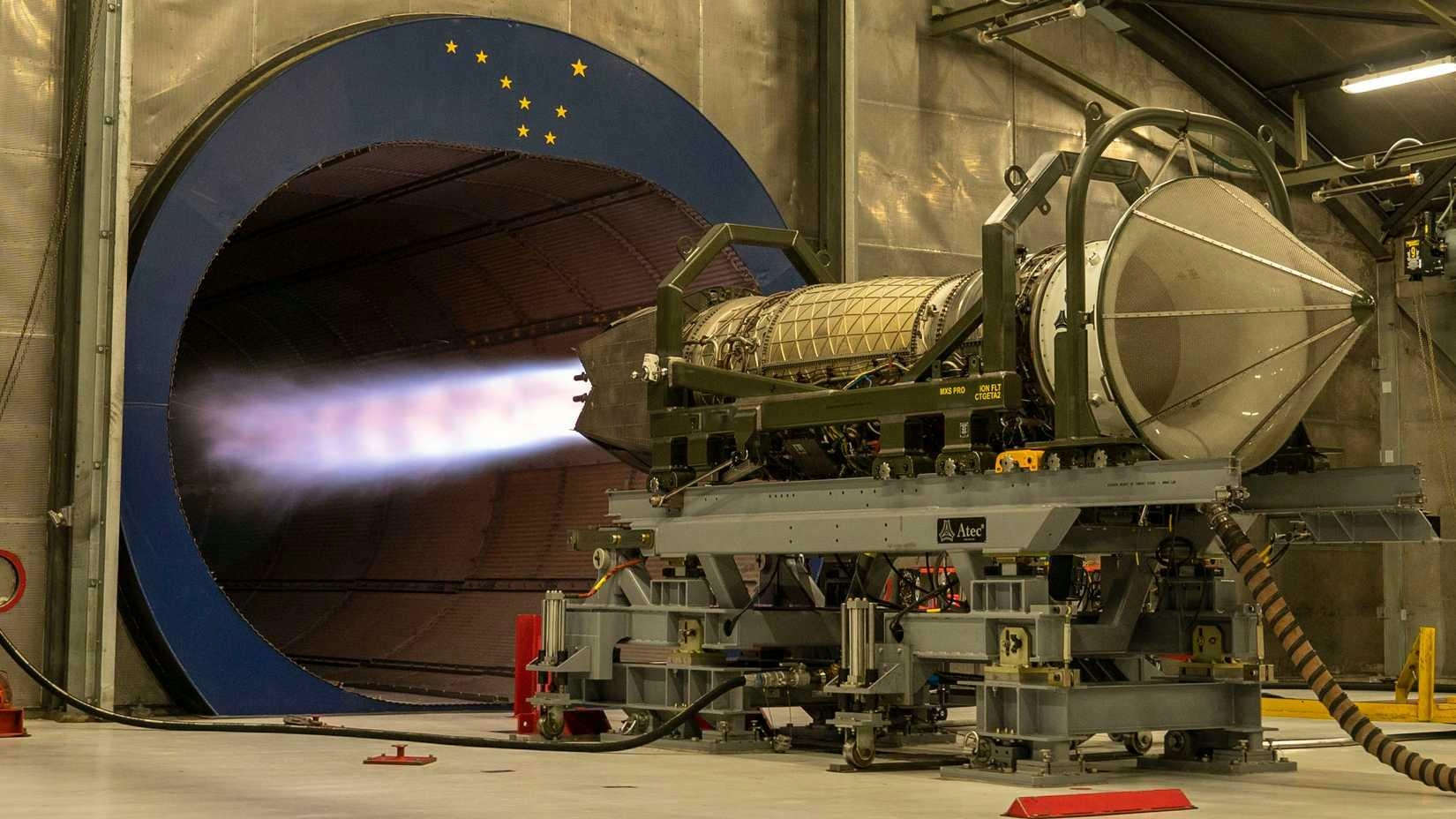
Pratt & Whitney F119 Engine Surpasses One Million Flight Hours
Pratt & Whitney, a subsidiary of RTX (NYSE: RTX), has announced that its F119 engine has surpassed one million flight hours powering the Lockheed Martin F-22 Raptor. This milestone highlights the engine’s pivotal role as the world’s first fifth-generation fighter engine and a fundamental component of the U.S. Air Force’s air superiority capabilities.
A Legacy of Performance and Innovation
Since its introduction over two decades ago, the F119 engine has been integral to the F-22 Raptor’s operational success. Jill Albertelli, president of Military Engines at Pratt & Whitney, emphasized the engine’s critical contribution to maintaining air dominance. She noted that the F119 continues to deliver exceptional capability, safety, and readiness, underscoring the company’s dedication to its customers.
Each F-22 Raptor is equipped with two F119 engines, which provide advanced features such as thrust vectoring, stealth technologies, and supercruise capability—enabling sustained supersonic flight without the use of afterburners. The engine’s thrust-vectoring nozzle enhances the aircraft’s speed, agility, and situational awareness. Over its service life, the F119 has established a strong reputation for reliability and performance, serving as the technological foundation for the F135 engine used in the F-35 Lightning II.
Sustaining the F-22 Fleet Amid Industry Challenges
Pratt & Whitney continues to support the global F-22 fleet through extensive sustainment programs, including depot maintenance and modernization efforts. The company employs advanced methodologies such as Model-Based Systems Engineering and Usage-Based Lifing, alongside ongoing component enhancements, to ensure the F119 remains operationally effective for years to come. Although the final F119 engine was produced in 2013, long-term sustainment remains a strategic priority as the F-22 remains a vital asset for the U.S. Air Force.
This achievement arrives amid broader challenges facing the aerospace industry. Increasing demand for advanced engines has complicated efforts to maintain reliability and meet production timelines. United Airlines CEO Scott Kirby recently identified engine availability as a significant constraint for the aviation sector over the next five years, placing additional pressure on manufacturers like Pratt & Whitney to balance new engine deliveries with sustained support. The company’s ability to uphold readiness rates will continue to attract close scrutiny.
Competitors are also intensifying their efforts in response to Pratt & Whitney’s accomplishments. General Electric is advancing hybrid-electric powertrain technologies, while Rolls-Royce is expanding its engine health monitoring systems, both aiming to capture market share and establish new standards in engine performance and reliability.
Founded in 1925, Pratt & Whitney remains a leader in aircraft propulsion, currently supporting more than 90,000 in-service engines worldwide. As the F119 engine reaches this significant milestone, the company faces the dual challenge of preserving its legacy of innovation and dependability within a rapidly evolving aerospace environment.

Etihad Airways Suspends Airbus A380 Flights on Key Route

Aditya Birla Group Seeks Approval for Aircraft Leasing in GIFT City

Qatar Airways Highlights Innovation and Connectivity at Arabian Travel Market 2026

Hong Kong's Five-Year Plan Includes Andrew Fan's Aircraft Parts Processing Hub Proposal

ACIA Aero Leasing Delivers ATR72-600 to Air Nostrum

RTX Appoints Jill Albertelli as Head of Pratt & Whitney

TAT Technologies Joins Beyond Aero Hydrogen Aircraft Program

AURAK Study Highlights Barriers to Air Taxi Adoption in Emerging Economies

Xiamen Air Selects Altitude for 787 Maintenance at Heathrow

Etihad and Swissport Extend Global Partnership
