
Zet AI‑inzichten om in gerichte actie

Trending
Categories
Projected Flight Numbers for Airbus A380 and Boeing 747-8 in 2026
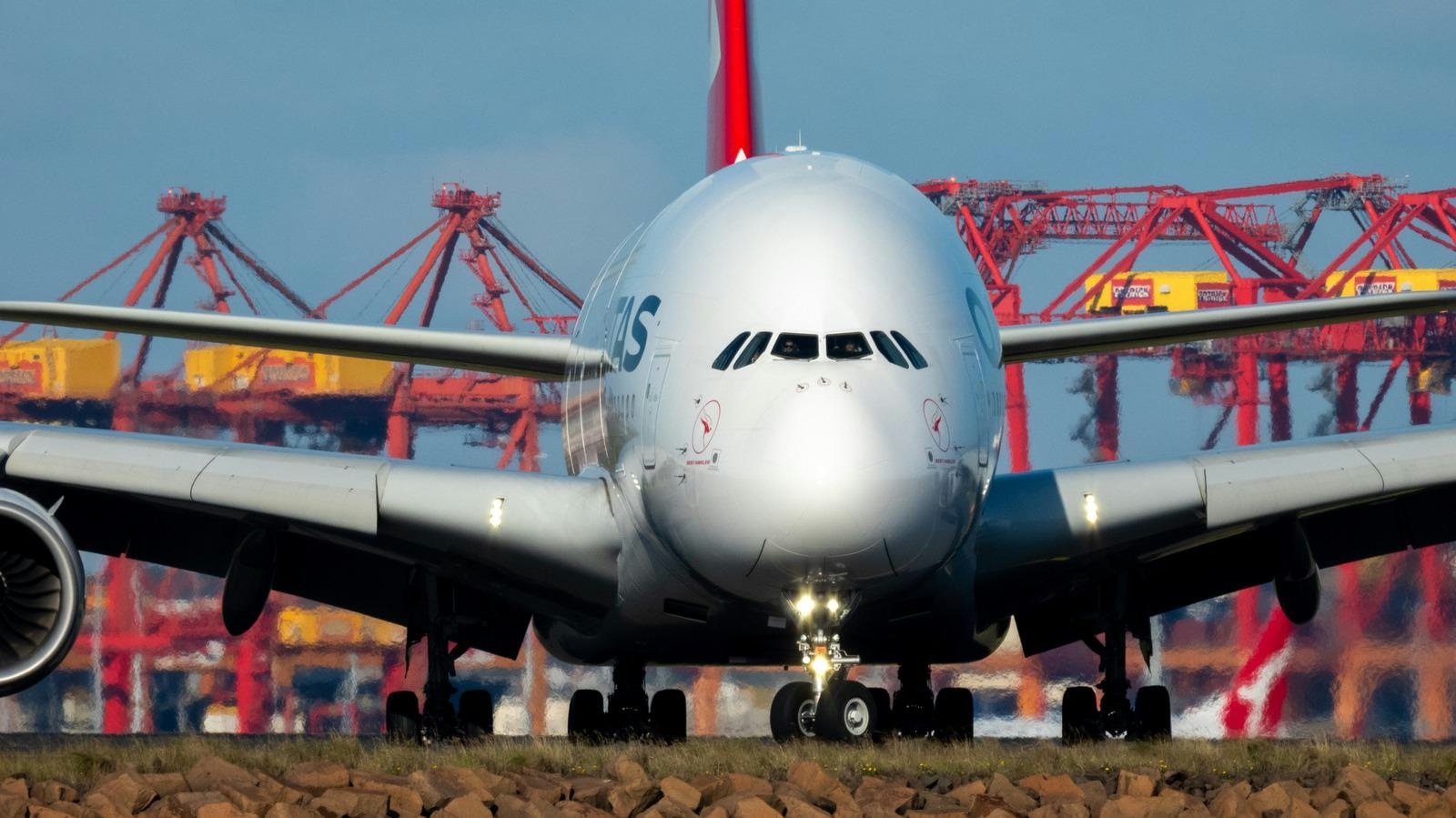
Projected Flight Numbers for Airbus A380 and Boeing 747-8 in 2026
As the aviation industry moves away from four-engined passenger jets, the Airbus A380 and Boeing 747-8 stand as the last significant quadjets in scheduled service. Although production of both models has ceased, recent data indicates that these aircraft will continue to operate globally through 2026, albeit with a reduced presence.
Dominance of the Airbus A380 in Scheduled Flights
According to aviation analytics firm Cirium, the combined scheduled passenger flights for the A380 and 747-8 will exceed 94,000 in 2026. The Airbus A380 will account for nearly 90% of these operations, underscoring its continued dominance among the remaining quadjets. The A380, recognized as the world’s largest passenger aircraft, is projected to operate 83,921 flights across ten airlines next year.
Emirates remains the principal operator, maintaining a fleet of 116 A380s out of the 251 produced. The airline’s flagship route between Dubai International Airport (DXB) and London Heathrow (LHR) will feature the highest volume of A380 flights, with 2,066 scheduled services in both directions and up to six daily departures for much of the year. Beyond Emirates, Etihad Airways’ Abu Dhabi to London Heathrow route ranks second, with 846 scheduled A380 flights. London Heathrow emerges as the most diverse hub for the A380, served by six of the ten global operators, including British Airways, which operates a fleet of 12 A380s.
Limited Operations for the Boeing 747-8
In contrast, the Boeing 747-8 is scheduled for only 10,131 passenger flights in 2026, representing approximately 12.1% of the A380’s total. The passenger version of the 747-8 will be operated by just three airlines: Lufthansa, Korean Air, and Air China. This limited deployment reflects the aircraft’s lower popularity compared to its predecessor, the 747-400. Boeing delivered only 48 passenger-configured 747-8s, with some units designated for VIP use.
Industry Trends and Market Challenges
The anticipated decline in quadjet operations highlights broader shifts within the aviation sector. Airbus has acknowledged that the transition away from traditional hub-and-spoke networks toward more efficient point-to-point services has diminished demand for very large aircraft such as the A380. This trend has been further accelerated by the 2008 economic crisis and the widespread adoption of fuel-efficient twin-engine jets.
Airbus’s latest 20-year forecast projects that 47% of new passenger aircraft demand between 2026 and 2045 will be driven by fleet replacement, reflecting airlines’ emphasis on modernizing with more efficient models. The company has also revised its overall industry demand forecast downward by 1%, citing geopolitical tensions including the conflict in Iran and ongoing trade disputes. Nevertheless, Airbus anticipates robust growth led primarily by the Asian market.
Meanwhile, the Boeing 747-8 has encountered its own challenges, including limited commercial uptake and recent controversy surrounding its selection as the new Air Force One, which has attracted criticism over procurement procedures.
Outlook for Quadjet Operations
As airlines increasingly prioritize operational efficiency and flexibility, the presence of quadjets like the A380 and 747-8 is expected to continue shrinking. While these iconic aircraft will remain in service on select high-demand routes in 2026, their declining numbers reflect an industry undergoing significant transformation, influenced by evolving market preferences, economic pressures, and geopolitical developments.

Etihad and Swissport Extend Global Partnership
Sepehran Airlines B737 Returns to Mashhad After Tyre and Engine Issues

Etihad Deploys Widebody Fleet to Meet Strong Demand

Korean Air Finalizes $36.2 Billion Deal with Boeing

Australia’s RFDS Queensland Section Orders Six King Air 260Cs

Korean Air Finalizes Order for 103 Boeing Jets and Engines

Embraer E195-E2 Features Distinctive Engine Placement Among Regional Jets

What Passengers Can Expect on Boeing’s New 777X Jet

How Ethiopian Airlines Became Africa’s Leading Carrier Amid Gulf Competition

Joby Aviation Extends Autonomous Flight Capabilities with Cross-Country Tour
