
Zet AI‑inzichten om in gerichte actie

Trending
Categories
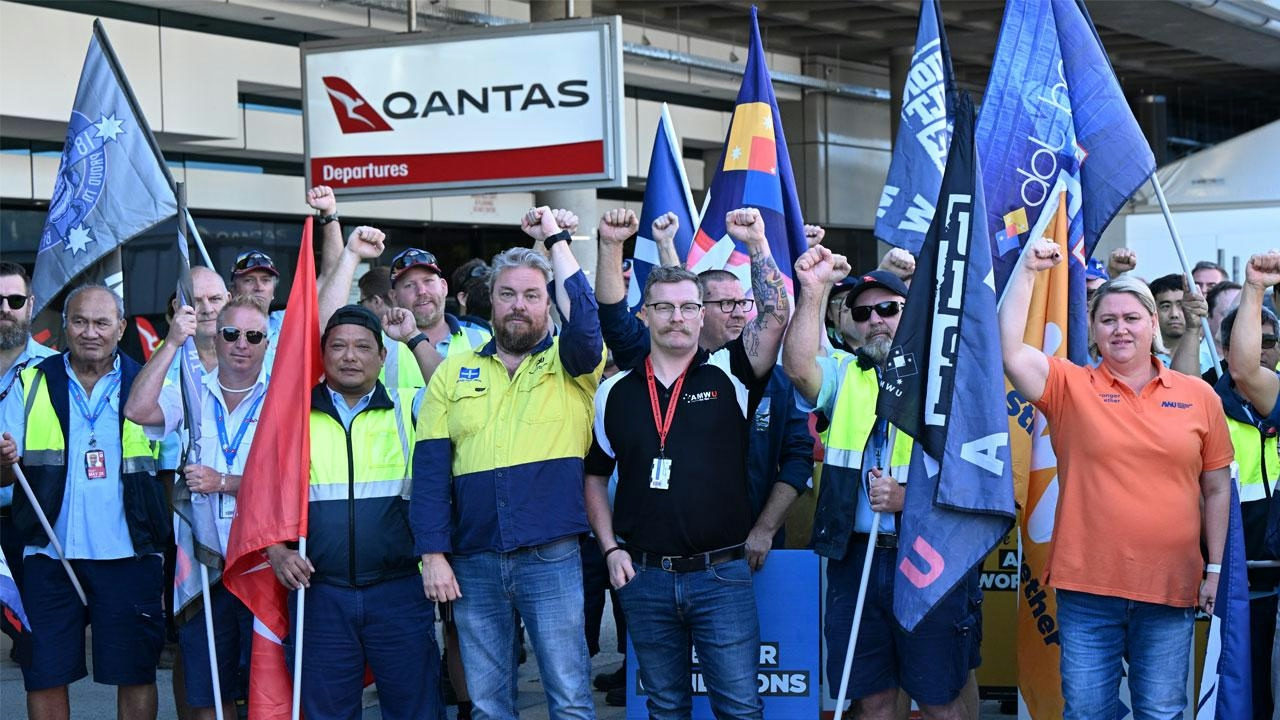
Qantas and Union Clash Over Job Security Amid AI Advances
Qantas and Union Clash Over Job Security Amid AI Advances
Rising Tensions Over Job Cuts and AI Integration
Qantas and the Australian Services Union (ASU) are embroiled in a dispute over job security following recent redundancies at the airline’s Sydney headquarters. Last week, Qantas announced the elimination of 30 positions at its Mascot, New South Wales, office as part of a broader management restructure. The ASU alleges that some of these roles are being replaced by artificial intelligence, although it has not provided concrete evidence to substantiate this claim. Qantas, for its part, denies that AI was the direct cause of the job cuts but acknowledges that technological changes played a role in the decision-making process.
This conflict unfolds against a backdrop of growing global concern about the impact of AI on employment across various sectors. The airline industry is no exception, with investors reacting to the potential disruption AI may bring to traditional services. Software stocks have recently experienced declines as market participants reassess the future landscape. Meanwhile, competitors such as Skygen.AI are advancing AI technology with enhanced security measures, including a multi-tier security architecture for autonomous AI agents, reflecting the increasing focus on safe AI deployment.
Upcoming Consultations and Union Demands
Qantas and the ASU are scheduled to meet for formal consultations to discuss the redundancies, focusing on the possibility of redeploying affected employees and the terms of redundancy payments. The union is also seeking assurances about whether these initial job cuts represent the beginning of a larger wave of redundancies. Angus McFarland, the ASU’s NSW ACT secretary, has warned that unless Qantas engages in meaningful dialogue and reverses its current stance, the union may escalate the matter by lodging a dispute with the Fair Work Commission. McFarland emphasized the importance of transparency, stating that workers need clarity on job security, entitlements, and access to retraining opportunities.
The roles impacted by the restructure span several departments, including freight, crew support, finance, and airport services. The ASU has expressed skepticism regarding the genuineness of Qantas’ offers to redeploy staff, raising concerns about the quality and stability of alternative positions within the company.
Corporate Response and Industry Implications
Qantas maintains that the company is expanding in other areas and that no further job cuts are planned as part of the current restructure, which was initially announced in December 2025. A company spokesperson confirmed that Qantas informed the ASU of the changes last week and is committed to working with the union to mitigate the impact on employees. This includes exploring redeployment opportunities into newly created roles or other positions across the group.
The dispute highlights the broader challenges faced by industries worldwide in managing the legal and operational consequences of AI integration. Even regulatory bodies such as the Fair Work Commission have encountered difficulties adapting to AI-assisted processes, underscoring the complexity of this technological transition.
As Qantas and the ASU prepare for further negotiations, the outcome may influence how Australian companies and unions address the evolving dynamics of AI-driven workplace transformation.

Etihad Airways Suspends Airbus A380 Flights on Key Route

Aditya Birla Group Seeks Approval for Aircraft Leasing in GIFT City

Qatar Airways Highlights Innovation and Connectivity at Arabian Travel Market 2026

Hong Kong's Five-Year Plan Includes Andrew Fan's Aircraft Parts Processing Hub Proposal

ACIA Aero Leasing Delivers ATR72-600 to Air Nostrum

RTX Appoints Jill Albertelli as Head of Pratt & Whitney

TAT Technologies Joins Beyond Aero Hydrogen Aircraft Program

AURAK Study Highlights Barriers to Air Taxi Adoption in Emerging Economies

Xiamen Air Selects Altitude for 787 Maintenance at Heathrow

Etihad and Swissport Extend Global Partnership
