
Zet AI‑inzichten om in gerichte actie

Trending
Categories
Qatar Operates 283-Seat Jet on Short 80-Mile Flight
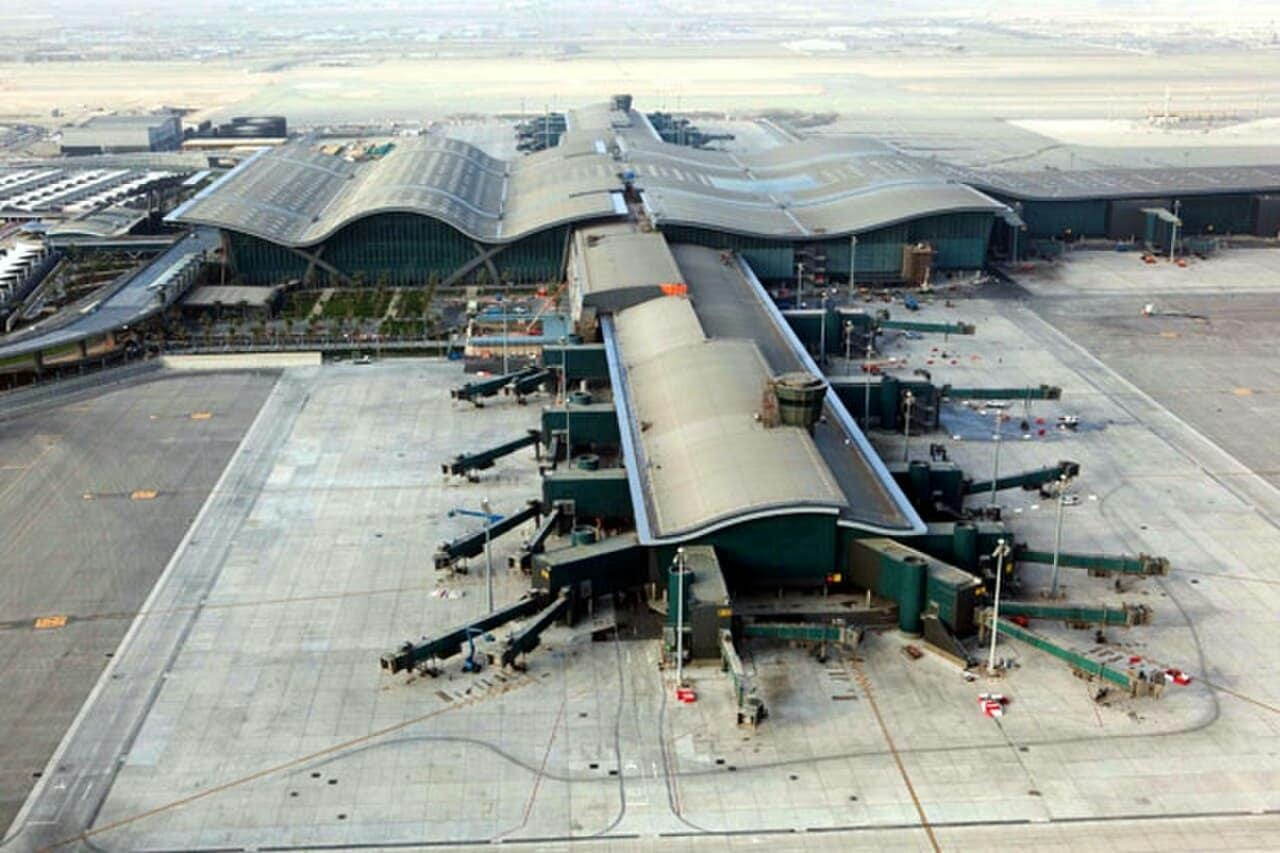
Qatar Operates 283-Seat Jet on Short 80-Mile Flight
Qatar Airways recently deployed an Airbus A350-900, a widebody aircraft typically reserved for long-haul international routes, on an unusually short flight between Doha and Bahrain. On August 12 and 13, 2026, the airline operated the 283-seat jet over a distance of just 80 nautical miles (approximately 148 kilometers), setting a new record for the world’s shortest bookable A350 service. This brief hop, lasting only minutes, contrasts sharply with the aircraft’s usual role connecting distant cities such as Doha and Auckland on flights exceeding seventeen hours.
A Widebody Aircraft on a Short Sector
Covering 80 nautical miles is a journey that a fast car could complete in roughly the same time it takes an A350 to taxi to the runway. On this route, the aircraft barely reached cruising altitude before beginning its descent, with the seatbelt sign remaining illuminated for most of the flight. Qatar Airways typically operates this busy Gulf corridor three times daily using the smaller Airbus A320, which seats around 132 passengers. The substitution of the twin-aisle A350 more than doubles the seating capacity on a route that many airlines would assign to regional jets, making this deployment highly unconventional.
Operational Rationale and Challenges
Despite appearances, there is a practical rationale behind Qatar Airways’ decision to operate a widebody on such a short route. Airlines frequently reposition aircraft to meet crew scheduling requirements, maintenance demands, or to position jets for upcoming long-haul flights. Utilizing an A350 on a short regional sector can be the most efficient method to ensure the aircraft is in the right location at the right time. Additionally, this move temporarily increases seat availability on a high-demand route, offering passengers the rare opportunity to experience the amenities of a long-haul aircraft—including mood lighting and lie-flat business class seats—on what is essentially a commuter flight.
However, operating a large aircraft like the A350 on a short hop presents significant challenges. Matching passenger demand to the aircraft’s large capacity can be difficult, especially when the route is typically served by a smaller plane. The operational costs are higher, as the A350 is not optimized for short sectors and its fuel efficiency diminishes over brief distances. These factors raise questions about the economic viability of such a service, with industry observers considering whether the benefits justify the increased expenses. Competitors may respond by adjusting their own fleet deployment strategies or offering more competitive pricing on similar short-haul routes.
Setting a New Record
This Bahrain route surpassed Qatar’s previous shortest A350 sector, which was the 122-nautical-mile flight from Doha to Dammam. Although an even shorter A350 flight exists in the Caribbean between Bonaire and Curaçao, that service does not sell seats individually and therefore does not qualify for the record. Ultimately, this operation underscores that efficiency is not always the primary consideration in airline logistics. Sometimes, scheduling imperatives and operational needs require a long-haul aircraft to undertake brief, unconventional journeys, providing both a logistical solution for the airline and a unique experience for passengers.

Etihad Airways Suspends Airbus A380 Flights on Key Route

Aditya Birla Group Seeks Approval for Aircraft Leasing in GIFT City

Qatar Airways Highlights Innovation and Connectivity at Arabian Travel Market 2026

Hong Kong's Five-Year Plan Includes Andrew Fan's Aircraft Parts Processing Hub Proposal

ACIA Aero Leasing Delivers ATR72-600 to Air Nostrum

RTX Appoints Jill Albertelli as Head of Pratt & Whitney

TAT Technologies Joins Beyond Aero Hydrogen Aircraft Program

AURAK Study Highlights Barriers to Air Taxi Adoption in Emerging Economies

Xiamen Air Selects Altitude for 787 Maintenance at Heathrow

Etihad and Swissport Extend Global Partnership
