
Zet AI‑inzichten om in gerichte actie

Trending
Categories
Rolls-Royce Adopts XWB-84 EP Engine as Standard for Future Models
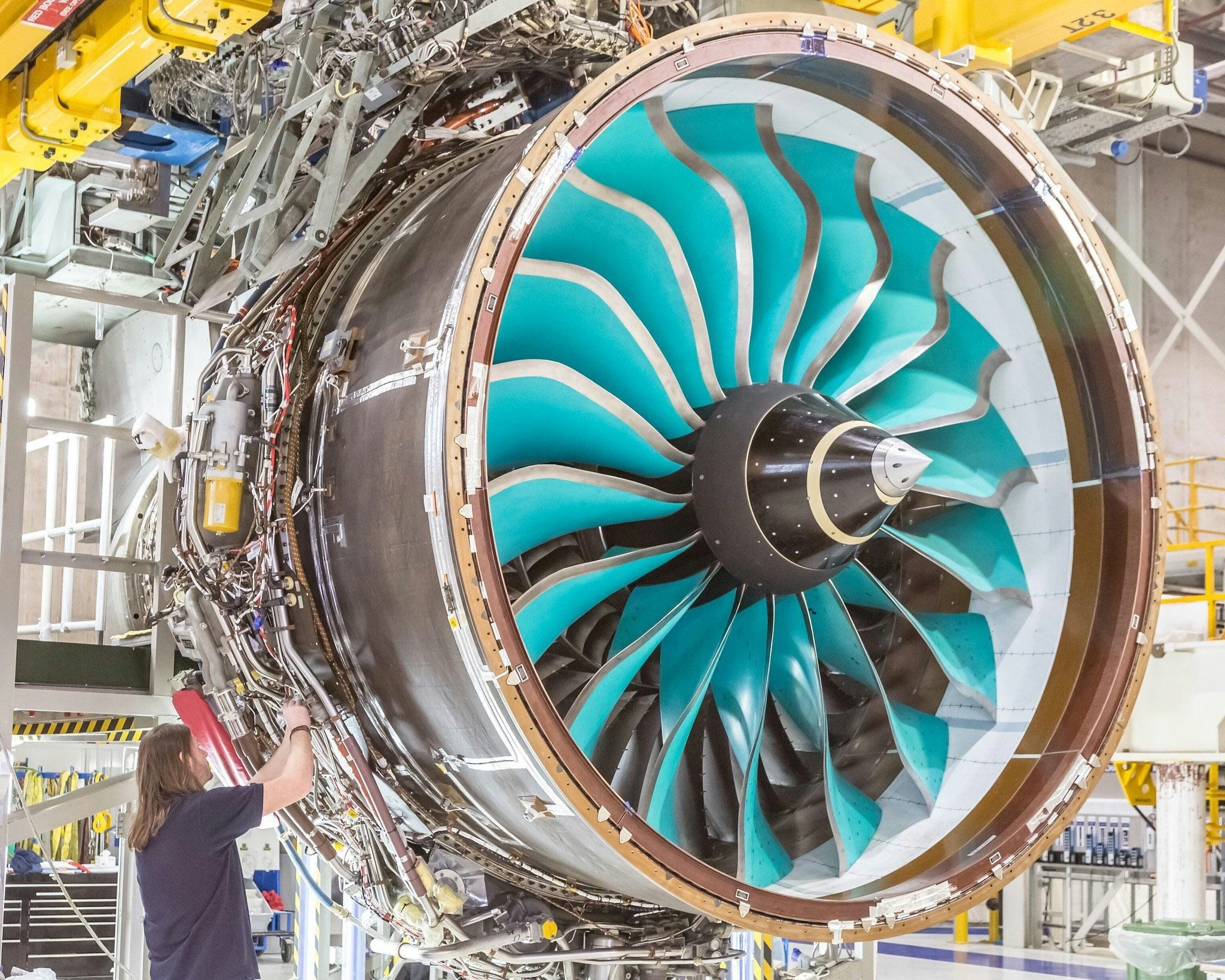
Rolls-Royce Adopts XWB-84 Enhanced Performance Engine as Standard for Future Models
Rolls-Royce has confirmed that its Enhanced Performance (EP) variant of the Trent XWB-84 engine will become the standard powerplant for all future Airbus A350-900 aircraft, effectively replacing the baseline model in new sales. This decision follows the successful entry into service of the EP engine with Delta Air Lines in May last year, where it demonstrated an average fuel-burn reduction of approximately 1.8%, exceeding the initial target of 1%.
Technical Advancements and Operational Benefits
The XWB-84 EP engine, which delivers 84,000 pounds-force (375 kN) of thrust, is the exclusive engine option for the A350-900. Rolls-Royce’s move to standardize the EP variant reflects its commitment to providing customers with enhanced value and improved operational performance. The company emphasized that demand for the upgrade remains strong among operators whose engines have yet to enter production.
To achieve the improved efficiency, Rolls-Royce introduced a range of technical enhancements, including optimized airflow dynamics, modifications to the fan design, refined cruise performance, and better cooling air distribution within the engine core. However, the differences between the baseline and EP variants are substantial enough to preclude in-service upgrades. Consequently, Rolls-Royce will continue manufacturing both versions concurrently to meet existing contractual obligations but anticipates that all forthcoming orders will specify the EP model.
Market Reception and Competitive Implications
The market response to the EP engine has been largely favorable, with airlines attracted by the prospect of significant cost savings. Rob Watson, president of Rolls-Royce’s civil aerospace division, highlighted that a 1% improvement in fuel efficiency can translate into approximately $500,000 in annual savings per aircraft. For operators managing fleets of around 20 aircraft, this could amount to $9–10 million in yearly cost reductions. Watson underscored the importance of the EP engine in delivering tangible benefits to customers.
Despite these gains, challenges remain, particularly in ensuring the engine’s durability and reliability under demanding conditions such as those found in the Gulf region. Emirates has expressed concerns regarding the EP variant’s performance in hot and sandy environments, indicating a potential opening for competitors to target this market segment.
The adoption of the EP engine also intensifies competitive pressure on rival manufacturers like Pratt & Whitney and General Electric, who may need to accelerate enhancements to their own engine offerings to remain competitive.
Production and Future Outlook
Currently, the XWB-84 is assembled at Rolls-Royce’s primary production facility in Derby, United Kingdom. To accommodate increasing demand, the company plans to expand production capacity at its Dahlewitz plant near Berlin by the end of the decade.
By establishing the XWB-84 EP as the standard engine for the A350-900, Rolls-Royce aims to deliver greater efficiency and value to its airline customers while addressing the challenges posed by diverse operating environments and a dynamic competitive landscape.

Etihad and Swissport Extend Global Partnership

Sepehran Airlines B737 Returns to Mashhad After Tyre and Engine Issues

Etihad Deploys Widebody Fleet to Meet Strong Demand

Korean Air Finalizes $36.2 Billion Deal with Boeing

Australia’s RFDS Queensland Section Orders Six King Air 260Cs

Korean Air Finalizes Order for 103 Boeing Jets and Engines

Embraer E195-E2 Features Distinctive Engine Placement Among Regional Jets

What Passengers Can Expect on Boeing’s New 777X Jet

How Ethiopian Airlines Became Africa’s Leading Carrier Amid Gulf Competition

Joby Aviation Extends Autonomous Flight Capabilities with Cross-Country Tour
