
Zet AI‑inzichten om in gerichte actie

Trending
Categories
Rolls-Royce Civil Aerospace Division Reports Strong Margins
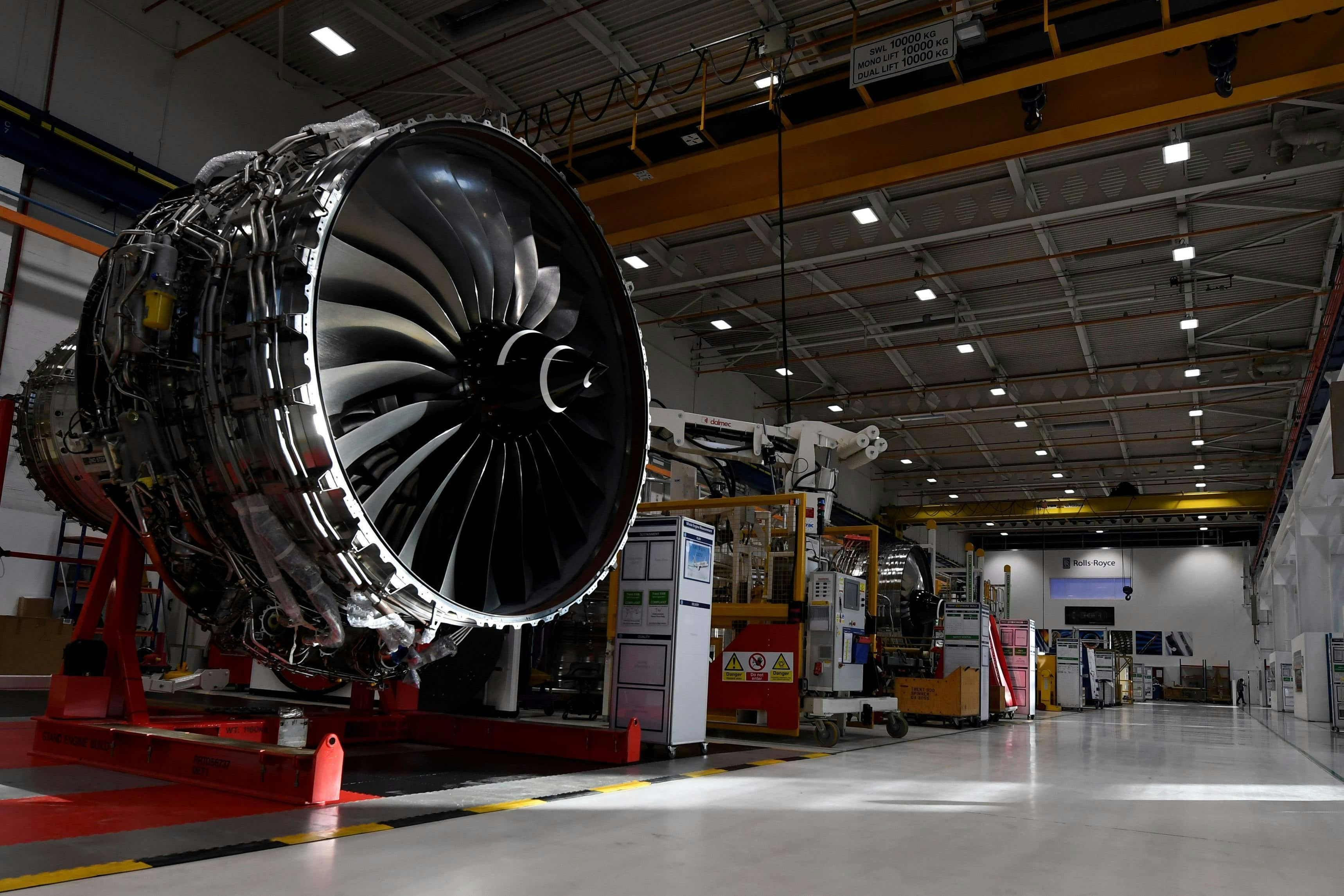
Rolls-Royce Civil Aerospace Division Reports Strong Margins Amid Market Optimism
Rolls-Royce’s Civil Aerospace Division has demonstrated a marked improvement in operating margins, driven primarily by robust performance in its widebody jet engine segment. In the first half of the year, the company delivered 122 large civil engines, a modest increase from 120 during the same period last year. Although deliveries of Trent 1000 engines for the Boeing 787 and Trent 7000 engines for the Airbus A330neo declined, production of Trent XWB engines for the Airbus A350-900 and A350-1000 variants rose significantly.
Financial Performance and Contractual Strategy
The division achieved an operating margin nearing 25%, the highest among Rolls-Royce’s business units. Operating profit surged by 63% to £1.19 billion ($1.58 billion), supported by a 17% increase in revenues, which approached £4.8 billion. These gains were attributed to strong aftermarket demand for large engines, improved contractual terms, and enhanced profitability from spare engine sales.
In response to shifting market conditions, Rolls-Royce has prioritized renegotiating all original equipment contracts and addressing the most onerous aftermarket agreements. The company anticipates completing the remaining contract renegotiations by 2025-26, expecting these efforts to yield a “significant benefit” to underlying operating profit and cash flow.
Market Outlook and Industry Challenges
The positive financial results have been well received by investors, propelling Rolls-Royce’s share price to an all-time high following the profit upgrade. The company’s outlook remains optimistic, with total civil engine deliveries for the first half of the year reaching 237, consistent with the previous year. Full-year deliveries are projected at the lower end of the 540-570 range, compared to 529 in 2024.
Despite this optimism, the aerospace industry faces potential challenges from rising energy costs, which are influencing strategic decisions across the sector. For instance, competitor Safran recently selected a French site for a new carbon-brake manufacturing plant after evaluating energy expenses. Rolls-Royce has responded by announcing a $75 million expansion of its manufacturing operations in South Carolina, aimed at improving energy efficiency and increasing production capacity.
As competitors consider similar investments, Rolls-Royce’s proactive approach to cost management and operational efficiency positions the company strongly within the civil aerospace market. The firm continues to focus on enhancing performance across both widebody aircraft and business aviation contracts, underscoring its commitment to long-term profitability and shareholder value.

Etihad Airways Suspends Airbus A380 Flights on Key Route

Aditya Birla Group Seeks Approval for Aircraft Leasing in GIFT City

Qatar Airways Highlights Innovation and Connectivity at Arabian Travel Market 2026

Hong Kong's Five-Year Plan Includes Andrew Fan's Aircraft Parts Processing Hub Proposal

ACIA Aero Leasing Delivers ATR72-600 to Air Nostrum

RTX Appoints Jill Albertelli as Head of Pratt & Whitney

TAT Technologies Joins Beyond Aero Hydrogen Aircraft Program

AURAK Study Highlights Barriers to Air Taxi Adoption in Emerging Economies

Xiamen Air Selects Altitude for 787 Maintenance at Heathrow

Etihad and Swissport Extend Global Partnership
