
Zet AI‑inzichten om in gerichte actie

Trending
Categories
Safran Sees Progress as Leap Engine Deliveries Recover
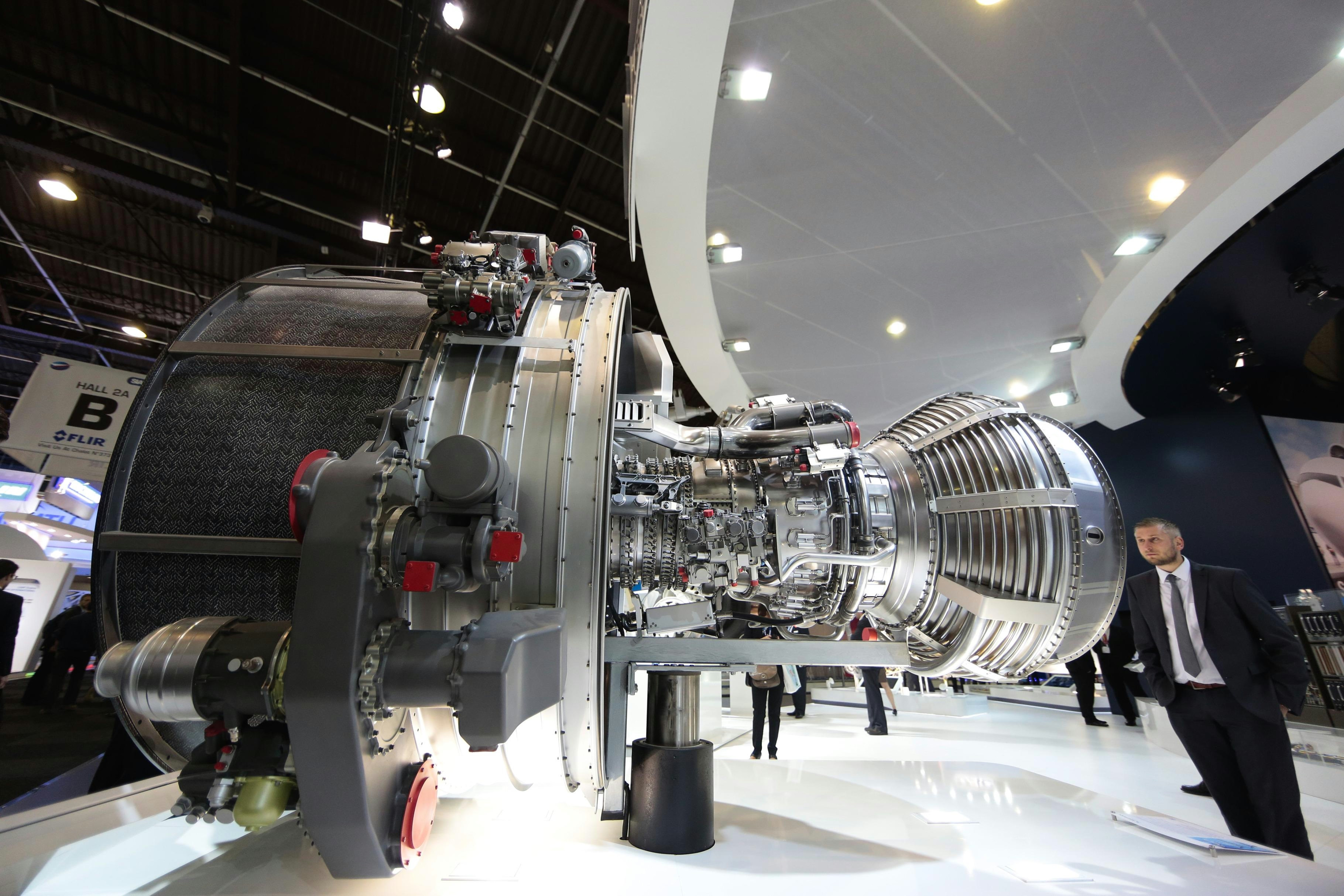
Safran Reports Strong Recovery in Leap Engine Deliveries
Safran has announced a significant rebound in deliveries of CFM International’s Leap engines during the first half of the year, with a 10% increase resulting in 729 units handed over. Production rates improved steadily quarter-on-quarter, with 410 engines delivered in the second quarter alone—a nearly 30% rise compared to 319 units in the first quarter. This enhanced output contributed to a 17% increase in propulsion revenues for the period, which reached €7.5 billion ($8.6 billion).
Supply Chain Improvements and Production Outlook
During a half-year briefing on July 31, Chief Executive Olivier Andries highlighted “some improvements” in the supply chain, marking a positive shift after a prolonged period of challenges. Safran now anticipates a 15-20% rise in total Leap engine deliveries for the full year, projecting between 1,618 and 1,688 units. This forecast surpasses last year’s production and sets a foundation for further expansion in 2025.
The Leap engine is a critical powerplant for major aircraft models, including the Airbus A320neo family, Boeing 737 Max, and China’s Comac C919. Airbus, in particular, has experienced a shortage of Leap-1A engines, with 60 aircraft grounded as of June 30 awaiting deliveries, most of which are missing these engines.
Aftermarket Growth and Financial Performance
Safran’s propulsion division also saw a 21% increase in aftermarket sales, driven by sustained demand for spare parts and maintenance services. The company reported that the positive momentum observed in the first quarter continued throughout the first half, with revenues from spares and civil engine services each rising by more than 21%. This growth was supported by ongoing requirements for the CFM56 engine, a higher spare-engine ratio for the Leap, and profit recognition on Leap-1A rate-per-flight-hour contracts.
Chief Financial Officer Pascal Bantegnie noted that profit margins on Leap-1B contracts are expected to be recognized in the first half of 2026, coinciding with the introduction of the “maverick blade,” an enhanced high-pressure turbine blade designed to improve engine performance.
Recurring operating income for the propulsion division surged by 37% to €1.76 billion. Robust aftermarket activity in civil engines has driven what Safran described as “unprecedented” cash generation and a strong operating margin in the first half, prompting the company to raise its full-year guidance and outlook for 2025.
Safran’s joint venture partner, GE Aerospace, has also contributed positively, with its cabin interiors business returning to profitability, further bolstering the group’s overall performance. Additionally, Safran extended its maintenance agreement for CFM International Leap-1A engines with SR Technics, reflecting continued confidence in its engine operations.
With ongoing supply chain improvements, increasing engine deliveries, and strong aftermarket demand, Safran is well positioned for sustained growth as it moves into the second half of the year.

Etihad Airways Suspends Airbus A380 Flights on Key Route

Aditya Birla Group Seeks Approval for Aircraft Leasing in GIFT City

Qatar Airways Highlights Innovation and Connectivity at Arabian Travel Market 2026

Hong Kong's Five-Year Plan Includes Andrew Fan's Aircraft Parts Processing Hub Proposal

ACIA Aero Leasing Delivers ATR72-600 to Air Nostrum

RTX Appoints Jill Albertelli as Head of Pratt & Whitney

TAT Technologies Joins Beyond Aero Hydrogen Aircraft Program

AURAK Study Highlights Barriers to Air Taxi Adoption in Emerging Economies

Xiamen Air Selects Altitude for 787 Maintenance at Heathrow

Etihad and Swissport Extend Global Partnership
