
Zet AI‑inzichten om in gerichte actie

Trending
Categories
Sats’ Next Phase to Incorporate AI and F1-Style Telemetry
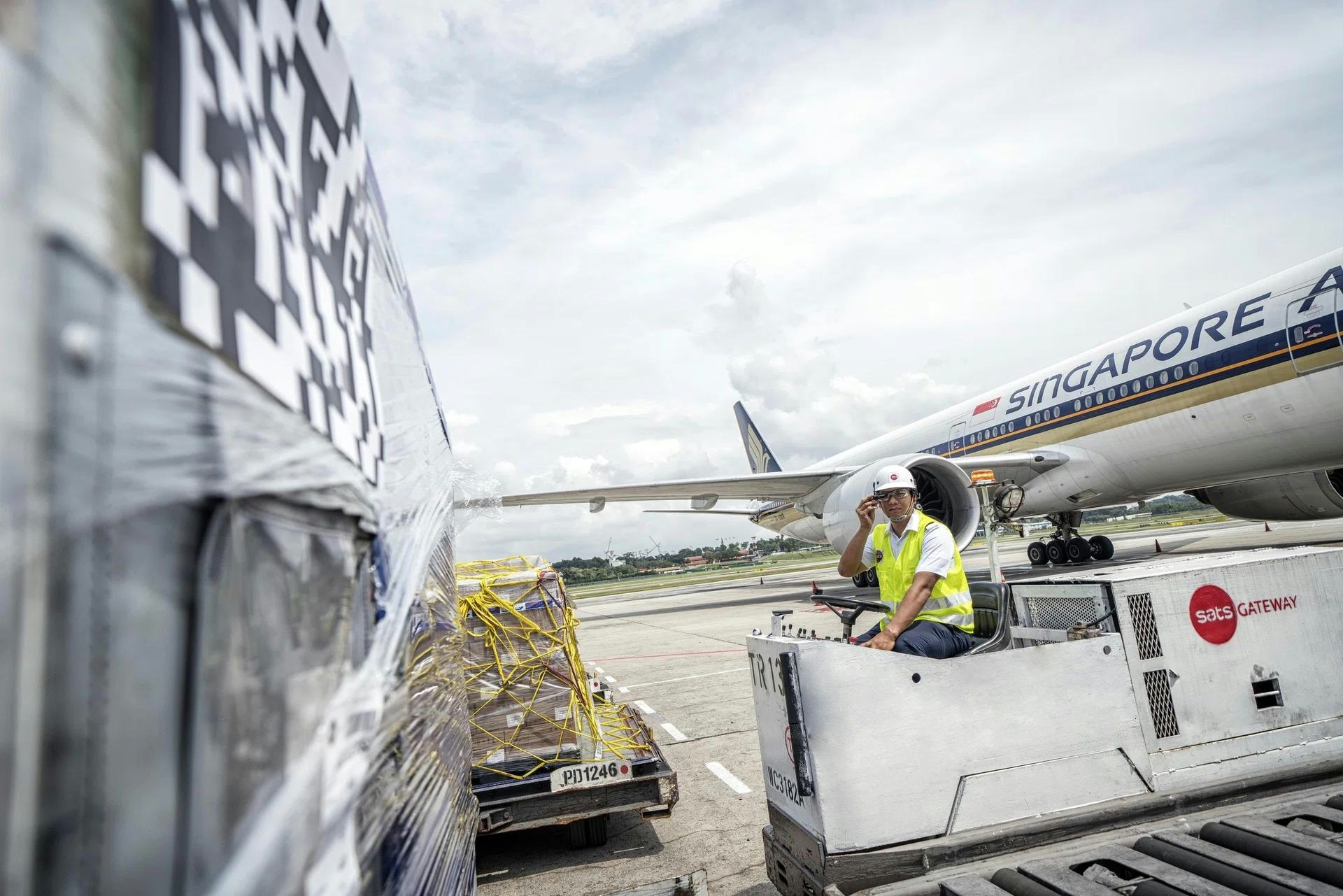
Sats’ Next Phase to Incorporate AI and F1-Style Telemetry
SINGAPORE – Sats is poised to revolutionize its global operations by integrating artificial intelligence (AI) and Formula 1-style telemetry into its aviation and food logistics businesses. Central to the company’s strategy is the development of a unified, data-enabled platform aimed at enhancing operational performance and decision-making across its expanding network.
Drawing Inspiration from Formula 1 Racing
Kerry Mok, president and CEO of Sats, highlighted the influence of Formula 1 racing on the company’s approach. In F1, teams rely on continuous data streams from car telemetry to make real-time strategic decisions. Mok remarked, “In an F1 race, teams are getting a continuous data feed from car telemetry. You have a strategy team that takes the data, analyses it, and that helps the team make decisions. I look at that and say, ‘This is perfect for us.’” This analogy underscores Sats’ ambition to harness real-time data analytics to optimize its operations.
To realize this vision, Sats plans to establish a group-level control centre that will utilize AI and advanced data analytics to monitor and streamline its activities. This initiative forms part of the company’s broader efforts to expand its core gateway services and food solutions businesses, reinforcing its position as a key player in the aviation and logistics sectors.
Challenges and Market Reactions
The integration of AI technologies presents significant challenges, particularly concerning workforce implications. The automation of routine tasks raises concerns about potential job displacement, especially in clerical and administrative roles. As Sats advances its AI-driven transformation, it will need to address these workforce impacts thoughtfully, including strategies for reskilling employees affected by automation.
Market responses to Sats’ AI integration have been mixed. While some investors are optimistic about the prospects for enhanced efficiency and competitiveness, others remain cautious about the sustainability of the AI boom. Concerns have been raised regarding rising energy costs and the risk of excessive expenditure on emerging technologies. Additionally, a growing anti-AI sentiment in the broader market could influence the momentum of technology stocks and affect investor confidence.
Competitive Landscape and Future Outlook
Sats’ move has attracted close attention from competitors in the aviation and logistics industries, many of whom are expected to adopt similar AI and telemetry systems to improve their own operations. This trend is likely to intensify competition as companies seek to leverage data and automation for operational advantages.
Despite these uncertainties, Sats remains steadfast in its commitment to a data-driven future. By adopting strategies inspired by high-performance industries such as Formula 1, the company aims to establish new benchmarks for efficiency and innovation within aviation and food logistics.

Etihad and Swissport Extend Global Partnership

Sepehran Airlines B737 Returns to Mashhad After Tyre and Engine Issues

Etihad Deploys Widebody Fleet to Meet Strong Demand

Korean Air Finalizes $36.2 Billion Deal with Boeing

Australia’s RFDS Queensland Section Orders Six King Air 260Cs

Korean Air Finalizes Order for 103 Boeing Jets and Engines

Embraer E195-E2 Features Distinctive Engine Placement Among Regional Jets

What Passengers Can Expect on Boeing’s New 777X Jet

How Ethiopian Airlines Became Africa’s Leading Carrier Amid Gulf Competition

Joby Aviation Extends Autonomous Flight Capabilities with Cross-Country Tour
