
Zet AI‑inzichten om in gerichte actie

Trending
Categories
Skunk Works Develops AI-Enabled Sensor Fighter Interceptor
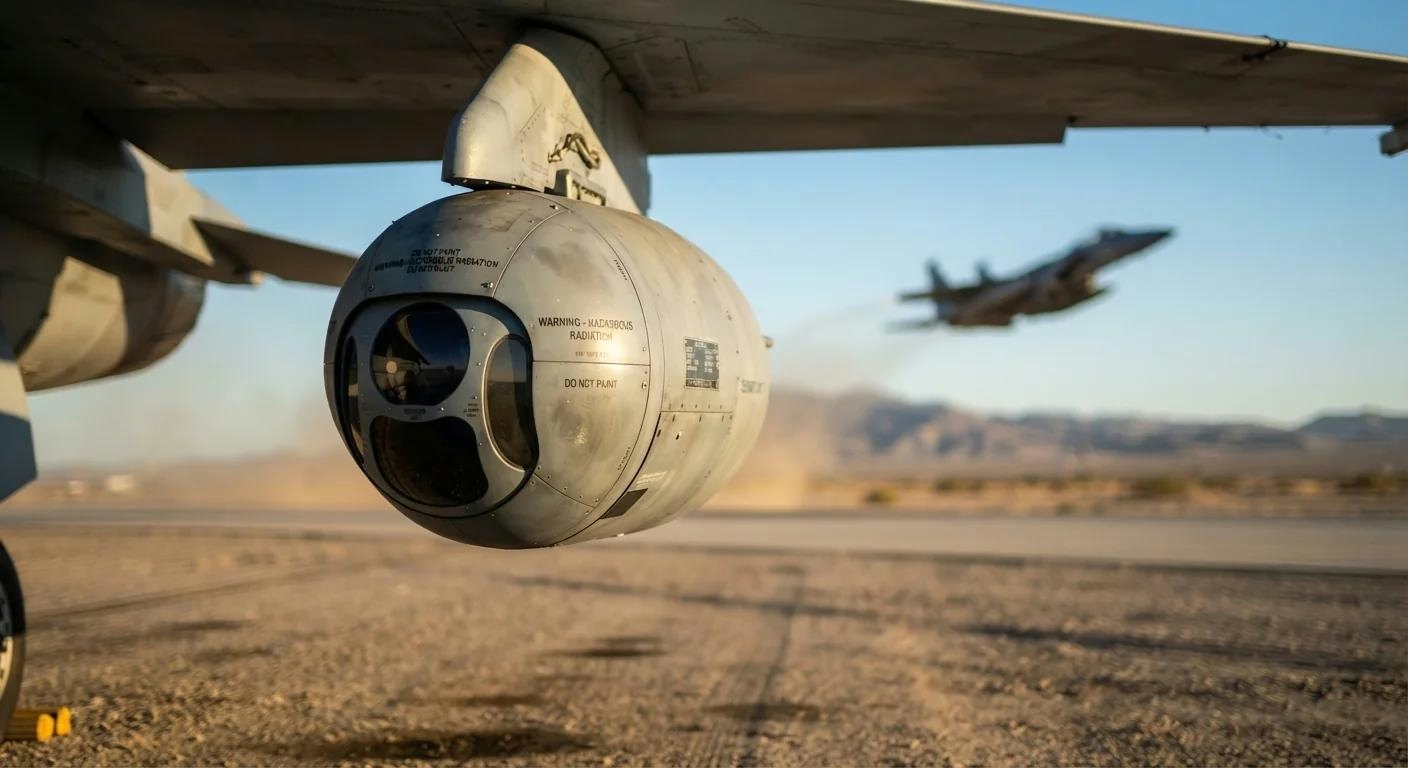
Skunk Works Advances AI-Enabled Sensor Fighter Interceptor in Collaboration with U.S. Air Force
Breakthrough in Autonomous Air Combat
At Edwards Air Force Base, California, Lockheed Martin Skunk Works®, in partnership with the U.S. Air Force Test Pilot School (TPS) and industry collaborators, has achieved a significant milestone in autonomous air combat technology. The team successfully demonstrated an artificial intelligence (AI)-enabled sensor system integrated into a fighter aircraft during a series of live mission system flight tests using the X-62 Variable In-flight Simulation Test Aircraft (VISTA).
Over the course of eight test flights, the X-62 VISTA completed 27 AI-controlled air intercepts, utilizing real-time targeting data sourced from operational sensors. The AI agent, embedded within Lockheed Martin’s Legion Pod®, autonomously piloted the aircraft to intercept a live T-38 jet. This marked a critical transition from simulated environments to real-world sensor data in AI testing, establishing a closed-loop system that replicates the complex data conditions pilots will face in future high-stakes combat scenarios.
Key Achievements and Strategic Collaboration
The demonstration validated the X-62’s autonomy architecture by employing authentic sensor data, showcasing the full development cycle from simulation to live flight execution. Skunk Works’ “Supermassive” AI agent generation capability facilitated rapid integration and ground testing with the X-62 in just three months, significantly accelerating development timelines and enhancing operational agility.
This initiative represents a strategic collaboration that bridges the U.S. Air Force’s advanced test community with industry expertise, expanding the TPS’s AI and autonomy testing portfolio to encompass mission-critical onboard systems. By delegating complex operational tasks to AI, pilots are afforded greater capacity to concentrate on tactical decision-making, potentially improving their effectiveness and survivability in combat.
Ron Fehlen, vice president and general manager at Lockheed Martin Skunk Works, emphasized the importance of this progress, stating, “Our ongoing partnership with TPS is driving important progress with this latest flight test series, demonstrating that our AI can effectively and reliably close the sensor-to-action loop aboard an operational combat aircraft. Our autonomous agents consumed classified infrared search and track feeds and executed combat-critical maneuvers in real time. This achievement marks a decisive advance toward delivering AI-augmented air dominance for the United States.”
Challenges and Industry Implications
Despite the technological advancements demonstrated, several challenges remain. Ensuring the reliability and security of AI-enabled sensor systems is critical, as is the seamless integration of AI capabilities with existing combat platforms. Furthermore, regulatory and ethical considerations surrounding autonomous combat systems must be addressed as these technologies evolve.
The defense sector is expected to respond to this breakthrough by accelerating the development of AI-driven technologies to maintain competitive parity or gain operational advantages. The successful demonstration of AI-enabled sensor-driven autonomy aboard the X-62 VISTA heralds a new era in air combat, with the potential to transform operational tactics and reshape the broader defense technology landscape.
Comments

Etihad Airways Suspends Airbus A380 Flights on Key Route

Aditya Birla Group Seeks Approval for Aircraft Leasing in GIFT City

Qatar Airways Highlights Innovation and Connectivity at Arabian Travel Market 2026

Hong Kong's Five-Year Plan Includes Andrew Fan's Aircraft Parts Processing Hub Proposal

ACIA Aero Leasing Delivers ATR72-600 to Air Nostrum

RTX Appoints Jill Albertelli as Head of Pratt & Whitney

TAT Technologies Joins Beyond Aero Hydrogen Aircraft Program

AURAK Study Highlights Barriers to Air Taxi Adoption in Emerging Economies

Xiamen Air Selects Altitude for 787 Maintenance at Heathrow

Etihad and Swissport Extend Global Partnership
