Afbeelding

AeroGenie — Uw intelligente copiloot.

Vraag wat je wilt. Analyseer alles. Handel onmiddellijk.

Trending

Categories

Skylark Labs Expands Tracer AI for Aircraft Safety in Defense and Commercial Aviation After Indian Navy Deployment
March 25, 2026By ePlane AI
Skylark Labs Expands Tracer AI for Aircraft Safety in Defense and Commercial Aviation After Indian Navy Deployment
0
0
Skylark Labs
Tracer AI
Runway Safety

Skylark Labs Advances Tracer AI for Enhanced Aircraft Safety in Defense and Commercial Aviation

Expanding Reach Following Indian Navy Deployment

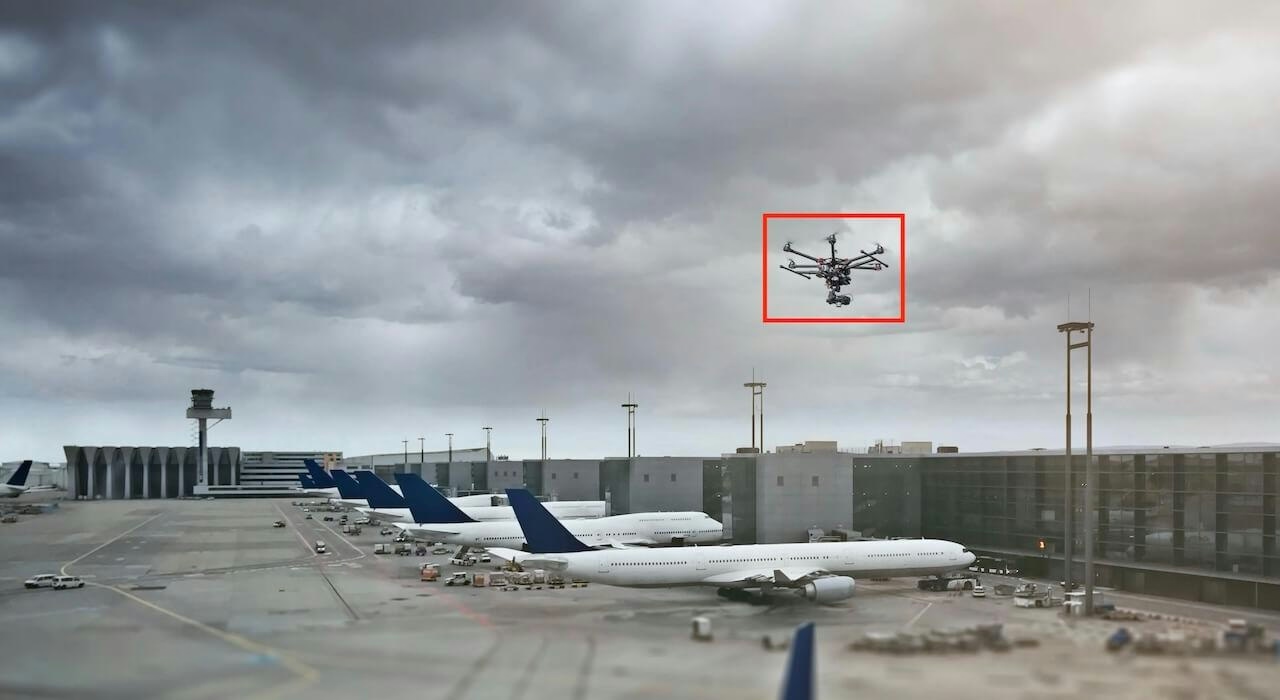
The global market for Foreign Object Debris (FOD) detection and runway safety is valued at approximately $14 billion, driven by the urgent need for modernization across defense forces and commercial airports worldwide. Skylark Labs, a California-based artificial intelligence company, is capitalizing on this demand with its Tracer AI Vehicle, a scalable solution designed to improve runway safety. The company’s technology has already seen successful deployment with the Indian Navy and is now expanding to the Indian Air Force and commercial aviation operators.

Unlike conventional FOD detection systems that depend on expensive radar or LiDAR infrastructure, Skylark Labs’ Tracer AI Vehicle employs adaptive optical AI powered by its proprietary Runway Monitoring Intelligence Layer. Each vehicle functions autonomously, learning from real-world debris detections, false positives, and evolving surface conditions during routine patrols. This localized intelligence is continuously synchronized across the entire fleet, creating a unified and dynamic knowledge base. Consequently, new insights—such as the identification of emerging debris types or refined detection methodologies—are instantly shared, enabling the network to improve collectively without requiring manual retraining of AI models.

Operational Capabilities and Industry Challenges

Operated by airfield personnel, the Tracer AI Vehicle is manually driven along runways and taxiways, persistently scanning for hazardous debris. Upon detection, the system transmits precise coordinates to air traffic control and ground teams to facilitate swift removal. Additionally, the AI classifies debris types, aiding safety investigations and root cause analyses. Over time, the platform compiles a comprehensive debris map that highlights recurring hotspots, supporting predictive maintenance efforts aimed at preventing future incidents.

Amarjot Singh, Founder and CEO of Skylark Labs, emphasized the platform’s unique advantages: “Runway safety demands continuous, intelligent monitoring across a massive global market that legacy systems have failed to serve effectively. The Tracer AI Vehicle detects debris with precision, eliminates false positives through adaptive learning, and shares intelligence across the entire fleet in real time. Every new deployment makes the network smarter—that’s a compounding advantage no radar or LiDAR system can match.”

Despite these strengths, Skylark Labs faces considerable challenges in scaling Tracer AI on a global scale. Regulatory complexities within both defense and commercial aviation sectors may impede rapid adoption, while integration with existing airport and military infrastructure presents technical hurdles. The company also contends with competition from established industry leaders such as Leonardo and Lockheed Martin, who are advancing their own AI-driven aircraft safety technologies. Market responses remain mixed, with some investors wary of AI’s disruptive potential in traditional industries, while others recognize significant growth opportunities in modernizing aviation safety infrastructure. Competitors may respond by accelerating AI development or pursuing strategic partnerships to safeguard their market positions.

With two years of operational validation at Indian Navy airfields and ongoing deployments in diverse environments, Skylark Labs’ Tracer AI Vehicle continues to amass valuable operational experience. Each new deployment benefits from the collective intelligence of the entire network, reinforcing the platform’s self-learning capabilities and positioning Skylark Labs as a prominent contender in the evolving field of runway safety solutions.

More news
Oregon Department of Forestry Deploys Aircraft Equipped with AI Sensors for Wildfire Detection

Oregon Department of Forestry Deploys Aircraft Equipped with AI Sensors for Wildfire Detection

Oregon Department of Forestry Deploys Aircraft Equipped with AI Sensors for Wildfire Detection The Oregon Department of Forestry (ODF) has taken a significant step forward in enhancing its wildfire and emergency response capabilities through the deployment of a new Multi-Mission Aircraft equipped with advanced artificial intelligence (AI) sensors. This initiative, backed by a $13.23 million investment—comprising $12 million from state-approved bonds and an additional $1.23 million from other sources—represents a major advancement in the state’s ability to detect, monitor, and respond to wildfires and other emergencies. Advanced Technology and Enhanced Capabilities Replacing a 30-year-old Partenavia P.68 Observer, the newly acquired Twin Otter aircraft offers substantial improvements in endurance, range, and payload capacity. These enhancements allow for longer flight durations, wider area coverage, and the transport of more personnel and equipment when necessary. Central to this upgrade is the integration of $5.4 million worth of cutting-edge sensing technology and mission systems, which transform the aircraft into a sophisticated aerial intelligence platform. The aircraft is outfitted with AI-enabled wide-area mapping, high-definition thermal imaging, augmented reality mapping software, and night operations capabilities. These technologies enable crews to identify emerging wildfire incidents more rapidly, track fire behavior with greater accuracy, and maintain continuous situational awareness. Neal Laugle, ODF’s state aviation manager, emphasized that the new system builds on decades of experience while introducing capabilities that allow for earlier fire detection, real-time condition assessment, and the provision of critical intelligence to firefighters and decision-makers when every moment is crucial. During wildfire detection missions, crews utilize lightning strike data, weather forecasts, and onboard sensors to locate new fire starts, often before they become visible to the public. Once a fire is detected, dispatch centers are promptly notified to facilitate rapid deployment of suppression resources. The aircraft’s night vision capabilities, including the use of night vision goggles (NVGs), provide a vital advantage by enabling crews to detect subtle visual cues such as the flicker of a nascent fire that might otherwise go unnoticed. Broader Emergency Response and Security Considerations Beyond wildfire detection and response, the aircraft will support a variety of emergency operations including flood response, severe storm monitoring, search and rescue missions, and disaster damage assessments. By collecting and sharing geospatial intelligence, the platform is expected to enhance coordination among state agencies, local responders, and incident management teams, thereby fostering a faster and more unified emergency response. Sarah Prout, ODF’s state aviation coordinator, highlighted the importance of this capability in improving interagency collaboration during crises. However, the deployment of AI-equipped aircraft also raises broader security concerns. The dual-use nature of AI technology, underscored by the availability of AI-enabled drones on international markets, has sparked discussions regarding the potential risks and regulatory challenges associated with such systems. Industry observers have called for stricter regulations to prevent misuse, while competitors in the wildfire detection sector are anticipated to accelerate the development of their own AI-driven solutions, with a focus on safety and compliance. Based at Prineville Airport in central Oregon, the Multi-Mission Aircraft will support a wide range of missions including wildfire detection and reconnaissance, real-time situational awareness and mapping, Air Tactical Group Supervisor (ATGS) coordination, movement of personnel and equipment, and support for non-fire and natural resource missions. As wildfire seasons grow longer and more complex, ODF officials stress that ongoing investment in advanced technology will be essential to safeguarding Oregon’s communities and natural resources.
Why Emirates Is Reluctant to Adopt the Boeing 737 MAX

Why Emirates Is Reluctant to Adopt the Boeing 737 MAX

Why Emirates Is Reluctant to Adopt the Boeing 737 MAX At first glance, the Boeing 737 MAX presents itself as an appealing choice for many major airlines due to its fuel efficiency, versatility, and suitability for short- and medium-haul routes. However, Emirates operates under a fundamentally different strategic philosophy. The Dubai-based carrier has established its global brand by transporting large volumes of long-haul passengers through a single, expansive hub—Dubai International Airport (DXB)—exclusively using widebody aircraft. Within this framework, the 737 MAX does not address a gap in Emirates’ network; rather, it serves a purpose the airline does not require. Emirates’ Focused Fleet Strategy This strategic distinction is key to understanding Emirates’ reluctance to incorporate the 737 MAX into its fleet. The decision reflects a commitment to a disciplined and focused fleet strategy rather than a rejection of Boeing as a manufacturer. Emirates’ current operations center on the Boeing 777 and Airbus A380, with the Airbus A350 recently introduced and additional Boeing 777X aircraft on order. The airline is also investing heavily in a multibillion-dollar retrofit program aimed at maintaining the competitiveness of its widebody fleet, underscoring its dedication to high-capacity, long-haul operations. Narrowbody aircraft, including the 737 MAX, are already managed within Dubai’s aviation ecosystem by flydubai, Emirates’ sister airline. Flydubai operates a fleet of 737s, including the MAX variant, serving thinner regional routes and higher-frequency short-haul markets that feed traffic into Emirates’ long-haul network. This clear division of labor enables Emirates to avoid the complexities associated with introducing narrowbody aircraft—such as additional pilot training, maintenance challenges, scheduling complications, and variations in cabin products—while preserving fleet commonality and maintaining a premium experience on its core routes. Impact of Boeing’s Production Challenges Recent developments in Boeing’s production schedule have further influenced Emirates’ cautious approach. Boeing has encountered setbacks, including delays in first-quarter deliveries of the 737 MAX due to wiring flaws, raising concerns about the aircraft’s delivery timeline and reliability. These issues compound ongoing challenges with premium class seats for the 787 Dreamliner, complicating Boeing’s broader production efforts. Although Boeing is actively addressing these problems by increasing 737 MAX production rates, planning to raise monthly output to 47 jets, and opening a new assembly line in Washington, the uncertainty surrounding delivery schedules and product quality adds an additional layer of hesitation for Emirates. Emirates’ fleet strategy remains distinctly clear: prioritize large widebody aircraft, build scale through a single global hub, and avoid unnecessary operational complexity. The introduction of the Airbus A350 and forthcoming 777X deliveries reinforce this approach. For Emirates, the 737 MAX does not align with its network design, brand positioning, or operational logic. As Boeing works to resolve its production challenges and restore confidence in the 737 MAX, Emirates appears content to adhere to its proven formula, delegating narrowbody operations to flydubai and maintaining its status as a leader in long-haul, high-capacity air travel.
Air Force Tanker Damages Alaska Airport Runway During Engine Test

Air Force Tanker Damages Alaska Airport Runway During Engine Test

Air Force Tanker Damages Alaska Airport Runway During Engine Test Incident Overview Last summer, a U.S. Air Force KC-46A refueling tanker caused substantial damage to the runway at Fairbanks International Airport during a series of high-powered engine tests, according to a recently released Air Force investigation report. The incident, which occurred in July, resulted in a 25-foot-wide hole in the runway and repair costs amounting to $147,044. Notably, the aircraft itself sustained no damage. The tanker, assigned to the New Hampshire Air National Guard’s 133rd Air Refueling Squadron, had landed in Fairbanks following a mission from Yokota Air Base in Japan. Upon arrival, the crew reported abnormal engine vibration indications in both engines, which grounded the aircraft and necessitated the deployment of a specialized maintenance team from McConnell Air Force Base, Kansas. Investigation Findings and Technical Details The investigation, led by Air Force Lieutenant Colonel Michael Raynor, revealed that maintenance personnel conducted ten high-power engine runs over an eight-hour period to diagnose and address the vibration issues. Each test involved operating both engines at up to 83 percent power—the same thrust level used during takeoff—producing exhaust temperatures near 1,170 degrees Fahrenheit. The report emphasized that even when testing a single engine, both are typically run simultaneously to avoid asymmetric forces that could damage the aircraft. The repeated exposure to intense heat and exhaust gases caused the asphalt sealant behind the aircraft to melt. During the tenth engine run, a 25-by-25-foot section of pavement detached and was propelled up to 100 feet away, scattering debris across nearly two-thirds of an acre. Fortunately, no personnel were injured, and the investigation did not identify any errors on the part of the maintenance team. Implications for Aviation Safety and Infrastructure This incident has raised concerns regarding operational safety and the potential impact on airport operations, particularly when military aircraft conduct maintenance procedures at civilian facilities. Aviation authorities may increase scrutiny of such activities, potentially prompting reviews of maintenance and operational protocols to prevent similar occurrences in the future. While there have been no reported responses from competitors or immediate market reactions, the event underscores broader challenges in military aviation and airport infrastructure. It may influence future policies and investments aimed at enhancing runway durability and maintenance standards, especially as military and civilian aviation operations continue to intersect. The Air Force’s investigation remains ongoing, and officials have yet to announce any procedural changes. Meanwhile, the damaged Fairbanks runway has been repaired, and the KC-46A tanker has returned to service without further incident.
Vietnam Airlines to Lease 12 Widebody Aircraft

Vietnam Airlines to Lease 12 Widebody Aircraft

Vietnam Airlines to Lease 12 Widebody Aircraft for 2028–2030 Expansion **HANOI, March 25, 2026** — Vietnam Airlines is advancing its long-haul fleet expansion by preparing to launch a binding tender to lease 12 widebody aircraft under dry-lease agreements. This initiative supports the carrier’s operational strategy for the 2028–2030 period and follows a comprehensive market survey conducted in September 2025. The move represents a significant step in strengthening Vietnam Airlines’ international network. From Market Survey to Binding Tender In September 2025, Vietnam Airlines issued a Request for Information (RFI) to aircraft manufacturers and lessors, seeking data on up to 30 widebody aircraft, including models such as the Airbus A350-900 and Boeing 787-9/10. The RFI, published on the airline’s official procurement website, was non-binding and aimed at gathering detailed information on aircraft availability, delivery schedules, leasing and purchase options, cabin configurations, and indicative commercial terms. Responses were collected by October 8, 2025, providing the airline with essential market intelligence to guide its fleet planning. Building on this foundation, Vietnam Airlines is now preparing to issue an official, binding tender for 12 widebody aircraft. Unlike the exploratory RFI, this tender will culminate in contracts for aircraft deliveries scheduled between 2028 and 2030, marking a concrete implementation of the airline’s fleet expansion strategy. Strategic and Market Context Vietnam Airlines currently operates a long-haul fleet composed of Airbus A350s and Boeing 787 Dreamliners. The planned addition of 12 widebody aircraft aims to meet rising international passenger demand, replace or supplement older leased aircraft as contracts expire, and support the airline’s objective of operating a larger, more efficient fleet by 2030. This expansion also reflects a strategic effort to optimize leasing arrangements and capital expenditures. The move occurs amid intensifying competition in the region, with major carriers such as United Airlines and Korean Air also expanding their widebody fleets. This competitive environment may increase pressures in both procurement and operational domains, potentially prompting Vietnam Airlines’ rivals to adjust their fleet compositions and strategies to maintain market share. Operational and Financial Considerations Industry analysts observe that Vietnam Airlines’ focus on dry-leasing offers flexibility and cost efficiency, a common approach among airlines seeking to expand long-haul capacity without significant upfront capital investment. However, this strategy is likely to attract scrutiny regarding the airline’s financial health and its capacity to manage the operational complexities associated with integrating a larger widebody fleet. Furthermore, the global market for aircraft floor panels—critical components for customizing and retrofitting widebody cabins—remains highly competitive. Brand influence plays a significant role in widebody completions, which could affect both the cost and timeline of aircraft integration for Vietnam Airlines. Outlook Vietnam Airlines’ forthcoming tender, as reported by Vietnam Investment Review, signals a transition from market exploration to actionable procurement. Airbus, Boeing, and leading leasing companies are expected to compete to fulfill the airline’s delivery and operational requirements for 2028–2030. As the process unfolds, industry stakeholders will closely monitor Vietnam Airlines’ ability to navigate competitive pressures, operational integration challenges, and financial considerations.
United Airlines Introduces New CRJ450 Aircraft

United Airlines Introduces New CRJ450 Aircraft

United Airlines Introduces CRJ450 to Enhance Premium Regional Service United Airlines has announced an ambitious plan to retrofit approximately fifty CRJ200 aircraft into a new model, the CRJ450, by 2030. This initiative aims to elevate the airline’s regional service by focusing on a premium passenger experience. The CRJ450, configured to seat 41 passengers, is being promoted as a “first-of-its-kind regional aircraft” designed to offer a private jet-like atmosphere, particularly for travelers seated in the United First cabin. To create this enhanced environment, United will remove overhead bins in the premium section and replace them with a spacious luggage closet, underscoring the airline’s commitment to comfort and convenience. The introduction of the CRJ450 will complement United’s existing CRJ550 fleet, a variant of the CRJ700, as part of the carrier’s broader strategy to expand its premium regional offerings. By 2028, United expects to operate more than fifty CRJ450s alongside nearly 120 CRJ550s. At the end of 2025, the airline’s regional fleet included thirty CRJ200s, all operated by SkyWest Airlines under the United Express brand and configured to seat 50 passengers. Partnership with SkyWest and Industry Context SkyWest, which currently operates 130 CRJ200s with an average age of 23 years, is collaborating closely with United on the CRJ450 conversion project. The regional carrier expressed enthusiasm about the partnership, highlighting the opportunity to “elevate the onboard customer experience” by reimagining the CRJ200 into the enhanced CRJ450. The first aircraft modification is already underway, with operations expected to commence in the fall of 2026. United plans to have more than 50 CRJ450s in service by 2028. The conversion requires a supplemental type certificate (STC) for the new interiors, which is presently under review by the Federal Aviation Administration (FAA). This development coincides with a broader rebound in the commercial aviation sector, marked by a surge in aircraft orders and renewed industry confidence. United itself anticipates taking delivery of over 250 new aircraft by April 2028. This includes forty-seven Boeing 787-9s—thirty-three of which will feature additional premium seating—fifty-eight Airbus A321-200NX aircraft (forty configured in the Coastliner layout), twenty-eight A321-200NY(XLR)s, and 119 Boeing 737 MAX jets. Notably, the new A321neo Coastliner and A321-200NY(XLR) models will offer all-aisle-access lie-flat seats in United Polaris, further advancing the airline’s premium service ambitions. Challenges and Strategic Vision Despite the promising outlook, integrating the redesigned CRJ450 into United’s existing fleet presents several challenges. These include ensuring sufficient passenger demand for the enhanced premium services and managing the impact of rising fuel costs. Early market responses have been positive, particularly among travelers seeking upgraded regional experiences. However, competitors are likely to respond by enhancing their own premium offerings or adjusting fleet strategies to maintain market competitiveness. United Airlines CEO Scott Kirby emphasized that the CRJ450 and other fleet enhancements are integral to the airline’s United Next growth strategy, launched in 2021. This strategy aims to deliver a more consistent and elevated onboard experience across United’s network, reinforcing the carrier’s commitment to innovation and customer satisfaction.
Tailored Solutions for Modern Challenges

Tailored Solutions for Modern Challenges

Tailored Solutions for Modern Challenges Additive manufacturing (AM) is undergoing a significant transformation, evolving from a specialized prototyping technique into a mainstream production method within aviation maintenance, repair, and overhaul (MRO) operations. Initially confined to experimental uses, AM now facilitates the production of certified aircraft components, ranging from simple cabin fittings to intricate structural parts. This advancement offers maintenance providers enhanced efficiency and flexibility, addressing longstanding industry challenges. Advancing Aviation Maintenance through Additive Manufacturing MRO organisations are increasingly adopting AM to mitigate persistent issues such as supply chain disruptions and the demand for faster, localized production. This transition is particularly pertinent as the aviation sector grapples with regulatory complexities, market-specific barriers, and operational demands in diverse environments. At Lufthansa Technik’s AM centre in Hamburg, the scope has expanded beyond prototyping to include the manufacture of both polymer and metal components for aircraft interiors and other applications. According to company spokesperson Michael Lagemann, the centre produces a broad spectrum of parts, from concealed cabin elements to visible features like seat covers and restroom signage. He highlights the development of specialised items such as 3D-printed holders for pilots’ headsets and intelligent tools designed to streamline maintenance tasks. These bespoke solutions can significantly reduce repair times, exemplified by enabling mechanics to replace onboard water filters without dismantling entire assemblies. The initial adoption of AM frequently focuses on polymer cabin components, which require regular replacement due to wear. Stephan Keil, business owner for aviation and certification at EOS, notes that traditional manufacturing methods for these parts are often costly and slow, particularly for small production runs. He explains that obsolescence and supply chain challenges contribute to extended lead times, while the expense of conventional injection moulding tools results in high prices and minimum order quantities. AM offers MRO providers the ability to produce components on demand, thereby lowering inventory costs and enhancing responsiveness. Broader Industry Applications and Strategic Responses Beyond aviation, tailored solutions are being implemented to address sector-specific challenges globally. The Nepal VR Training Initiative, for instance, employs advanced simulation technology to prepare pilots for the rigours of high-altitude mountain flying. In Brazil, structural barriers within the aviation market—highlighted by Azul’s CEO—have spurred efforts to expand market access despite regulatory and financial constraints. Similarly, in the mining sector, companies such as Harmony Gold are adopting strategic operational efficiencies to navigate fluctuating commodity prices. These adaptive strategies are reflected across competitive landscapes, where organisations invest in specialised training, innovative manufacturing techniques, and strategic partnerships. In agriculture and biologics, competitors are developing advanced solutions and leveraging collaborations to overcome regulatory and market challenges. Lagemann identifies three primary drivers behind Lufthansa Technik’s commitment to AM: the capacity to produce complex geometries without the need for special tooling, enhanced customisation and design flexibility, and the potential to create lighter, stronger components. He emphasises that AM enables immediate production with reduced waste and improved cost efficiency. By integrating creative design approaches, often inspired by natural forms, Lufthansa Technik is optimising parts for both performance and sustainability. As industries confront evolving challenges—from regulatory changes to market volatility—additive manufacturing and other tailored solutions are becoming indispensable tools for maintaining operational agility and securing competitive advantage.
Veryon Wins AI Excellence Awards for Advancing Aviation and Travel

Veryon Wins AI Excellence Awards for Advancing Aviation and Travel

Veryon Wins AI Excellence Awards for Advancing Aviation and Travel Veryon, a prominent provider of aviation maintenance software, has been honored with two prestigious industry awards in recognition of its pioneering application of artificial intelligence (AI) to enhance aviation maintenance and operational reliability. The company received the 2026 Artificial Intelligence Excellence Award in the Agentic AI category, alongside the Platinum award at the Pinnacle Awards for Artificial Intelligence. These accolades affirm Veryon’s dedication to advancing technological innovation within the aviation and travel sectors. Transforming Aircraft Maintenance with AI Central to Veryon’s acclaim is its AI-powered data intelligence platform, Veryon AIRE. This system integrates directly into aviation maintenance workflows, offering critical insights and actionable recommendations that improve operational efficiency while reducing the likelihood of human error. By harnessing sophisticated AI algorithms, Veryon AIRE facilitates a more precise and streamlined approach to aircraft upkeep, which is essential for maintaining reliable flight operations. The implications of this innovation extend well beyond airlines, impacting the broader tourism industry. Given that air travel remains a primary mode of transportation for millions of tourists globally, the efficiency and dependability of aircraft maintenance are vital. Delays, cancellations, and technical malfunctions can severely disrupt travel plans and diminish passenger experience. By mitigating such disruptions, Veryon AIRE contributes to smoother journeys and enhanced customer satisfaction, thereby supporting the sustained growth of international tourism. AI’s Broader Impact and Industry Challenges While Veryon’s achievements underscore the transformative potential of AI in aviation, the rapid integration of AI technologies is also reshaping the wider travel ecosystem. Traditional intermediaries—including online travel agencies (OTAs), global distribution systems (GDSs), and travel management companies (TMCs)—face increasing challenges as AI agents automate functions such as planning, booking, and operational management. This evolution threatens to erode established value propositions, potentially resulting in market instability and diminished returns for these entities. Furthermore, AI’s capacity to dismantle conventional barriers to entry raises concerns regarding cash flow management, capital investment, and the long-term sustainability of existing business models. Competitors are expected to accelerate their AI adoption strategies to maintain competitiveness, while some traditional players may seek to pivot toward segments less vulnerable to AI-driven disruption. Data security also emerges as a critical issue. As AI platforms like Veryon AIRE gain expanded access to sensitive enterprise data, organizations must emphasize data visibility and encryption to safeguard against potential breaches. Robust data protection measures will be indispensable as AI becomes increasingly embedded in aviation and travel operations. Looking Ahead The integration of AI in aviation maintenance is set to deepen, with platforms such as Veryon AIRE establishing benchmarks for future technological progress. As AI continues to evolve, its role in enabling airlines and maintenance teams to anticipate and resolve issues proactively will further enhance operational reliability and safety. While the advantages for airlines and travelers are evident, the industry must carefully manage the accompanying challenges and risks inherent in rapid technological transformation. Veryon’s recent accolades not only recognize its leadership in AI-driven aviation solutions but also highlight the profound and sometimes disruptive impact of AI across the travel sector.
Joby Aviation Wins Innovation Award After 17 Years Developing Electric Air Mobility

Joby Aviation Wins Innovation Award After 17 Years Developing Electric Air Mobility

Joby Aviation Recognized for Innovation After Nearly Two Decades in Electric Air Mobility Joby Aviation has been named one of FastCompany’s Most Innovative Companies for 2026, a distinction that acknowledges the company’s nearly 20 years of pioneering efforts in electric aviation technology. This accolade arrives at a critical juncture for the California-based firm, which is preparing to launch its Electric Skies Tour and engage in key Federal Aviation Administration (FAA) initiatives as it advances toward the commercialization of electric aircraft. Milestones and Industry Developments Recently, Joby celebrated the first flight of its FAA-conforming aircraft, marking a significant achievement in its mission to bring electric air mobility to market. The company has also introduced an official merchandise store and highlighted the adoption of the FAA’s eIPP policy as a crucial development for advancing the market readiness of advanced air mobility solutions. Competitive Landscape and Legal Challenges Joby’s progress unfolds amid increasing competition and scrutiny within the electric aviation sector. Rival Archer Aviation has filed legal claims accusing Joby of fraud, alleging that the company concealed business ties to China and misrepresented itself as an American-made enterprise to secure government contracts and funding, including support from the U.S. Air Force. These allegations reflect the intense rivalry and high stakes as companies compete for government backing and leadership in the emerging electric air taxi market. Strategic Partnerships and Future Outlook Despite these challenges, Joby continues to push forward with technological innovation and strategic partnerships. The company is actively collaborating with Uber to develop air taxi services and remains engaged with federal regulators to ensure compliance and safety in preparation for broader commercial operations. Joby attributes its progress to the dedication and innovation of its team as it strives to usher in a new era of sustainable passenger flight. As it balances industry recognition with ongoing legal disputes, the company remains committed to transforming urban mobility through electric aviation.
American Airlines Expands Dublin Maintenance Operations with Direct Maintenance Agreement

American Airlines Expands Dublin Maintenance Operations with Direct Maintenance Agreement

American Airlines Expands Dublin Maintenance Operations with Direct Maintenance Agreement Strategic Partnership to Support Growing Transatlantic Operations Direct Maintenance, operating under the Magnetic Line brand, has secured a significant line maintenance agreement with American Airlines to support its Boeing 777 and 787 fleets at Dublin Airport. Effective from January 1, 2026, the contract encompasses comprehensive technical handling services, including ETOPS (Extended-range Twin-engine Operational Performance Standards) support. This development marks a notable expansion of Magnetic Line’s presence within Dublin’s competitive maintenance, repair, and overhaul (MRO) sector. American Airlines currently operates up to two daily flights to Dublin during the winter months, increasing to as many as five daily services at the peak of the summer season. This high-frequency schedule imposes substantial operational demands on line maintenance providers. James Dyer, station manager at Direct Maintenance Dublin, emphasized the strategic importance of the partnership, stating, “As the largest independent Part-145 maintenance provider in Dublin, American Airlines represents a strategic addition to our client portfolio. Supporting up to five daily widebody operations during peak season requires significant technical capability and operational flexibility.” To meet the increased workload, Magnetic Line plans to relocate its Dublin station to a larger on-airport facility, thereby expanding both storage and office capacity. The local engineering team will also be augmented to ensure robust support for American Airlines’ expanding operations. Industry Challenges and Competitive Pressures The expansion occurs amid broader challenges facing the aviation industry. US carriers, including American Airlines, have appealed to the Department of Transportation to address potential passenger caps at Dublin Airport, cautioning that such restrictions could jeopardize transatlantic services. The possibility of US retaliatory measures in response to any imposed caps adds a layer of uncertainty to the future growth prospects for American Airlines and its partners in Dublin. Competition within the MRO market is intensifying, with rivals such as Ryanair expanding their maintenance operations, notably at Prestwick Airport in Scotland. This trend highlights the increasing competition among service providers as airlines seek dependable technical support for their increasingly complex fleets. Getter Kägu, commercial representative at Direct Maintenance, remarked, “American Airlines operates one of the most demanding schedules in the industry, and we’re proud to have been entrusted to perform line maintenance that directly impacts their operational performance. This agreement validates our technical capabilities and represents a significant milestone in our growth.” Strengthening Capabilities and Future Outlook The new contract builds on Magnetic Line’s enhanced capabilities following the 2021 integration of Direct Maintenance and Magnetic MRO Line Maintenance. The unified operation now supports more than 70 aircraft and engine combinations, including the A320neo, A350, A380, B737 MAX, B747-8, and B787 platforms. As American Airlines deepens its maintenance footprint in Dublin, the partnership with Magnetic Line underscores both the opportunities and challenges confronting transatlantic carriers and their service providers amid evolving regulatory frameworks and intensifying market competition.
Airbus Secures $15.8 Billion Order for 101 Aircraft

Airbus Secures $15.8 Billion Order for 101 Aircraft

Airbus Secures $15.8 Billion Order from China Eastern Airlines Airbus has finalized a substantial agreement with China Eastern Airlines, a member of the SkyTeam alliance, for the purchase of 101 aircraft from its next-generation A320neo series of narrowbody twinjets. Valued at approximately $15.8 billion, the deal marks a significant milestone for Airbus as deliveries are scheduled to begin between 2028 and 2032. This transaction underscores China Eastern’s continued confidence in Airbus, complementing its existing fleet that already includes a broad range of Airbus narrowbody and widebody aircraft. Expanding Fleet and Strategic Importance China Eastern Airlines, one of the largest carriers in China, has confirmed the acquisition through a statement filed on the Shanghai Stock Exchange. The airline’s fleet expansion reflects its strategic growth ambitions, with Airbus playing a dominant role alongside other manufacturers such as Boeing and COMAC. The recent order is part of a broader trend in which Chinese airlines have increasingly turned to Airbus for fleet modernization and expansion. In December 2025 alone, Chinese carriers including Air China, Spring Airlines, Juneyao Air, and China Express Airlines, as well as the China Aircraft Leasing Group, collectively placed 148 orders for Airbus aircraft, highlighting the manufacturer’s growing footprint in the Chinese aviation market. China Eastern noted that the delivery schedule remains flexible and may be adjusted based on mutual agreement, allowing the airline to adapt to evolving operational needs. Diverse Models within the A320neo Family While specific details of the order have not been fully disclosed, it is confirmed that the purchase includes multiple variants from the A320neo family, notably the stretched A321neo and its long-range counterpart, the A321XLR. The A321neo offers a larger capacity and extended range compared to the standard A320neo. Measuring 44.51 meters in length, the A321neo can seat up to 244 passengers in a high-density configuration, or 206 in a typical two-class layout, compared to the A320neo’s 37.57 meters and seating for 195 or 165 passengers respectively. In terms of range, the A321neo can fly up to 3,650 nautical miles (6,760 kilometers), surpassing the A320neo’s 3,500 nautical miles (6,500 kilometers). The A321XLR variant extends this range further to 4,700 nautical miles (8,700 kilometers), enabling airlines to operate thinner long-haul routes that were previously uneconomical. This capability has made the A321XLR particularly attractive for carriers seeking to expand their network reach with greater efficiency.
line










