
Zet AI‑inzichten om in gerichte actie

Trending
Categories
Spirit Signs Agreement with Pratt & Whitney Units on Aircraft Engines
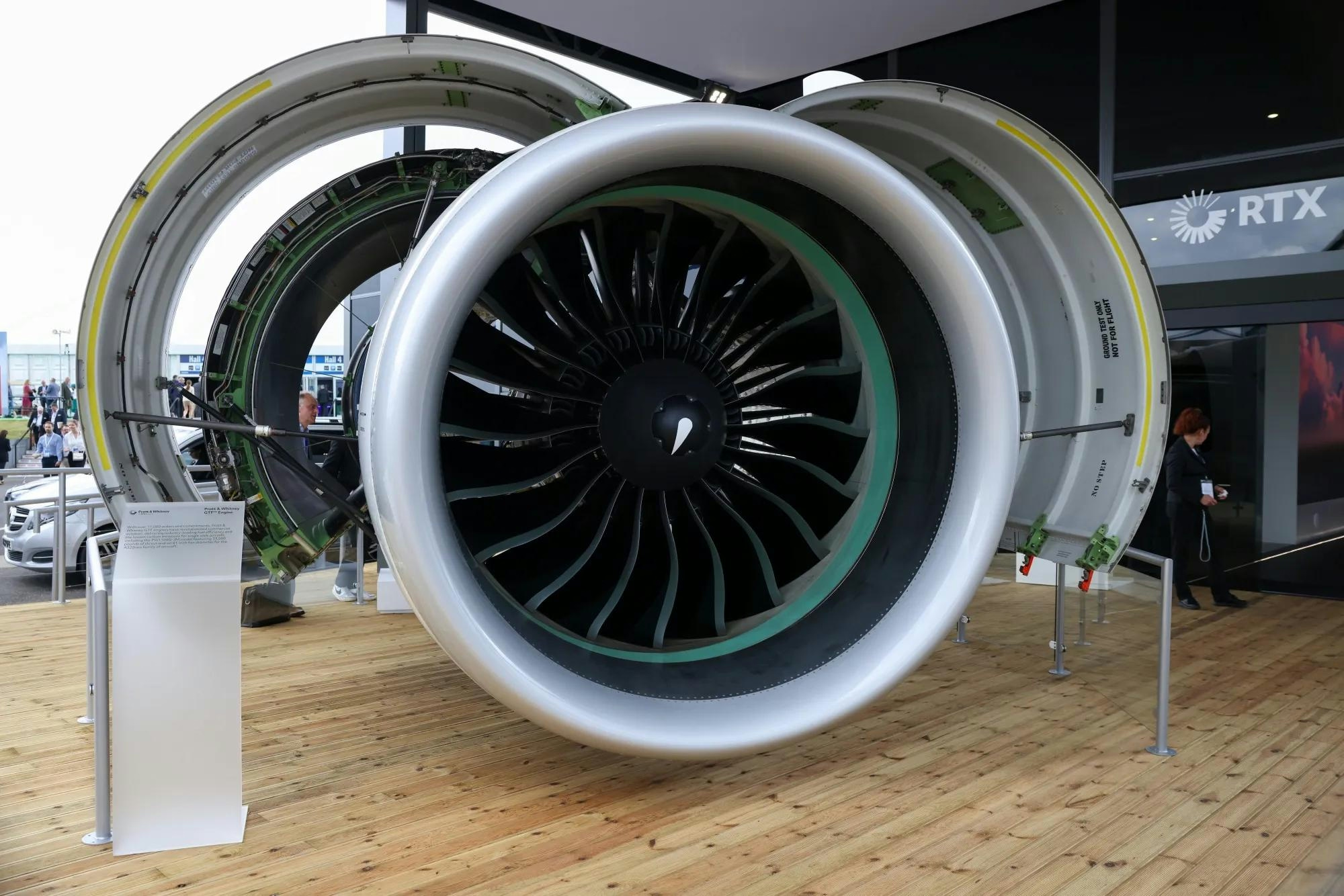
Spirit Signs $140 Million Settlement with Pratt & Whitney Affiliates Amid Industry Challenges
Spirit Aviation Holdings Inc. has reached a settlement valued at up to $140 million with two affiliates of Pratt & Whitney concerning engine-related issues that have led to the grounding of parts of its fleet. The agreement, disclosed in a filing on Wednesday with the U.S. Bankruptcy Court for the Southern District of New York, involves International Aero Engines LLC and IAE International Aero Engines AG. Negotiated prior to Spirit’s Chapter 11 bankruptcy filing, the settlement provides the airline with monthly credits through 2025 to mitigate the operational impact caused by grounded aircraft.
Terms and Implications of the Settlement
Pending court approval, the settlement is expected to establish a sustainable, long-term framework for servicing the aircraft engines essential to Spirit’s post-reorganization optimized fleet. The credits included in the agreement aim to alleviate the financial strain resulting from ongoing engine repairs and maintenance delays, which have disrupted Spirit’s operations. This arrangement offers the airline a measure of financial relief and operational stability as it proceeds through bankruptcy restructuring.
Broader Industry Context and Challenges
Despite the settlement, Spirit continues to face significant challenges amid a turbulent aviation sector. The industry is currently contending with widespread supply chain disruptions, particularly delays in engine repairs that have grounded hundreds of Pratt & Whitney-powered Airbus aircraft worldwide. These disruptions have complicated airlines’ efforts to maintain flight schedules and meet the rising demand for air travel.
Competitive dynamics within the engine manufacturing market are also evolving. Pratt & Whitney’s difficulties have created opportunities for GE Aerospace and Safran’s joint venture, CFM International, which supplies competing engines for Airbus’s A320neo model. As Airbus plans to increase production of the A320neo, CFM International may adjust its supply strategies to protect market share, potentially affecting pricing and availability across the sector.
Spirit’s challenges are further compounded by pressures on its key supplier, Spirit AeroSystems, which continues to report elevated production costs and posted a $724 million loss in the third quarter. Additionally, regulatory scrutiny remains intense. The U.S. Federal Trade Commission has mandated that Boeing divest certain Spirit AeroSystems assets as a condition for their proposed merger, citing concerns over competition.
The settlement with Pratt & Whitney’s affiliates provides Spirit with some financial and operational certainty amid these complexities. However, the airline’s future will depend on its capacity to navigate ongoing supply chain disruptions, respond to intensifying competitive pressures, and comply with evolving regulatory demands in a rapidly shifting aviation environment.

Etihad Airways Suspends Airbus A380 Flights on Key Route

Aditya Birla Group Seeks Approval for Aircraft Leasing in GIFT City

Qatar Airways Highlights Innovation and Connectivity at Arabian Travel Market 2026

Hong Kong's Five-Year Plan Includes Andrew Fan's Aircraft Parts Processing Hub Proposal

ACIA Aero Leasing Delivers ATR72-600 to Air Nostrum

RTX Appoints Jill Albertelli as Head of Pratt & Whitney

TAT Technologies Joins Beyond Aero Hydrogen Aircraft Program

AURAK Study Highlights Barriers to Air Taxi Adoption in Emerging Economies

Xiamen Air Selects Altitude for 787 Maintenance at Heathrow

Etihad and Swissport Extend Global Partnership
