
Zet AI‑inzichten om in gerichte actie

Trending
Categories
Supply Constraints Limit Commercial Aviation Growth in 2026
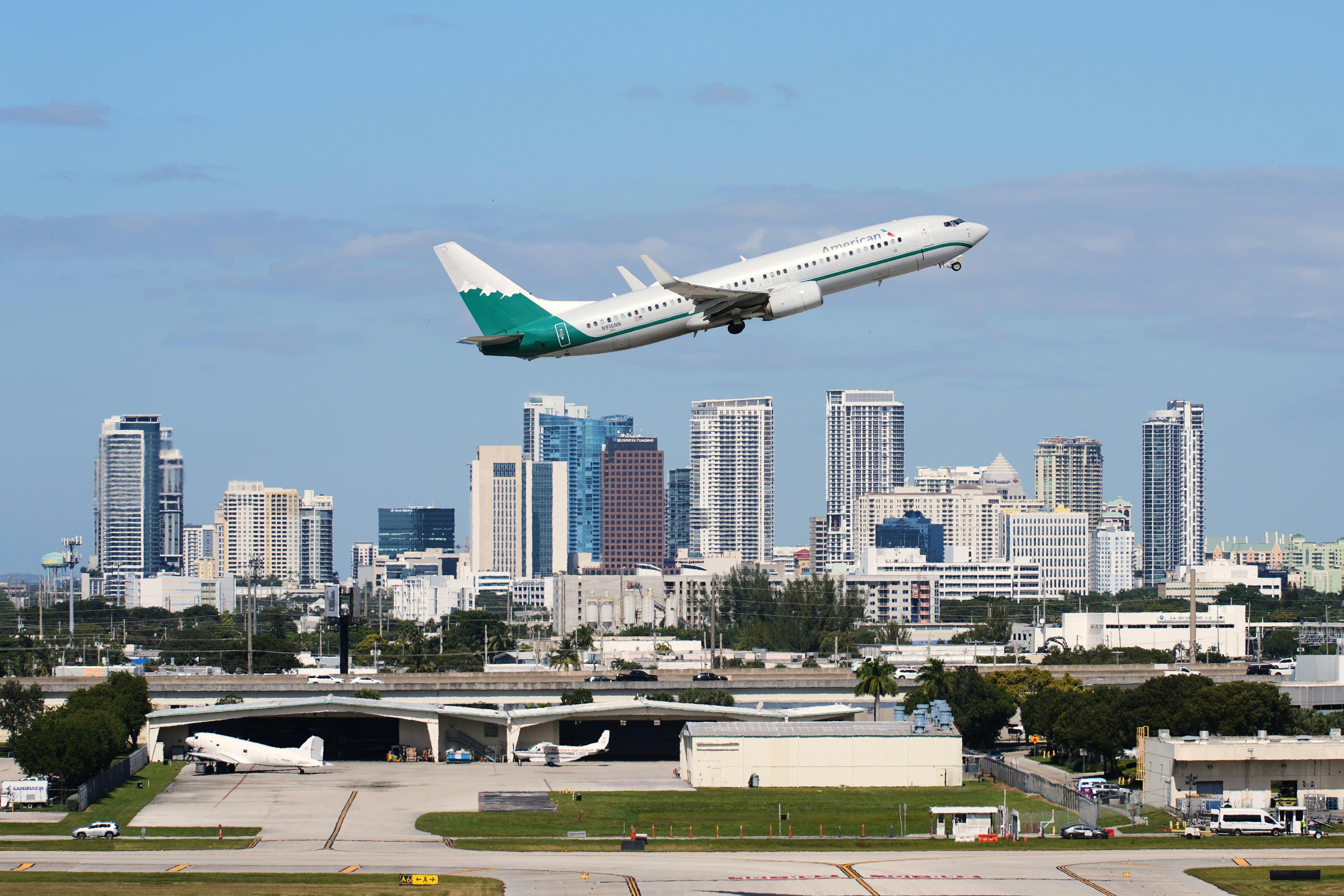
Supply Constraints Limit Commercial Aviation Growth in 2026
The commercial aviation industry is set to enter 2026 with strong demand and stable profitability, yet it faces a significant challenge: growth is increasingly constrained by persistent supply limitations. Global passenger volumes are expected to exceed all previous records, with nearly 5.2 billion travelers projected to fly in 2026, according to the International Air Transport Association (IATA). Despite this robust demand, airlines are struggling to keep pace due to production bottlenecks, reliability issues, and a maintenance, repair, and overhaul (MRO) sector operating at full capacity.
Demand Outpaces Supply Amidst Industry Challenges
Load factors are forecast to reach a record 83.8%, highlighting how fully booked aircraft will be as supply struggles to meet demand. Even in the face of geopolitical uncertainties, regulatory pressures, and ongoing supply chain disruptions, the industry is expected to generate a net profit of $41 billion in 2026. This figure represents a slight increase from the previous year and demonstrates remarkable resilience given recent market turbulence.
However, these optimistic headline numbers conceal a more persistent problem: the global fleet is insufficient to satisfy current and near-term demand. Airlines are grappling with a “missing fleet” of over 5,300 aircraft compared to pre-pandemic delivery projections, as reported by IATA. This shortfall, reflecting several years of lost production, is unlikely to be resolved before 2031 to 2034. The backlog of orders exceeds 17,000 aircraft, equating to nearly 12 years of production at current manufacturing rates.
Manufacturing Bottlenecks and Widebody Aircraft Pressures
Although Airbus and Boeing increased deliveries in 2025—delivering 793 and 600 aircraft respectively—these improvements are tempered by ongoing challenges. Boeing continues to face heightened regulatory scrutiny following recent quality incidents, which restrict its ability to accelerate production. Airbus has encountered supplier-related disruptions and quality inspections that slowed output toward the end of 2025. Consequently, capacity growth is now largely dictated by manufacturers’ production capabilities, with even modest delivery gains insufficient to overcome the structural shortage of aircraft and engines.
Widebody aircraft are experiencing particularly acute supply pressures. IATA Director General Willie Walsh has emphasized persistent supply chain difficulties in widebody freighter manufacturing. Industry analyst Julia Seiermann forecasts continued constraints on widebody airfreight capacity due to the substantial order backlog. Andreas Blanchi of LATAM Cargo anticipates further capacity challenges as the slow pace of new aircraft deliveries forces airlines to extend the operational life of older freighters beyond initial plans.
Business Jets and Long-Term Supply Outlook
The business jet sector is also affected by these supply constraints. Dassault’s recent introduction of the Falcon 10X highlights the market’s growth potential, yet production and completion bottlenecks remain, despite some easing of supply chain pressures.
Looking forward, the aviation titanium alloy market is projected to grow steadily through 2035, driven by the production of next-generation aircraft. This trend suggests a gradual improvement in supply chains over the long term. Nevertheless, for the foreseeable future, the commercial aviation industry’s expansion remains fundamentally limited by production and supply chain challenges—a dynamic unlikely to be resolved before the next decade.

Etihad Airways Suspends Airbus A380 Flights on Key Route

Aditya Birla Group Seeks Approval for Aircraft Leasing in GIFT City

Qatar Airways Highlights Innovation and Connectivity at Arabian Travel Market 2026

Hong Kong's Five-Year Plan Includes Andrew Fan's Aircraft Parts Processing Hub Proposal

ACIA Aero Leasing Delivers ATR72-600 to Air Nostrum

RTX Appoints Jill Albertelli as Head of Pratt & Whitney

TAT Technologies Joins Beyond Aero Hydrogen Aircraft Program

AURAK Study Highlights Barriers to Air Taxi Adoption in Emerging Economies

Xiamen Air Selects Altitude for 787 Maintenance at Heathrow

Etihad and Swissport Extend Global Partnership
