
Zet AI‑inzichten om in gerichte actie

Trending
Categories
TC Sets Aviation and AI Goals for 2026-28
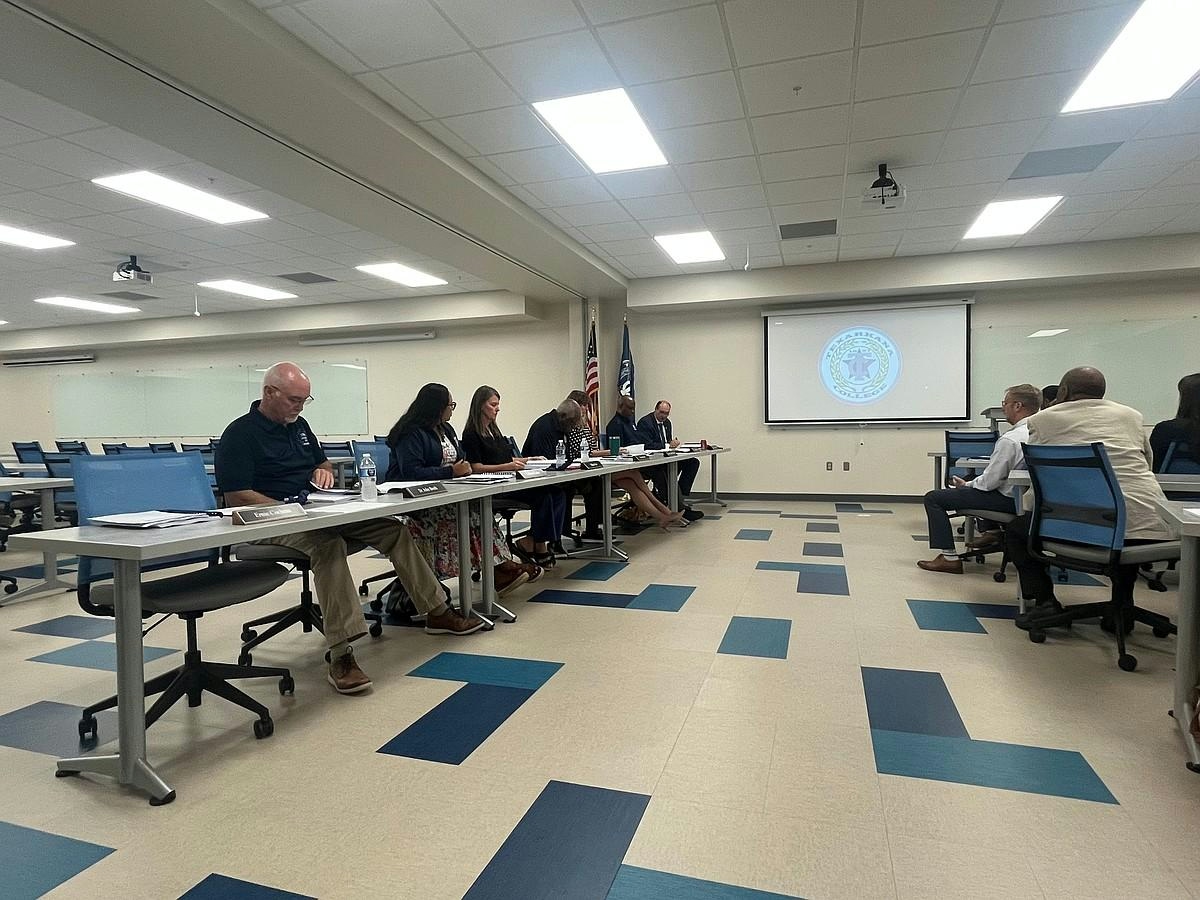
Texarkana College Sets Strategic Priorities for 2026-28 with Focus on Aviation and Artificial Intelligence
Texarkana, Texas — Texarkana College’s Board of Trustees has approved a comprehensive strategic plan for 2026-28 that emphasizes significant advancements in aviation and artificial intelligence (AI). Developed through extensive consultation with students, faculty, staff, and administrators, the plan aims to establish the college as a regional leader in workforce technology while simultaneously enhancing campus infrastructure and academic programs.
Strategic Vision and Key Initiatives
President Jason Smith described the board’s workshop as a constructive process that reinforces the college’s mission and strategic focus. Central to the plan are initiatives to integrate AI into student learning and workforce training, expand aviation and piloting programs, and increase dual credit matriculation from 13% to 18%. The college also intends to invest in campus development and beautification, host a centennial celebration, and grow the college foundation’s assets to $27 million by the end of the plan’s term.
In addition to these priorities, the board approved relocating the growing cosmetology program to the Physical Sciences building. Workforce Dean Brandon Washington noted the program’s recent expansion, including the introduction of a barber license in 2023 and an esthetician license in 2024. The planned renovation will retrofit the 16,000-square-foot facility with salon and shampooing stations, with a budget capped at just over $3 million, creating a dedicated space for cosmetology education.
The board also voted to maintain the college’s property tax rate at $0.109639 per $100 of assessed value, a rate that has remained unchanged for eight years.
Industry Context and Challenges
While the college is optimistic about its ambitious goals, experts highlight several challenges that may impact implementation. Tony Sciarrino, an analyst specializing in aviation and AI trends, pointed to uncertainties such as tariff fluctuations and the difficulty in quantifying returns on AI investments. In the aviation sector, market responses to rising costs have been varied. Some providers, like Flexjet, have absorbed increased expenses for fractional owners, whereas others, including Nicholas Air, have publicly criticized sudden price hikes. These developments reflect broader economic pressures and adjustments within the industry.
In the realm of artificial intelligence, rapid advancements continue to reshape the competitive landscape. The U.S. Air Force’s recent deployment of AI-controlled fighter intercepts exemplifies the accelerating pace of innovation. Such progress underscores the challenges Texarkana College will face as it seeks to incorporate AI into its curriculum and workforce training programs.
As Texarkana College embarks on this strategic path, it confronts a dynamic environment marked by both promising opportunities and significant challenges in advancing its aviation and AI initiatives.

Etihad Airways Suspends Airbus A380 Flights on Key Route

Aditya Birla Group Seeks Approval for Aircraft Leasing in GIFT City

Qatar Airways Highlights Innovation and Connectivity at Arabian Travel Market 2026

Hong Kong's Five-Year Plan Includes Andrew Fan's Aircraft Parts Processing Hub Proposal

ACIA Aero Leasing Delivers ATR72-600 to Air Nostrum

RTX Appoints Jill Albertelli as Head of Pratt & Whitney

TAT Technologies Joins Beyond Aero Hydrogen Aircraft Program

AURAK Study Highlights Barriers to Air Taxi Adoption in Emerging Economies

Xiamen Air Selects Altitude for 787 Maintenance at Heathrow

Etihad and Swissport Extend Global Partnership
