
Zet AI‑inzichten om in gerichte actie

Trending
Categories
Textron secures extension for T-6 trainer support
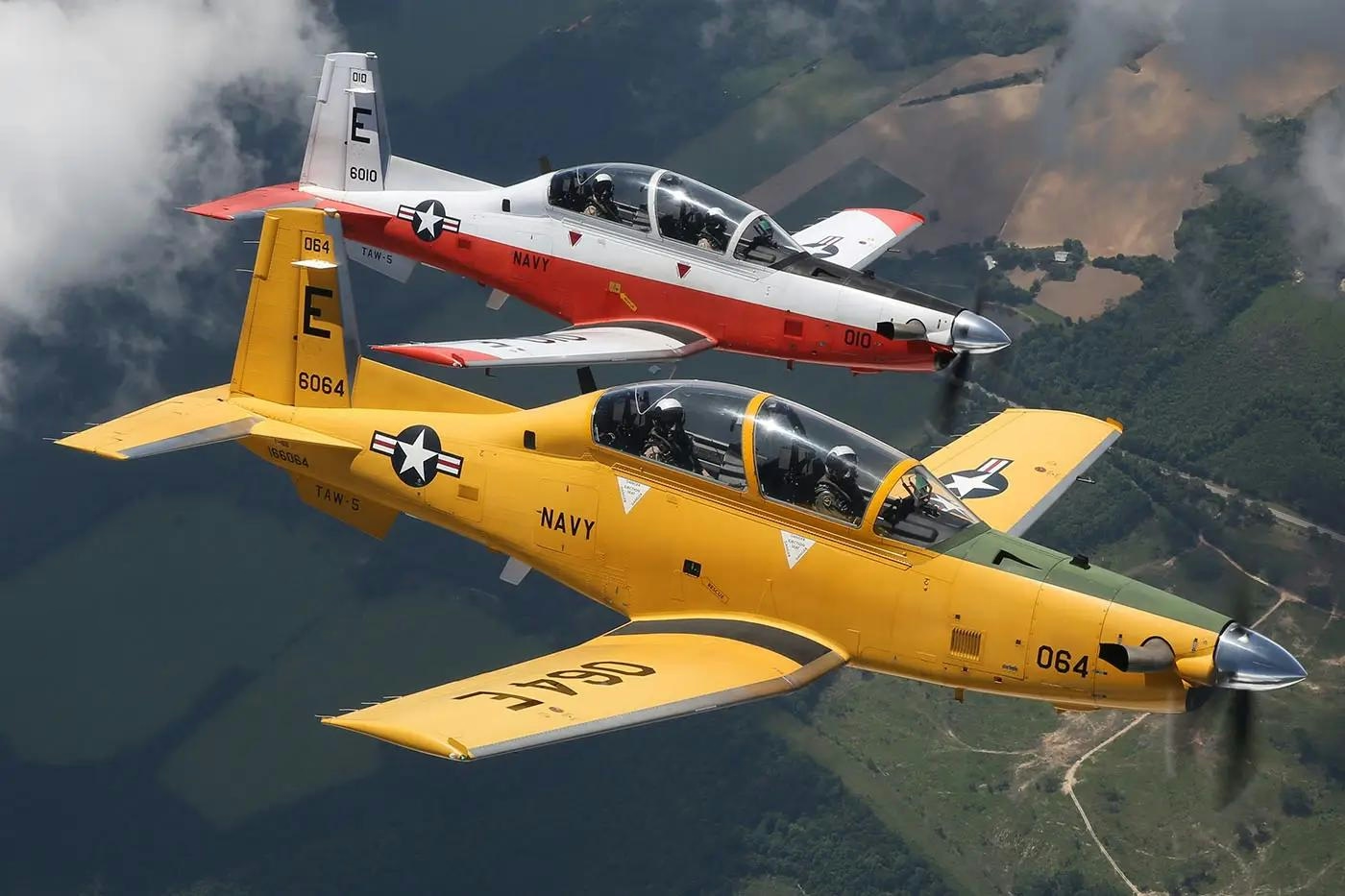
Textron Secures Five-Year Extension for T-6 Trainer Support
Textron Aviation Defense LLC, a subsidiary of Textron Inc., has been awarded a five-year contract extension by the U.S. Government to continue providing Sustaining Engineering and Program Management (SEPM) services for the T-6 trainer fleets operated by the U.S. Air Force, Navy, and Army. Originally granted in 2021, this contract now extends through 2029, ensuring ongoing systems engineering, program oversight, and support for maintenance, repairs, modifications, and structural integrity programs for the T-6A, T-6B, and T-6D aircraft. All related work will be carried out at Textron’s Wichita, Kansas facility.
Travis Tyler, President and CEO of Textron Aviation Defense, highlighted that the contract extension reflects the government’s sustained confidence in Textron’s capabilities. He underscored the company’s dedication to maintaining aircraft availability and ensuring the T-6 fleet remains mission-ready, thereby supporting the training of future military pilots.
The T-6 Texan II: A Leading Military Trainer Amidst Growing Competition
The Beechcraft T-6 Texan II is widely regarded as a premier military training platform, noted for its relatively low acquisition, operating, and sustainment costs. Backed by Textron’s extensive aviation manufacturing heritage—spanning nearly a century and more than 255,000 aircraft delivered worldwide—the T-6 has established a reputation for reliability and efficiency. With an installed base that significantly surpasses its nearest competitor, the T-6 family has served as the world’s leading integrated training system for over two decades. Its active production line, supported by a Manufacturing Readiness Level of 10 and a resilient supply chain, further ensures its long-term viability.
Despite this strong position, Textron faces increasing competition from major defense contractors such as Boeing and Lockheed Martin. Both companies are actively pursuing opportunities to replace the aging T-45 Goshawk with advanced training systems, particularly as the U.S. Navy seeks to modernize its training fleet. This competitive landscape poses challenges for Textron, as Boeing and Lockheed Martin are expected to leverage their existing capabilities and strategic partnerships in bids for the Navy’s forthcoming Undergraduate Jet Training System contract.
Market responses to Textron’s contract extension have been mixed. While some stakeholders view the continuation of support as a positive measure to guarantee uninterrupted pilot training and fleet readiness, others regard it as a temporary solution that may delay broader modernization efforts for the Navy’s training aircraft. As competition intensifies, Textron’s ability to maintain its leadership will depend on its ongoing performance and adaptability within a rapidly evolving defense environment.

Etihad Airways Suspends Airbus A380 Flights on Key Route

Aditya Birla Group Seeks Approval for Aircraft Leasing in GIFT City

Qatar Airways Highlights Innovation and Connectivity at Arabian Travel Market 2026

Hong Kong's Five-Year Plan Includes Andrew Fan's Aircraft Parts Processing Hub Proposal

ACIA Aero Leasing Delivers ATR72-600 to Air Nostrum

RTX Appoints Jill Albertelli as Head of Pratt & Whitney

TAT Technologies Joins Beyond Aero Hydrogen Aircraft Program

AURAK Study Highlights Barriers to Air Taxi Adoption in Emerging Economies

Xiamen Air Selects Altitude for 787 Maintenance at Heathrow

Etihad and Swissport Extend Global Partnership
