
Zet AI‑inzichten om in gerichte actie

Trending
Categories
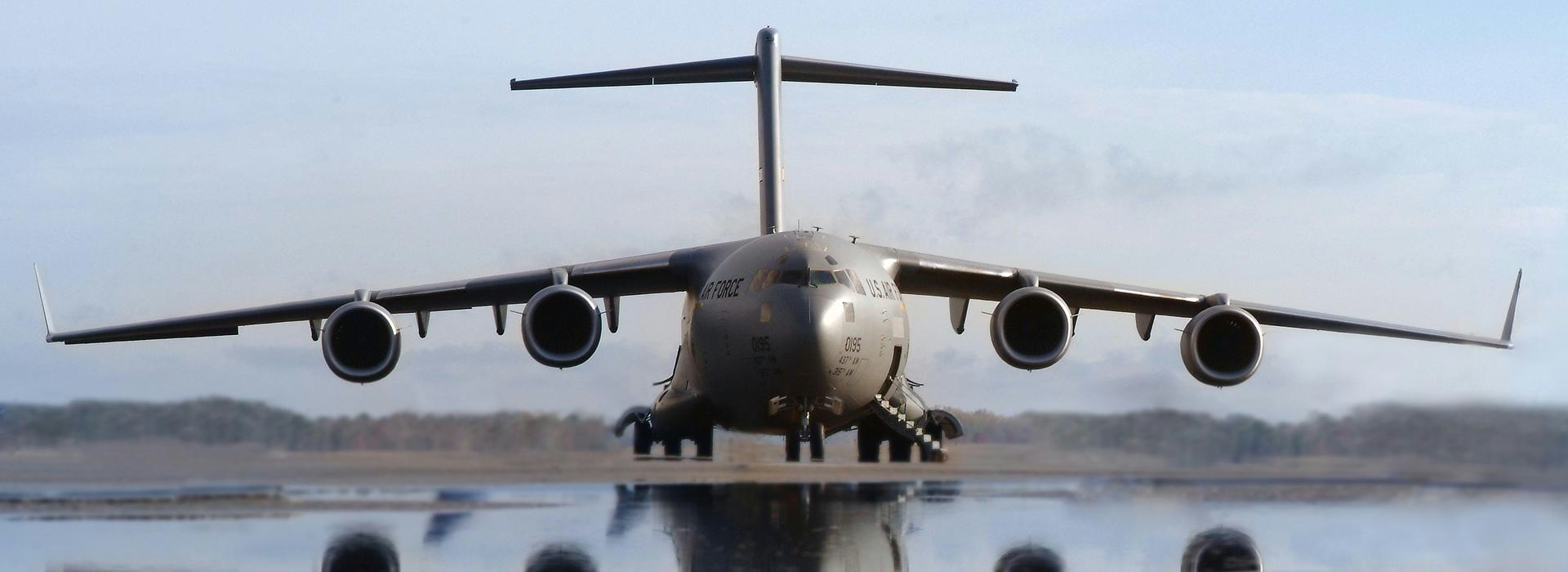
The Aircraft Poised to Replace the Largest Quadjet
The Aircraft Poised to Replace the Largest Quadjet
When Airbus introduced the A380, it sought to transform long-haul air travel with an aircraft of unprecedented size and ambition. Now, as the iconic superjumbo gradually retires from passenger service, the aviation industry faces the question of which aircraft will succeed it as the world’s largest quadjet. The answer is complex: no single model fully replaces the A380. Instead, a new generation of efficient widebody jets is emerging, reshaping airline networks and the future of long-haul travel.
The A380’s Unmatched Legacy
The A380 was launched in 2000 and entered service in 2007 with Singapore Airlines, quickly establishing itself as the largest commercial aircraft ever built. Over 14 years, Airbus delivered 251 A380s to 14 airlines before ending production in 2021. Emirates operates more than half of the global A380 fleet, while other major carriers such as British Airways, Lufthansa, Qantas, and Singapore Airlines also incorporated the aircraft into their fleets.
Technically, the A380 remains a marvel of engineering. Its wingspan approaches 263 feet, and it is powered by four robust engines coupled with advanced fly-by-wire controls. The aircraft can carry over 800 passengers in an all-economy configuration, though most airlines opted for layouts accommodating between 450 and 550 seats. Its immense capacity made it ideal for high-demand routes, but the aircraft’s size also imposed limitations. Specialized airport infrastructure was necessary, and as airlines increasingly prioritized fuel efficiency and route flexibility, demand for such a large aircraft diminished.
The A350: Airbus’s Successor
Within Airbus’s current portfolio, the A350 stands as the closest successor to the A380, albeit smaller in scale. The A350-900 and the larger A350-1000 represent a strategic shift toward efficiency and versatility. Built primarily from composite materials, the A350 achieves significantly lower fuel burn per seat compared to the four-engine A380, appealing to airlines focused on cost optimization and emissions reduction.
However, the transition to the A350 has encountered challenges. Recent supply chain disruptions have delayed deliveries of key aircraft, notably postponing Qantas’s first A350-1000. This delay has impacted the airline’s plans to launch nonstop flights from Australia to London and New York under its ambitious “Project Sunrise” initiative, now deferred to at least April 2027. These setbacks have intensified scrutiny of Airbus’s supply chain management and may prompt airlines to reconsider their fleet strategies or explore alternative aircraft options to mitigate future risks.
The Future of Long-Haul Travel
As the A380 era comes to a close, no single aircraft will assume its role entirely. Instead, a combination of advanced twin-engine widebodies, such as the Airbus A350 and Boeing 787, is redefining long-haul travel by offering airlines greater flexibility and efficiency. While the A380’s operational days are numbered, its legacy continues to influence the evolving strategies and technologies shaping the next chapter of global aviation.

Etihad Airways Suspends Airbus A380 Flights on Key Route

Aditya Birla Group Seeks Approval for Aircraft Leasing in GIFT City

Qatar Airways Highlights Innovation and Connectivity at Arabian Travel Market 2026

Hong Kong's Five-Year Plan Includes Andrew Fan's Aircraft Parts Processing Hub Proposal

ACIA Aero Leasing Delivers ATR72-600 to Air Nostrum

RTX Appoints Jill Albertelli as Head of Pratt & Whitney

TAT Technologies Joins Beyond Aero Hydrogen Aircraft Program

AURAK Study Highlights Barriers to Air Taxi Adoption in Emerging Economies

Xiamen Air Selects Altitude for 787 Maintenance at Heathrow

Etihad and Swissport Extend Global Partnership
