
Zet AI‑inzichten om in gerichte actie

Trending
Categories
The C-2 Greyhound Quickly Stops on Aircraft Carriers While Transporting Jet Engines and Parts
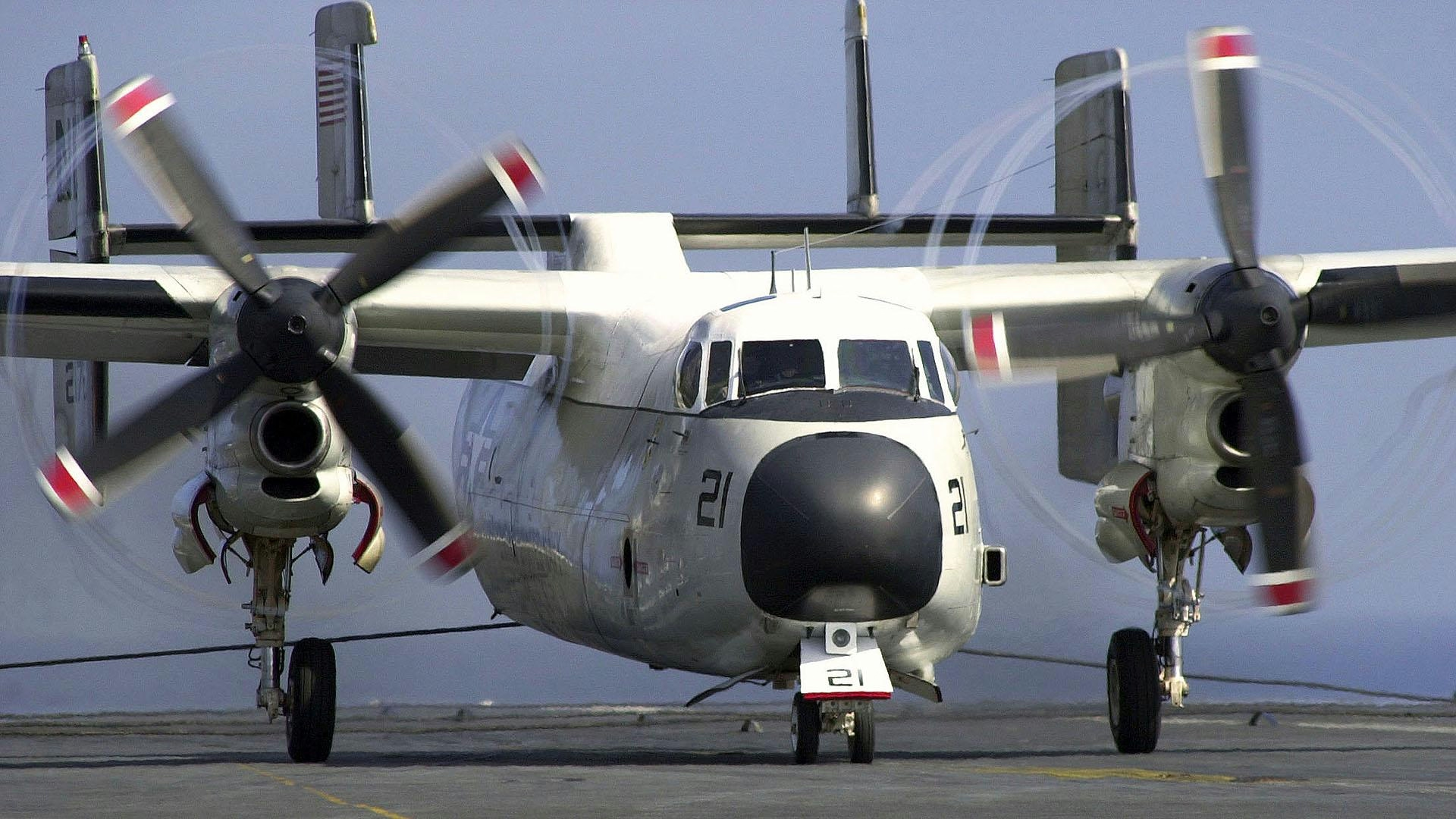
The C-2 Greyhound: Essential Logistics on Aircraft Carriers
Landing a fully loaded cargo aircraft on a moving aircraft carrier represents one of the most demanding challenges in naval aviation. The C-2A Greyhound has met this challenge for over fifty years, serving as the U.S. Navy’s primary Carrier Onboard Delivery (COD) aircraft. Tasked with transporting cargo, mail, spare parts, medical supplies, and personnel between shore bases and carriers at sea, the Greyhound has been a critical component in sustaining carrier strike groups operating far from home ports.
Though it lacks the high-profile status of fighter jets, the Greyhound’s role is indispensable. According to the Naval Air Systems Command (NAVAIR), the aircraft is a high-wing, twin-engine turboprop powered by two Allison T56-A-425 engines. Its mission is straightforward yet demanding: to deliver urgent cargo—including jet engines, critical components, and even medical evacuation patients—between ship and shore within hours. This rapid logistical support ensures that carriers remain operational without the need to return to port. Even routine mail deliveries contribute significantly to crew morale, highlighting the importance of dependable supply lines at sea.
Precision Landings and Specialized Design
The most dramatic phase of the Greyhound’s mission occurs during landing. Approaching the carrier deck at approximately 240 km/h (150 mph), the aircraft must come to a complete stop within seconds. This is achieved through a combination of reinforced landing gear, a tailhook, and a robust airframe engineered to withstand the intense stresses of carrier operations. The arresting gear system halts the plane in just 340 feet, a process comparable to catching a speeding truck with a cable rather than a conventional civilian landing.
The Greyhound’s design reflects its specialized role. Derived from the E-2C Hawkeye, it features a widened fuselage and a rear loading ramp that facilitate the handling of bulky cargo such as jet engines—items that have recently become more valuable than entire aircraft due to shifting market conditions. A cargo cage system secures loads during the rigors of launch and recovery, while folding wings conserve vital deck space aboard carriers.
These capabilities have gained heightened importance amid global supply chain disruptions, intensified by the ongoing conflict in Iran. Delays affecting aerospace manufacturers like Bombardier and General Dynamics have led to shortages that drive up demand and prices for jet engines and parts. Some airlines, including Spirit, now regard their engines as more valuable than their aircraft. This dynamic has forced competitors across the civil aviation sector to adapt strategies to secure essential components and maintain fleet readiness.
As the Navy prepares to replace the Greyhound with the CMV-22B Osprey—a tiltrotor aircraft offering vertical takeoff and extended range—the C-2A’s legacy remains a testament to the logistical ingenuity and resilience necessary to sustain carrier operations amid evolving global challenges.

Etihad Airways Suspends Airbus A380 Flights on Key Route

Aditya Birla Group Seeks Approval for Aircraft Leasing in GIFT City

Qatar Airways Highlights Innovation and Connectivity at Arabian Travel Market 2026

Hong Kong's Five-Year Plan Includes Andrew Fan's Aircraft Parts Processing Hub Proposal

ACIA Aero Leasing Delivers ATR72-600 to Air Nostrum

RTX Appoints Jill Albertelli as Head of Pratt & Whitney

TAT Technologies Joins Beyond Aero Hydrogen Aircraft Program

AURAK Study Highlights Barriers to Air Taxi Adoption in Emerging Economies

Xiamen Air Selects Altitude for 787 Maintenance at Heathrow

Etihad and Swissport Extend Global Partnership
