
Zet AI‑inzichten om in gerichte actie

Trending
Categories
The Challenges of AI Pricing in Aviation
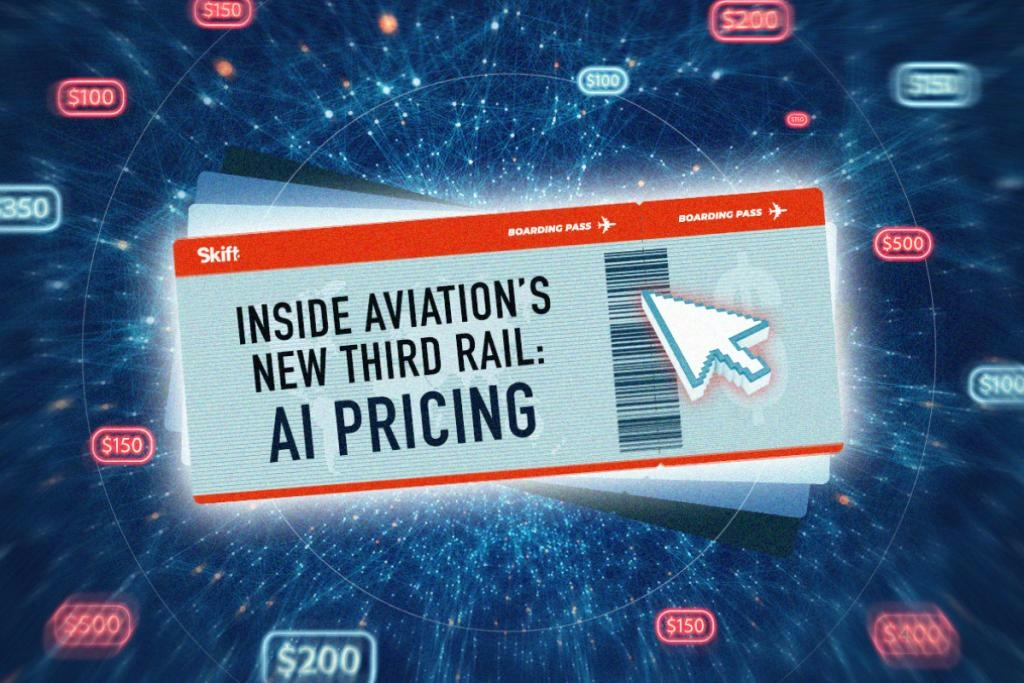
The Challenges of AI Pricing in Aviation
Emerging Concerns Over AI-Driven Fare Setting
The integration of artificial intelligence into airline pricing strategies has sparked significant debate, raising ethical and regulatory questions about fairness and privacy. A hypothetical yet unsettling scenario illustrates these concerns: an individual facing a family emergency might find that airlines, having accessed personal data such as emails, charge exorbitantly higher fares for last-minute flights. Although this practice is not currently widespread, Lina Khan, former chair of the Federal Trade Commission, highlighted such risks in a podcast last July, emphasizing the potential for AI to be used in ways that could exploit vulnerable consumers.
Industry Developments and Regulatory Scrutiny
The aviation industry has increasingly embraced AI technologies for customer service and operational management, but its application in pricing remains contentious. In 2025, Delta Air Lines brought this issue to the forefront when President Glen Hauenstein disclosed during a July earnings call that the airline was partnering with a startup to apply AI algorithms to price approximately 3% of its domestic flights. This revelation prompted immediate concern among lawmakers in Washington, who questioned whether Delta’s approach constituted “surveillance pricing”—the use of personal data to tailor fares on an individual basis.
This controversy reflects broader challenges as airlines adopt AI-driven pricing models. Regulatory agencies are intensifying their oversight, focusing on transparency and consumer protection to prevent discriminatory or exploitative pricing practices. The possibility that airlines might leverage detailed personal information to maximize profits has raised alarms about privacy violations and fairness, leading to calls for clearer regulatory frameworks to govern the ethical use of AI in this context.
Consumer and Industry Perspectives
Reactions among consumers have been mixed. Some travelers express apprehension about the prospect of paying higher prices based on personal circumstances or digital behavior, citing concerns over transparency and the loss of control. Conversely, others recognize the potential advantages of AI in optimizing pricing structures, which could result in more competitive fares for those who book early or demonstrate flexibility.
For airlines, the challenge lies in balancing innovation with ethical responsibility. While AI offers significant opportunities to enhance operational efficiency and respond dynamically to market fluctuations, its deployment in pricing strategies risks undermining consumer trust if not managed with transparency and fairness. Industry competitors are closely monitoring these developments; some are experimenting with similar AI-powered pricing models, while others advocate for the establishment of industry-wide standards to ensure fair competition and protect passenger interests.
As the aviation sector grapples with these issues, the debate over AI pricing highlights a fundamental tension: the need to leverage technological advancements without compromising fairness, privacy, or public confidence. With regulatory scrutiny intensifying and consumer expectations evolving, airlines must navigate this complex landscape carefully to prevent the promise of AI from becoming a liability.

Etihad Airways Suspends Airbus A380 Flights on Key Route

Aditya Birla Group Seeks Approval for Aircraft Leasing in GIFT City

Qatar Airways Highlights Innovation and Connectivity at Arabian Travel Market 2026

Hong Kong's Five-Year Plan Includes Andrew Fan's Aircraft Parts Processing Hub Proposal

ACIA Aero Leasing Delivers ATR72-600 to Air Nostrum

RTX Appoints Jill Albertelli as Head of Pratt & Whitney

TAT Technologies Joins Beyond Aero Hydrogen Aircraft Program

AURAK Study Highlights Barriers to Air Taxi Adoption in Emerging Economies

Xiamen Air Selects Altitude for 787 Maintenance at Heathrow

Etihad and Swissport Extend Global Partnership
