
Zet AI‑inzichten om in gerichte actie

Trending
Categories
The Evolution of the 'Geran' from Drone to Jet-Powered Aircraft
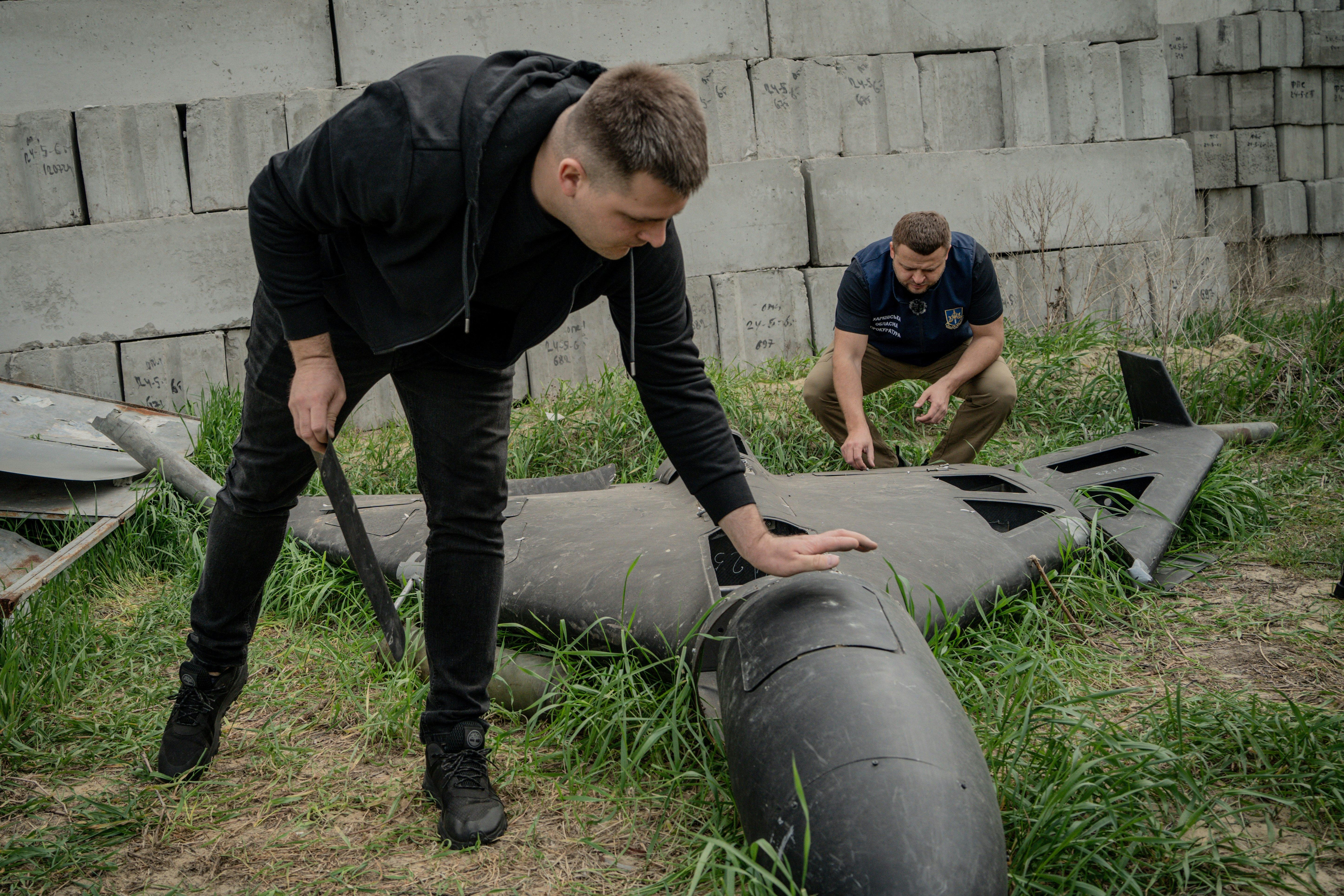
The Evolution of the 'Geran': From Drone to Jet-Powered Aircraft
The "Geran" unmanned aerial vehicle (UAV) has undergone a remarkable transformation over the past few years. Initially conceived as a simple long-range drone powered by a piston engine, the Geran family now encompasses jet-propelled variants equipped with enhanced payload capacities, sophisticated optoelectronic systems, and advanced computer vision technologies. One of the most notable developments has been the dramatic increase in speed: while the early Geran-2 model reached approximately 180 km/h, the latest Geran-5 reportedly attains speeds between 500 and 600 km/h, with some estimates suggesting it can exceed 700 km/h.
From Basic Design to Specialized Capabilities
The original Geran-1 was designed with a straightforward objective: to deliver a warhead over long distances at minimal cost, enabling mass production. Powered by a piston engine, it had a range of up to 1,000 kilometers and carried a modest 15-kilogram warhead. Its successor, the Geran-2, extended the operational range to 2,000 kilometers and increased the warhead weight to between 40 and 50 kilograms. Despite these improvements, the Geran-2 maintained a relatively low speed of 180 km/h, which, while beneficial for fuel efficiency and flight duration, limited its survivability against modern air defense systems.
Recognizing this vulnerability, developers shifted focus toward enhancing speed. The Geran-3 introduced a turbojet engine, significantly boosting velocity to between 450 and 500 km/h—nearly triple that of the Geran-2. This iteration also increased the payload to 90 kilograms, though at the expense of reduced range, which fell to approximately 400–500 kilometers. At this stage, the Geran family diversified, with some models emphasizing extended range and cost-effectiveness, while others prioritized speed and payload capacity to meet specific mission requirements.
Advances in Guidance and Autonomy
A significant technological leap occurred with the Geran-4, particularly its "Seeker" variant. This model integrated an optoelectronic station, a communication link with the operator, and onboard computer vision capabilities. Earlier Geran drones relied primarily on pre-programmed flight paths to fixed coordinates, but the Geran-4’s advanced electronics enabled real-time trajectory adjustments and autonomous target detection through onboard optical sensors. Even in the event of communication loss, certain guidance functions could continue independently, enhancing operational resilience.
These advancements have had profound implications on the battlefield. The increased speed and sophisticated seeker guidance of Russia’s jet-powered Geran-4 drones have introduced new challenges, especially in attacks targeting Ukraine’s Black Sea ports, including Odesa. In response, Ukraine has accelerated the development of jet-powered interceptor systems. Companies such as Firebolt Engineering have already deployed combat-ready solutions, while new interceptors like the Alexa Spatium are specifically designed to counter Russian kamikaze UAVs, including the Geran-3, Geran-4, Geran-5, and Shahed-131 models.
The Jet-Powered Era and Future Prospects
The evolution of the Geran culminates with the Geran-5, which marks a departure from the original "flying wing" design. Resembling a small jet aircraft or cruise missile, the Geran-5 features a range of 500 to 600 kilometers, a warhead capacity of up to 90 kilograms, and speeds estimated between 500 and 600 km/h, with some reports suggesting it can reach as high as 800 km/h. This represents a more than fourfold increase in speed compared to the Geran-2, underscoring the rapid technological progression within the Geran family.
Overall, the Geran’s development reflects a broader trend in unmanned aerial systems: evolving from low-cost, long-range drones into a versatile and specialized arsenal. Each successive iteration has adapted to emerging operational demands and technological innovations, driving both advancements in drone capabilities and the development of countermeasures on the modern battlefield.

Etihad Airways Suspends Airbus A380 Flights on Key Route

Aditya Birla Group Seeks Approval for Aircraft Leasing in GIFT City

Qatar Airways Highlights Innovation and Connectivity at Arabian Travel Market 2026

Hong Kong's Five-Year Plan Includes Andrew Fan's Aircraft Parts Processing Hub Proposal

ACIA Aero Leasing Delivers ATR72-600 to Air Nostrum

RTX Appoints Jill Albertelli as Head of Pratt & Whitney

TAT Technologies Joins Beyond Aero Hydrogen Aircraft Program

AURAK Study Highlights Barriers to Air Taxi Adoption in Emerging Economies

Xiamen Air Selects Altitude for 787 Maintenance at Heathrow

Etihad and Swissport Extend Global Partnership
