
Zet AI‑inzichten om in gerichte actie

Trending
Categories
The Future of Flight: Advancements in the Trent XWB Engine
The Future of Flight: Advancements in the Trent XWB Engine
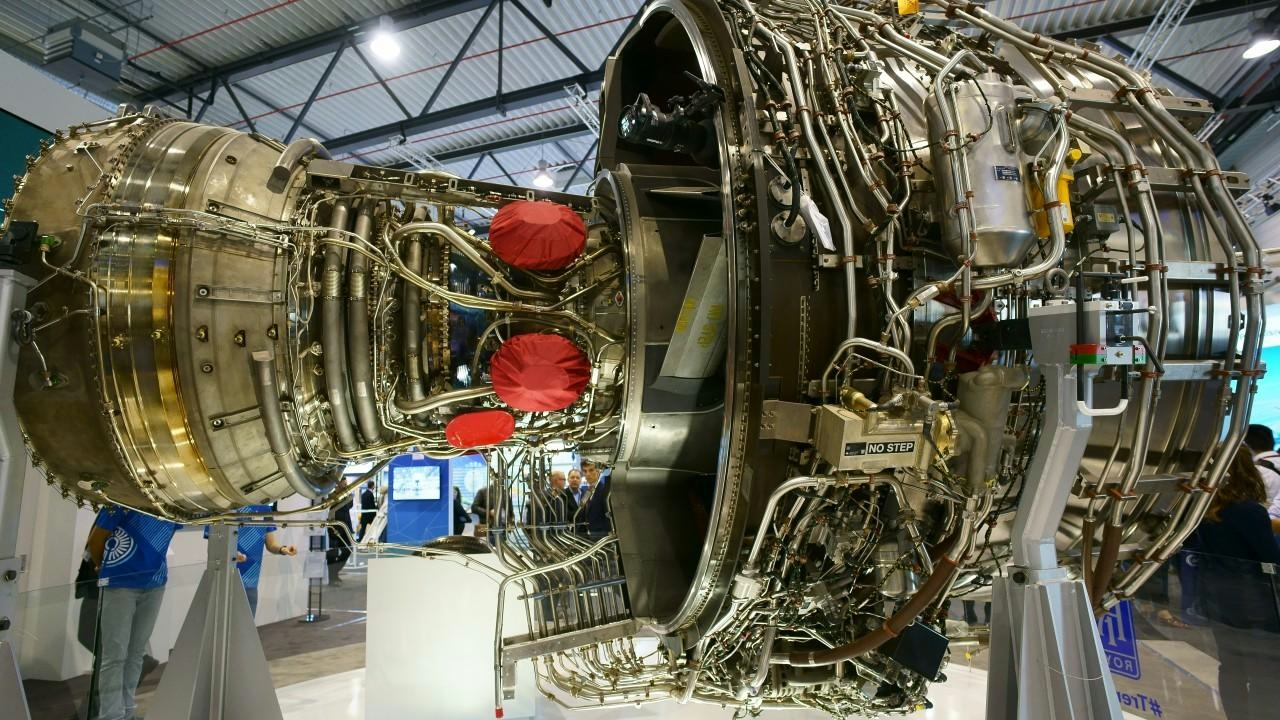
Rolls-Royce continues to advance aviation technology through significant investments aimed at enhancing the performance and reliability of its engines. The Trent XWB, widely regarded as the world’s most efficient large aero engine currently in service, remains central to these efforts. Recent developments have concentrated on doubling the durability of the Trent XWB-97 variant, particularly under the demanding conditions of hot and sandy environments such as those prevalent in the Middle East.
Engineering Excellence and Rigorous Testing
In a recent behind-the-scenes tour with Veritasium, Rolls-Royce’s manufacturing and materials specialists Ben Fifoot and Rumaanah Hoosen provided insight into the company’s Precision Casting Facility and Testbed 80 located in Derby, UK. They detailed the intricate engineering processes involved in creating the wax moulds for turbine blades, as well as the stringent testing protocols designed to replicate real-world environmental stresses. These meticulous procedures are integral to ensuring that the Trent XWB engine continues to deliver exceptional reliability for operators across the globe.
Market Challenges and Renewed Confidence
The pursuit of enhanced durability comes amid a highly competitive and rapidly evolving aerospace market. The Trent XWB’s reputation encountered challenges following durability concerns with earlier engine models, prompting some customers, including LATAM Airlines, to initially transition to rival engines such as GE’s GEnx-1. However, recent technical improvements have helped restore confidence in the Trent XWB. Rolls-Royce has successfully regained LATAM’s 787 contract, and engines operating in the Middle East have returned to pre-conflict performance levels, signaling renewed trust from major carriers.
The competitive environment remains intense. CFM International’s Leap engines continue to perform strongly in the market, while RTX is addressing the grounding of Pratt & Whitney GTF engines by increasing maintenance and production capacity. Within this context, Rolls-Royce’s emphasis on advanced materials, precision engineering, and comprehensive real-world testing is vital to sustaining its leadership in aero engine technology.
As airlines increasingly demand greater efficiency and reliability, the ongoing advancements in the Trent XWB engine highlight Rolls-Royce’s commitment to adapting to the evolving needs of the aviation industry. Through cutting-edge engineering and a proactive approach to market challenges, the company seeks to establish new benchmarks for performance and dependability in commercial aviation.
BBN Airlines Becomes IATA Member

FAA Orders Breeze Airways and Delta to Inspect Airbus A220 Fuel Hoses

Philippine Aviation Navigates Expansion and Costs Amid Fuel Price Volatility

On April 26, 1971, an SR-71 Blackbird Flew Over 15,000 Miles in 10.5 Hours, Limited by Liquid Nitrogen Supply

Boeing 747 Airframe Valued Less Than One Landing Gear Component

The Rear-Fan Engine Behind the Crash of the World's Fastest Airliner

Morphing Aircraft Skin Improves Safety and Fuel Efficiency

BRICS Nations Commit to Enhanced Cooperation on Sustainable Transport and Green Aviation

CFM Turbine Upgrade Doubles LEAP Engine Service Life in Harsh Conditions

CFM Upgrade Doubles LEAP Engine Lifespan in Harsh Climates
