
Zet AI‑inzichten om in gerichte actie

Trending
Categories
The Reason Behind Boeing’s Use of Engine Chevrons on the 737 MAX
The Reason Behind Boeing’s Use of Engine Chevrons on the 737 MAX
Evolution of Noise Regulations and Aircraft Design
Commercial aviation has undergone significant transformation over the decades, shifting from an emphasis on raw performance to a more balanced focus on efficiency, environmental impact, and noise reduction. Early jetliners, while groundbreaking in their ability to provide extended range and speed, were notoriously loud. This noise became a growing concern as airports expanded and nearby communities increasingly demanded quieter operations. In response, regulatory bodies introduced progressively stricter noise limits. During the era of aircraft such as the Boeing 727 and McDonnell Douglas DC-9, compliance with Stage 2 noise standards was sufficient. However, by the late 1970s, Stage 3 regulations imposed tougher maximum noise levels for takeoff, approach, and runway operations. Today, the Federal Aviation Administration (FAA) requires all new jets and large turboprops to meet even more stringent Stage 5 standards.
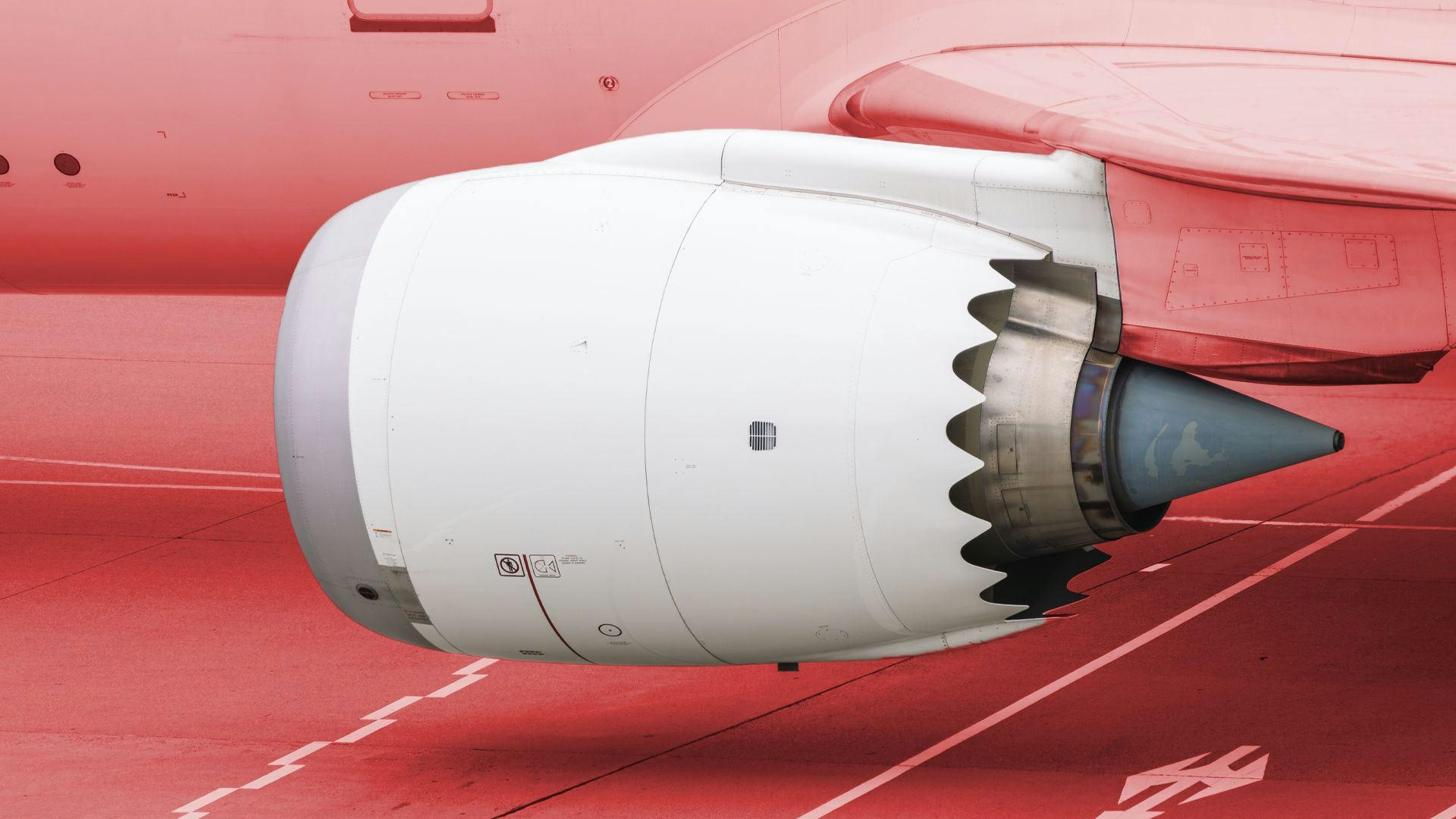
This tightening of noise regulations has spurred innovation in both aircraft and engine design. Among the most notable advancements is the introduction of chevrons—distinctive jagged edges located at the rear of some modern jet engines, including those on the Boeing 737 MAX. These features are not merely aesthetic; they serve a critical function in noise reduction.
The Role of Chevrons in Noise Reduction
The underlying science of chevrons is rooted in the dynamics of jet engine exhaust. Traditional engines generated significant noise as hot exhaust gases exited at high velocity, mixing turbulently with cooler bypass air and the surrounding atmosphere. This interaction created vortices and turbulence, which were primary contributors to the characteristic jet roar. The development of high-bypass ratio engines, which use large fans to move greater volumes of air at lower speeds, had already reduced noise levels by up to 50% compared to earlier designs. Nevertheless, as noise regulations became more stringent, further innovations were necessary.
Chevrons mitigate noise by smoothing the mixing process between hot and cold air streams at the engine’s exhaust. This reduces turbulence and weakens the vortices responsible for much of the noise. By incorporating chevrons, aircraft like the 737 MAX can comply with the latest regulatory requirements without incurring significant weight penalties or compromising engine performance.
Industry Context and Boeing’s Challenges
Boeing’s integration of chevrons on the 737 MAX reflects a broader industry trend toward quieter and more efficient aircraft. However, the MAX program has encountered considerable challenges, including ongoing safety concerns and intensified regulatory scrutiny that have complicated its certification process. Although the FAA has recently approved the 737 MAX 10 for the next stage of certification, several obstacles remain before the aircraft can enter widespread service.
Simultaneously, engine manufacturers such as GE Aerospace have seen increased demand for their LEAP and GE9X engines, driven by Boeing’s ramped-up 737 MAX production and efforts to certify the 777X. Despite these hurdles, Boeing’s renewed emphasis on safety and its so-called “industrial reset” have contributed to stabilizing its position within the global aviation market.
The adoption of chevrons on the 737 MAX thus exemplifies the intersection of regulatory pressure, technological innovation, and market dynamics that continue to shape the future of commercial aviation, enabling the delivery of quieter, more efficient, and safer aircraft for airlines and communities worldwide.

Etihad Airways Suspends Airbus A380 Flights on Key Route

Aditya Birla Group Seeks Approval for Aircraft Leasing in GIFT City

Qatar Airways Highlights Innovation and Connectivity at Arabian Travel Market 2026

Hong Kong's Five-Year Plan Includes Andrew Fan's Aircraft Parts Processing Hub Proposal

ACIA Aero Leasing Delivers ATR72-600 to Air Nostrum

RTX Appoints Jill Albertelli as Head of Pratt & Whitney

TAT Technologies Joins Beyond Aero Hydrogen Aircraft Program

AURAK Study Highlights Barriers to Air Taxi Adoption in Emerging Economies

Xiamen Air Selects Altitude for 787 Maintenance at Heathrow

Etihad and Swissport Extend Global Partnership
