
Zet AI‑inzichten om in gerichte actie

Trending
Categories
The Role of Lubrication in Aircraft Reliability and Performance
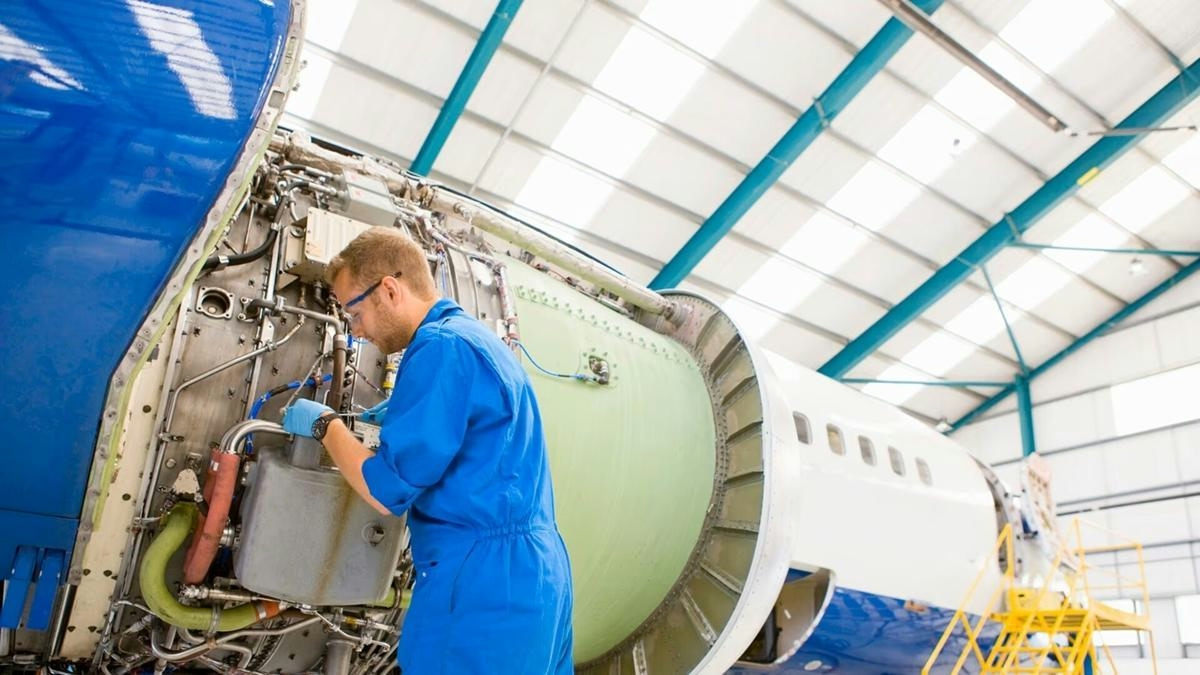
The Role of Lubrication in Aircraft Reliability and Performance
The Expanding Importance of Lubrication in Modern Aviation
As aircraft technology continues to advance, maintenance teams are confronted with increasing challenges to ensure reliability and operational readiness. Innovations such as novel materials, high-efficiency propulsion systems, and sophisticated control architectures have driven significant performance improvements. However, these advancements have also introduced greater complexity in maintenance practices, particularly in the domain of lubrication.
Lubricants extend far beyond their traditional role of reducing friction and wear; they are vital in protecting and optimizing a wide range of aircraft systems. From landing gear and hydraulic assemblies to turbine engines and auxiliary equipment, the selection of appropriate fluids is critical for components to operate reliably under demanding conditions. Modern aviation environments subject lubricants to extreme stresses, including rapid temperature fluctuations, heavy mechanical loads, and prolonged operating cycles. For instance, hydraulic fluids must maintain consistent performance from cold starts at high altitudes to elevated temperatures on the ground, while turbine oils are required to resist thermal degradation and minimize deposits that could compromise system efficiency.
Challenges and Innovations in Lubricant Performance
The complexity of lubrication is further heightened by the necessity for compatibility with a diverse array of metals, elastomers, and composite materials used in contemporary aircraft construction. Maintenance organizations now assess lubricants not only for compliance with technical specifications but also for critical attributes such as oxidation resistance, low-temperature operability, corrosion protection, deposit control, and long-term stability. These factors are essential for prolonging component lifespan, preserving system cleanliness, and ensuring predictable maintenance intervals.
Among the challenges faced are the need to optimize lubrication for engine component longevity and efficiency, manage the intricacies of varying lubrication systems across different aircraft models, and address the environmental impact of lubrication fluids. With sustainability emerging as a paramount concern, the aviation industry is increasingly scrutinizing the ecological footprint of lubricants. This has spurred manufacturers to develop more environmentally friendly formulations, reflecting a broader commitment to reducing the sector’s environmental impact.
Market Trends and Future Directions
Market dynamics are evolving as airlines and Maintenance, Repair, and Overhaul (MRO) organizations place greater emphasis on advanced lubrication technologies and stringent maintenance protocols. This heightened focus is driving competition among suppliers to develop proprietary lubrication solutions aimed at enhancing aircraft performance and reliability. Collaborative efforts between manufacturers and suppliers are accelerating innovation, resulting in new products designed to meet the rigorous demands of next-generation aircraft.
The critical role of lubricant performance is particularly evident in aerospace applications where operating conditions push technology to its limits. Specialty lubricants initially developed for aviation are now employed in spacecraft systems exposed to extreme temperatures and vacuum environments, underscoring the engineering precision required to ensure reliability in mission-critical systems.
As aircraft continue to evolve, lubricant requirements will likewise advance. Emerging materials, propulsion technologies, and increasingly data-driven maintenance practices will necessitate fluids capable of delivering consistent performance across a broader spectrum of conditions. For MRO organizations, lubrication remains a foundational element of reliability. A thorough understanding of how lubricants contribute to equipment performance, coupled with the selection of products tailored to specific applications, will be essential to supporting system availability, protecting critical assets, and maintaining operational readiness throughout the aircraft lifecycle.

Hong Kong's Five-Year Plan Includes Andrew Fan's Aircraft Parts Processing Hub Proposal

ACIA Aero Leasing Delivers ATR72-600 to Air Nostrum

RTX Appoints Jill Albertelli as Head of Pratt & Whitney

TAT Technologies Joins Beyond Aero Hydrogen Aircraft Program

AURAK Study Highlights Barriers to Air Taxi Adoption in Emerging Economies

Xiamen Air Selects Altitude for 787 Maintenance at Heathrow

Etihad and Swissport Extend Global Partnership

Sepehran Airlines B737 Returns to Mashhad After Tyre and Engine Issues

Etihad Deploys Widebody Fleet to Meet Strong Demand

Korean Air Finalizes $36.2 Billion Deal with Boeing
