
Zet AI‑inzichten om in gerichte actie

Trending
Categories
The Unique Design of the McDonnell Douglas MD-11’s Tail Engine
The Unique Design of the McDonnell Douglas MD-11’s Tail Engine
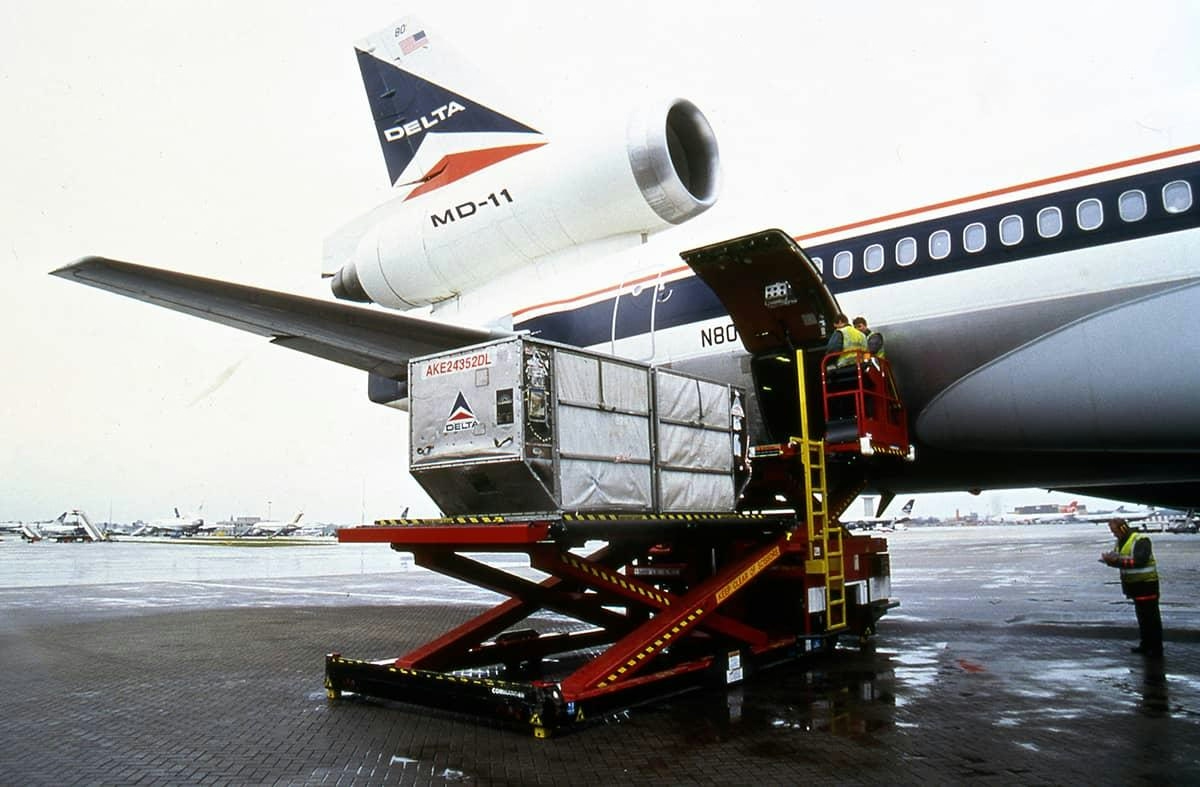
When observing a trijet aircraft on the tarmac, the distinctive tail-mounted center engine invariably captures attention. The McDonnell Douglas MD-11’s tail engine is notable for its unconventional design compared to other trijets such as the Boeing 727 and Lockheed L-1011. While those aircraft employ a pronounced S-duct to channel air to an engine deeply embedded within the tail, the MD-11 adopts a more straightforward, direct-through configuration. The engine is affixed at the base of the vertical stabilizer, resulting in a simpler inlet and ducting system. This design reduces manufacturing complexity and enhances structural integrity in the tail section, setting the MD-11 apart from its contemporaries.
This engineering approach, inherited from the earlier DC-10, enabled McDonnell Douglas to maintain a clean widebody wing and underwing engine arrangement. However, it also introduced operational peculiarities, notably requiring maintenance personnel to access the tail engine by climbing into the tail structure—a less common practice among other trijet models.
The MD-11: A Brief Overview
Developed as a modernization of the DC-10, the MD-11 was designed to extend the commercial viability of the trijet configuration into the 21st century. It featured a stretched fuselage, aerodynamic refinements, and winglets, alongside a two-crew glass cockpit that reduced operating costs while enhancing range and performance. Classified as a medium-to-long range widebody, the MD-11 could accommodate up to 410 passengers in high-density layouts and found extensive use as a freighter.
Although its fuel efficiency was surpassed by newer widebody aircraft, the MD-11 remained valued by cargo operators for its reliability and substantial payload capacity, particularly given their typically lower utilization rates compared to passenger airlines. With a range exceeding 7,000 nautical miles and the ability to cruise at high-subsonic speeds, the MD-11 served global routes for decades. Its dependable performance earned it a loyal following among operators until production ceased following Boeing’s acquisition of McDonnell Douglas.
Design Challenges and the End of an Era
Despite its engineering merits, the MD-11’s tail engine design encountered significant challenges during its operational lifespan. A fatal crash in Louisville brought safety concerns to the forefront, triggering an investigation by the National Transportation Safety Board. The inquiry revealed cracks in components securing the engine to the wing, exposing a critical vulnerability in the aircraft’s design. In response, UPS elected to retire its entire MD-11 fleet, absorbing an after-tax charge of $137 million.
This incident highlighted the inherent risks associated with the MD-11’s distinctive tail engine configuration and hastened the aircraft’s withdrawal from commercial service. The retirement of the MD-11 from major airline fleets marked the close of the trijet era, concluding a significant chapter in the history of widebody aviation design.

Etihad Airways Suspends Airbus A380 Flights on Key Route

Aditya Birla Group Seeks Approval for Aircraft Leasing in GIFT City

Qatar Airways Highlights Innovation and Connectivity at Arabian Travel Market 2026

Hong Kong's Five-Year Plan Includes Andrew Fan's Aircraft Parts Processing Hub Proposal

ACIA Aero Leasing Delivers ATR72-600 to Air Nostrum

RTX Appoints Jill Albertelli as Head of Pratt & Whitney

TAT Technologies Joins Beyond Aero Hydrogen Aircraft Program

AURAK Study Highlights Barriers to Air Taxi Adoption in Emerging Economies

Xiamen Air Selects Altitude for 787 Maintenance at Heathrow

Etihad and Swissport Extend Global Partnership
