
Zet AI‑inzichten om in gerichte actie

Trending
Categories
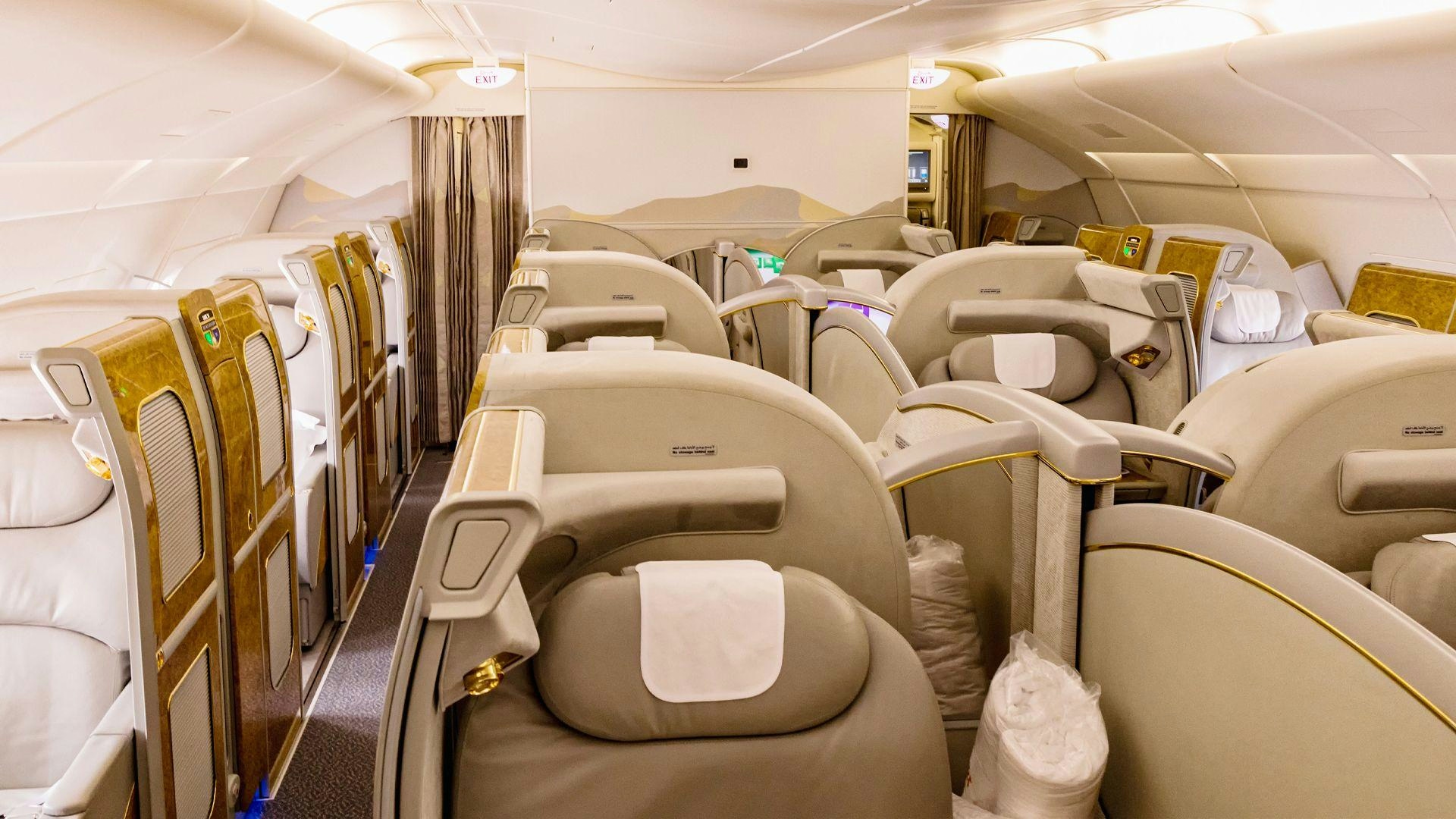
Trade-Offs in Emirates’ Redesigned Airbus A380s
Trade-Offs in Emirates’ Redesigned Airbus A380s
On May 20, 2026, Emirates inaugurated its newly reconfigured Airbus A380 on a commercial flight from Dubai International Airport (DXB) to Birmingham International Airport (BHX). This event marked a pivotal moment in the airline’s approach to cabin design and fleet management. Far from a routine operation, the flight symbolized a strategic shift as Emirates introduced a premium economy cabin and adjusted its seating configuration to better align with evolving market demands.
From High-Density to Premium Comfort
Historically, Emirates’ A380s were optimized for maximum passenger capacity, configured as high-density “people-movers” on popular leisure routes. The previous two-class layout accommodated 615 seats, with 557 in economy class, enabling the airline to maintain highly competitive seat-mile costs on key routes between Dubai and major European and UK destinations. However, changing travel preferences have prompted Emirates to reconsider this model. Modern travelers increasingly prioritize comfort and are willing to pay a premium for enhanced cabin experiences, driving sustained demand for upgraded seating options.
The reconfiguration of airframe A6-EUX, the first of 15 A380s scheduled for this transformation, embodies this strategic realignment. The total seat count has been reduced from 615 to 569, reflecting the introduction of a dedicated premium economy section on the upper deck alongside an expanded business class, which now offers 76 seats—an increase of 18. The new premium economy cabin comprises 56 seats, directly addressing the growing market for mid-tier comfort. Although this adjustment reduces overall capacity, it is expected to generate higher revenue per available seat-mile, a critical advantage at slot-constrained airports where increasing flight frequency is not feasible.
Engineering Challenges and Industry Implications
The retrofit of the world’s largest passenger aircraft presented significant engineering challenges. Emirates Engineering teams undertook the complex task of removing entire rows of economy seats—eliminating 120 seats in the initial conversion—and reconstructing the aircraft’s interior infrastructure to accommodate the new cabin classes. This extensive overhaul forms part of what Emirates describes as the largest cabin retrofit program in commercial aviation history. The initiative responds not only to shifting consumer preferences but also to global supply chain delays that have hindered the delivery of next-generation widebody aircraft.
Emirates aims to complete the reconfiguration of all 15 targeted A380s by the end of the year. The airline’s investment in premium economy is positioned to strengthen its competitive standing in this expanding market segment and may influence broader industry trends. While the long-term effects on the market and competitor strategies remain uncertain, Emirates’ move highlights a growing emphasis within the aviation sector on enhancing passenger experience and financial efficiency rather than maximizing capacity alone.

Etihad Airways Suspends Airbus A380 Flights on Key Route

Aditya Birla Group Seeks Approval for Aircraft Leasing in GIFT City

Qatar Airways Highlights Innovation and Connectivity at Arabian Travel Market 2026

Hong Kong's Five-Year Plan Includes Andrew Fan's Aircraft Parts Processing Hub Proposal

ACIA Aero Leasing Delivers ATR72-600 to Air Nostrum

RTX Appoints Jill Albertelli as Head of Pratt & Whitney

TAT Technologies Joins Beyond Aero Hydrogen Aircraft Program

AURAK Study Highlights Barriers to Air Taxi Adoption in Emerging Economies

Xiamen Air Selects Altitude for 787 Maintenance at Heathrow

Etihad and Swissport Extend Global Partnership
