Afbeelding

Zet AI‑inzichten om in gerichte actie

Meld je vandaag nog aan voor de AeroGenie-wachtlijst!

Trending

Categories

UK Airlines Use AI and WhatsApp to Reduce Passenger Queues
February 25, 2026By ePlane AI
UK Airlines Use AI and WhatsApp to Reduce Passenger Queues
0
0
AI In Aviation
Passenger Experience
Digital Messaging Platforms

UK Airlines Harness AI and WhatsApp to Alleviate Passenger Queues

Digital Messaging as a Strategic Response to Staffing Challenges

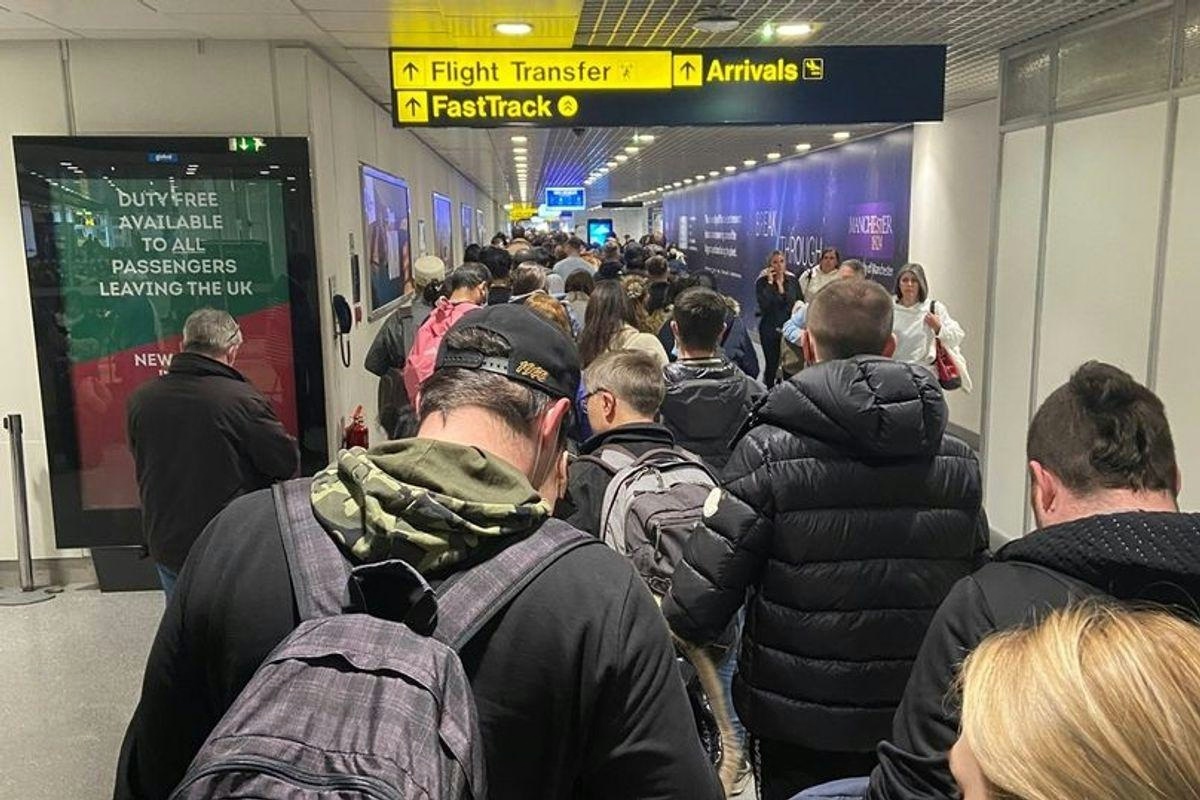
In response to persistent staffing shortages and anticipated border delays, UK airlines and travel operators are increasingly turning to advanced artificial intelligence (AI) and messaging platforms such as WhatsApp to manage passenger flows and reduce airport queues. These digital solutions are being implemented in preparation for longer immigration processing times associated with the forthcoming EU Entry/Exit System, as well as ongoing recruitment difficulties following Brexit, according to communications provider Infobip.

Airlines have intensified their use of proactive digital messaging to keep passengers informed well before they arrive at the airport. Automated notifications now extend beyond simple flight updates to include reminders about necessary documentation, live flight status, and the handling of more complex requests such as rebooking and baggage tracking. This approach is designed to divert routine inquiries away from airport counters and call centres, thereby allowing staff to concentrate on issues requiring direct, in-person assistance.

WhatsApp has emerged as a particularly effective channel for real-time, two-way communication with UK travellers. Virgin Atlantic, in collaboration with Infobip, piloted a WhatsApp chatbot at London Heathrow, which led to an 11% increase in online check-in rates. This rise in online check-ins contributes to smoother airport operations by reducing congestion at check-in counters and shortening queues during peak travel times. The chatbot also provides real-time flight updates, encouraging passengers to act promptly and navigate the airport more efficiently. Simon Langthorne, Head of CRM at Virgin Atlantic, emphasized that empowering customers with convenient, real-time notifications via WhatsApp not only enhances the travel experience but also optimizes airport operations.

Integrating AI: Benefits and Limitations

The deployment of agentic AI—systems capable of autonomously performing actions such as changing flights or providing baggage status updates—reflects growing consumer demand for swift and seamless service. Airlines are experimenting with digital service models that lessen dependence on airport staff for routine requests, a strategy driven by rising passenger volumes and the high costs of maintaining large operational teams.

Nonetheless, the integration of AI at scale presents significant challenges. Industry stakeholders express concerns regarding the maturity of AI technologies and their ability to make sound independent decisions in complex or exceptional circumstances. Successful implementation requires robust, enterprise-grade infrastructure and seamless integration with existing airline systems. Consequently, the effectiveness of AI in real-world operations has come under increased scrutiny.

Responses among competitors vary: some airlines are accelerating their AI initiatives to gain a competitive edge, while others adopt a more cautious stance, underscoring the necessity of human oversight in critical decision-making processes.

Enhancing Revenue and Passenger Service Through Conversational Channels

Beyond operational efficiencies, conversational platforms like WhatsApp are also being leveraged to support sales processes, enabling passengers to transition from enquiry to booking confirmation within a single chat interface. This integrated approach addresses rising customer expectations for fast and convenient service, particularly during periods of disruption.

James Stokes, Head of Enterprise for the UK and Nordics at Infobip, encapsulated the sector’s predicament by noting the immense pressure on the travel industry to deliver smooth passenger experiences despite systemic challenges.

As UK airlines continue to explore the potential of AI and messaging technologies, striking the right balance between automation and human judgment remains a central concern, with the overarching aim of enhancing both operational efficiency and the overall passenger journey.

More news
Israir Receives FAA Approval for Tel Aviv–New York A330 Flights

Israir Receives FAA Approval for Tel Aviv–New York A330 Flights

Israir Receives FAA Approval for Tel Aviv–New York A330 Flights Israir has secured approval from the US Federal Aviation Administration (FAA) to operate scheduled flights between Tel Aviv and New York, marking a significant expansion beyond its traditional leisure and regional routes. The Israeli carrier plans to deploy Airbus A330 widebody aircraft on this transatlantic service, representing a notable upgrade from its usual narrowbody Airbus A320-family jets. Regulatory Clearance and Operational Plans With the FAA’s authorization, Israir is now permitted to conduct commercial passenger operations within US airspace and airports. The approval follows rigorous compliance with the FAA’s foreign carrier requirements, which encompass safety oversight, operational procedures, and aircraft certification. This clearance enables Israir to proceed with scheduling flights, initiating ticket sales, and securing airport slots at its chosen US gateway. Although the airline has confirmed New York as its destination, the specific airport and launch date remain contingent on slot availability and final commercial arrangements. John F. Kennedy International Airport currently handles the majority of nonstop traffic between Israel and the New York metropolitan area, making it a likely candidate. Strategic Shift with Widebody Aircraft The introduction of the Airbus A330 signals a strategic shift for Israir. The widebody aircraft typically accommodates between 250 and 300 passengers in a two-class configuration and offers the necessary range for the approximately 5,700-mile journey between Ben Gurion Airport and New York. Additionally, the A330’s larger cargo capacity presents an opportunity for Israir to capitalize on steady demand for belly freight along this route. Passengers can anticipate a markedly different onboard experience compared to Israir’s short-haul flights, with long-haul service generally featuring enhanced business class seating, expanded meal options, and inflight entertainment, although the airline has yet to disclose specific cabin details. Market Context and Competitive Landscape Israir’s entry into the Tel Aviv–New York market occurs amid heightened competition and evolving dynamics. The route is currently served by Israeli carriers El Al and Arkia, alongside several US and European airlines that connect the two cities via their hubs. Major international carriers such as United Airlines, KLM, and Lufthansa are also expanding their services to Tel Aviv. Notably, United plans to resume two daily flights from Newark to Tel Aviv starting September 8, intensifying competition on US–Israel routes. Market responses indicate that Israir anticipates increased business, with ticket sales expected to commence shortly. However, the airline faces challenges from established competitors who may respond with increased capacity or promotional fares. The Tel Aviv–New York corridor has experienced significant disruption since the regional conflict erupted in October 2023, leading several foreign carriers to temporarily suspend or reduce service. During this period, Israeli airlines absorbed a larger share of demand, with El Al reporting record load factors and profitability. As foreign airlines gradually resume operations, the competitive environment is poised to become more dynamic. Israir’s FAA approval positions the airline as a new contender on one of Israel’s most important long-haul routes, with the potential to influence pricing, availability, and service offerings for travelers between Tel Aviv and New York.
Japan Approves Air Taxi Routes with Osaka Vertiport and Tokyo Pilot Program

Japan Approves Air Taxi Routes with Osaka Vertiport and Tokyo Pilot Program

Japan Advances Air Taxi Operations with Osaka Vertiport and Tokyo Pilot Program Japan has made a pivotal advancement in the commercial deployment of electric vertical take-off and landing (eVTOL) aircraft by formally accepting Archer Aviation’s type certification application for its Midnight eVTOL model on August 21, 2026. This development establishes Japan as the world’s most commercially prepared market for eVTOL operations, boasting a regulatory framework that now encompasses five major international manufacturers. Expanding eVTOL Certification Landscape The announcement, issued by Japan’s Civil Aviation Bureau (JCAB) under the Ministry of Land, Infrastructure, Transport and Tourism (MLIT), places Archer’s Midnight M001 as the fifth program in the country’s eVTOL certification queue. The current lineup includes Japan’s own SkyDrive SD-05, accepted in October 2021; the United States’ Joby S4, accepted in October 2022; Germany’s Volocopter VC2-1, accepted in February 2023; the United Kingdom’s Vertical Aerospace VX4, accepted in March 2023; and now Archer’s Midnight M001 from the United States. This diverse assembly of manufacturers distinguishes Japan from other nations, none of which currently have five distinct eVTOL programs under active type certification review. While China’s Civil Aviation Administration (CAAC) has issued the world’s first eVTOL type certificate to EHang’s pilotless EH216-S, its regulatory pipeline lacks the international diversity seen in Japan. Similarly, the United States Federal Aviation Administration (FAA) and the European Union Aviation Safety Agency (EASA) are reviewing eVTOL programs, but Japan’s combination of multiple manufacturers and robust commercial infrastructure—including signed vertiport leases, city government agreements, and operator joint ventures—sets it apart. Notably, these advancements have been achieved prior to the commencement of any revenue-generating passenger flights worldwide. Regulatory Progress and Industry Challenges Japan’s approval of designated air taxi routes, featuring a vertiport in Osaka and a pilot program in Tokyo, underscores the country’s growing momentum in the advanced air mobility sector. Despite this progress, the rollout faces considerable challenges. Regulatory complexities, technological integration, and public acceptance remain significant hurdles. The industry is concurrently developing a comprehensive digital traffic management system to ensure the safe and efficient operation of air taxis within urban airspace. Market response to Japan’s regulatory strides has been largely positive, attracting heightened interest from investors and stakeholders. Competitors such as Wisk Aero and other eVTOL developers are expected to accelerate their aircraft and infrastructure initiatives to establish a presence in the rapidly evolving Japanese market. It is important to emphasize that JCAB’s acceptance of Archer’s application marks the commencement rather than the conclusion of the certification process. The granting of a type certificate requires exhaustive evaluation of safety protocols, environmental standards, and extensive flight testing. Archer’s Midnight will undergo review under the Implementation Procedures for Airworthiness (IPA) established by the US-Japan Bilateral Aviation Safety Agreement. This arrangement permits JCAB to validate aircraft already assessed by the FAA, potentially expediting certification compared to independent national processes. The FAA and JCAB formalized their collaboration on advanced air mobility in October 2022, enabling parallel reviews of eVTOL programs. Nonetheless, the timeline for commercial air taxi operations in Osaka and Tokyo remains closely linked to the progress of FAA certification in the United States. As Japan continues to develop its regulatory and operational framework, the nation is positioned to become a global leader in urban air mobility, contingent upon successfully addressing the remaining regulatory, technological, and societal challenges.
Fly Alliance Sells Parts Business to Former CEO

Fly Alliance Sells Parts Business to Former CEO

Fly Alliance Divests Parts Business to Former CEO Amid Strategic Refocus Fly Alliance, headquartered in Wilmington New Castle, has completed the sale of its entire aircraft parts inventory and warehouse operations to Altitude Parts, a company led by former Fly Alliance CEO Kevin Wargo. This transaction signals a deliberate strategic shift for Fly Alliance as it concentrates on its core aviation services, including charter flights, jet cards, fractional ownership, and maintenance. Details of the Transaction and Operational Transition Christopher Tasca, CEO of Fly Alliance, explained that the company is prioritizing its flying-related services, distinguishing them from the parts business, which operates under a different model. The sale, initiated in August following discussions between Tasca and Wargo, includes Fly Alliance’s Orlando facility, which holds assets valued at over USD 150 million. These assets comprise 156 disassembled aircraft and more than 42,000 individual parts. Manny Perez, formerly head of Fly Alliance’s parts division, will assume the role of president at Altitude Parts. The acquiring company is owned by Cove Capital Investments, co-founded by Wargo and Samantha Nunez in September. Kevin Wargo reported that the parts business generated USD 60 million in sales in 2025. He also noted plans to disassemble six additional aircraft in August, including a Falcon 50, three Gulfstream IV-SPs, a Hawker 400XP, and a Hawker 4000. In July, Fly Alliance informed the Federal Aviation Administration that 20 aircraft had been dismantled and scrapped, encompassing models such as Learjet 45s, Citation Excels, Falcon 50s, Falcon 2000s, and various Hawker jets, all of which required deregistration. Industry Context and Market Implications The divestiture occurs amid increasing regulatory scrutiny and evolving market dynamics within the aerospace sector. Industry analysts suggest that the sale of Fly Alliance’s parts business to its former CEO may attract regulatory attention and provoke competitive responses. Rivals could attempt to capture market share or invest in similar parts operations, potentially intensifying competition. The broader aerospace market has already demonstrated sensitivity to such developments; for instance, Honeywell Aerospace experienced a significant stock price decline following its first standalone quarterly report, reflecting investor caution amid sectoral changes. Cove Capital Investments, the owner of Altitude Parts, also holds interests in Sky Travel, a charter and aircraft management company currently operating a Hawker 400XP under its Part 135 certificate, with a total fleet of 12 aircraft under management. Wargo indicated that six Hawker 400XPs will be available for charter by the end of 2026. While Sky Travel’s charter fleet is slated for expansion, Wargo emphasized that Cove Capital’s primary focus remains on aircraft parts and refurbishment projects, including paint, interior work, maintenance, and resale. He further indicated that additional strategic acquisitions are planned as part of the company’s broader growth strategy. As Fly Alliance shifts away from the parts business, this move is poised to alter competitive dynamics within the aerospace industry. The interplay of regulatory oversight and market reactions will likely shape the sector’s trajectory in the months ahead.
Google Acquired 100 Million Spirit Airlines Emails to Train AI for $10 Million

Google Acquired 100 Million Spirit Airlines Emails to Train AI for $10 Million

Google Acquires Spirit Airlines’ Corporate Data for AI Training in $10 Million Bankruptcy Auction Google has secured a vast trove of digital assets from the bankrupt Spirit Airlines, including approximately 100 million internal emails and 500 million Microsoft Teams items, in a $10 million deal. The acquisition, finalized through a competitive bankruptcy auction, marks a significant development in the valuation and utilization of corporate data within the rapidly evolving artificial intelligence landscape. Scope and Purpose of the Acquisition The assets obtained by Google extend well beyond a conventional email archive. The purchase encompasses around 100 million emails from roughly 80,000 Spirit Airlines accounts, alongside approximately 500 million Microsoft Teams chats and related communications. Additionally, Google acquired nearly 17 million files stored on OneDrive and SharePoint, as well as payroll and crew scheduling records, customer service call recordings, internal software code, financial audits, and fraud reports. Importantly, the transaction explicitly excludes passenger personally identifiable information (PII) and loyalty program data. A spokesperson for Google characterized the acquisition as the procurement of "part of an enterprise dataset" intended to enhance the company’s AI models and product offerings. By integrating this extensive dataset, Google aims to refine its large language models with authentic corporate workflows, industry-specific terminology, and complex organizational communications. This data is expected to improve the functionality of AI-driven tools within enterprise environments such as Gmail, Google Docs, and Workspace. Privacy Concerns and Data Scrubbing Measures Prior to transfer, the dataset will undergo rigorous deidentification by a third party to remove any personally identifiable information, according to court documents and statements from Google. The company has emphasized that it will not receive any personal data directly, underscoring the commitment to privacy safeguards. Despite these assurances, privacy advocates and labor organizations have expressed significant concerns. They warn that even anonymized data—comprising decades of human resources records, payroll information, and internal communications—poses risks of reidentification when processed by sophisticated AI systems. The flight attendants’ union has formally objected to the sale, highlighting the potential for sensitive information to be reconstructed, a risk underscored by previous incidents involving supposedly anonymized datasets. Market and Regulatory Implications Google’s $10 million bid establishes a new public benchmark for the value of large-scale enterprise data in the AI sector. The auction attracted interest from other AI-focused companies, including the hiring startup Mercor and Micro1, reflecting a burgeoning market for acquiring data from bankrupt firms to bolster machine learning capabilities. A critical factor in the court’s evaluation was the method of data deidentification—whether conducted by Google or an independent third party. The transaction has ignited broader discussions regarding data privacy, regulatory oversight, and the rights of employees whose communications and records are repurposed for AI training. Industry competitors and privacy advocates are expected to scrutinize the deal closely, and it may face additional regulatory review. Final approval rests with Judge Sean H. Lane of the Southern District of New York, who must determine the adequacy of protections for individuals whose information is included, even in anonymized form. As AI companies increasingly compete to acquire expansive datasets, the Spirit Airlines sale highlights both the opportunities and unresolved challenges inherent in leveraging real-world corporate data to advance artificial intelligence technologies.
Mammoth Freighters Delivers 777-200LRMF to Jetran

Mammoth Freighters Delivers 777-200LRMF to Jetran

Mammoth Freighters Delivers First 777-200LRMF to Jetran Amid Rising Demand Mammoth Freighters has marked a significant milestone with the delivery of its first converted 777-200LRMF freighter to aircraft lessor Jetran. This delivery comes at a time of increasing global demand for widebody cargo conversions and represents the initial aircraft in a larger order exceeding two dozen units. Of these, 13 are scheduled to enter revenue service within the DHL global network, underscoring the strategic importance of this partnership. A Milestone in Widebody Cargo Conversion The aircraft made its public debut at the 2026 Farnborough International Airshow before being handed over to Jetran. Additional deliveries from Jetran’s order book, which includes aircraft destined for DHL and Qatar Airways, are expected in the coming weeks. This rapid delivery schedule highlights the accelerating pace of Mammoth’s conversion program and its commitment to meeting market demand. Bill Tarpley, CEO of Mammoth Freighters, described the delivery as a “defining moment” for the company. He emphasized the momentum behind the 777 programme, noting the transition from public debut to imminent revenue service with DHL as a testament to the aircraft’s capabilities. Tarpley expressed pride in delivering this milestone freighter and appreciation for Jetran’s trust in Mammoth’s platform. Jordan Jaffe, CEO of Jetran, highlighted the broader significance of the delivery, stating that it represents more than just fleet expansion. He praised the engineering and production quality of the 777-200LRMF programme as it enters active service with DHL. Jaffe also acknowledged the close collaboration with DHL and commended Mammoth Freighters for their technical excellence and dedication in bringing the aircraft to market. Advanced Design and Market Challenges The Mammoth 777-200LRMF is based on the Boeing 777-200LR platform and features advanced cargo conversion technology, including the widest cargo door currently in commercial operation. This design offers a long-range, high-capacity payload solution tailored to the needs of modern global logistics networks. As Mammoth Freighters scales up deliveries, the company faces several challenges. These include ensuring compliance with stringent regulatory and operational standards, managing the logistical complexities of large-scale aircraft conversions, and maintaining competitive pricing in a crowded cargo aircraft market. Industry analysts suggest that the successful entry of the 777-200LRMF could stimulate increased interest from other leasing customers in similar conversion programs. At the same time, competitors may accelerate their own development of long-range freighter modifications to preserve market share. Despite these challenges, the delivery to Jetran underscores Mammoth Freighters’ expanding influence in the cargo conversion sector. It signals a notable shift in the global air freight landscape as operators increasingly seek efficient, high-capacity solutions to meet evolving logistics demands.
Jeju Air Seeks Control of Asiana’s Gimpo Maintenance Hangar

Jeju Air Seeks Control of Asiana’s Gimpo Maintenance Hangar

Jeju Air Pursues Control of Asiana’s Gimpo Maintenance Hangar Amid Industry Consolidation Jeju Air has expressed interest in acquiring Asiana Airlines’ maintenance hangar at Seoul Gimpo International Airport, a strategic move aimed at enhancing its in-house aircraft maintenance capabilities. This development occurs against the backdrop of significant consolidation within South Korea’s airline industry, as Asiana prepares for full integration into Korean Air—a process poised to transform the nation’s aviation sector. Transition at Gimpo and Strategic Implications The Gimpo maintenance hangar, currently operated by Asiana under a lease agreement with Korea Airports Corporation, is set to become available when Asiana’s lease expires in December 2026. Korea Airports Corporation, which manages Gimpo International Airport, has initiated a tender process to select a new operator for the facility. Jeju Air has confirmed its submission of an expression of interest, though no final decision has been reached and the tender remains ongoing. Asiana Airlines has maintained operations at the Gimpo hangar since 1991, and its impending departure will conclude nearly 35 years of presence at the site. An Asiana spokesperson confirmed the company’s plan to return the facility upon lease expiration. The airline’s withdrawal aligns with the broader consolidation following Korean Air’s acquisition of a controlling stake in Asiana in December 2024. While the two carriers continue to operate independently during the transition, full operational integration is scheduled for December 17, 2026, when the Asiana brand will be retired and its operations absorbed into Korean Air. Maintenance activities are expected to increasingly shift to Korean Air’s facilities at Incheon International Airport. Jeju Air’s potential acquisition of the Gimpo hangar is intended to establish a dedicated maintenance base to support the modernization and expansion of its Boeing 737 fleet. For low-cost carriers, access to in-house maintenance infrastructure is becoming increasingly critical, allowing them to reduce dependence on third-party providers, enhance aircraft availability, and exercise greater control over maintenance costs and scheduling. Market Dynamics and Regulatory Considerations The competition for the Gimpo hangar unfolds at a pivotal moment for South Korea’s airline sector. Jeju Air’s bid may attract regulatory scrutiny, particularly given the broader context of the Korean Air-Asiana merger. Industry analysts suggest that the outcome could influence competition within the country’s low-cost carrier segment, potentially prompting rival airlines to adjust fares or improve services in response. Beyond airline competition, alternative transportation modes such as KTX high-speed rail and express buses continue to exert pressure on airline pricing and operational strategies. As carriers expand their fleets and increase aircraft utilization, securing dedicated maintenance capacity emerges as a strategic priority to maintain operational reliability and cost efficiency. Korea Airports Corporation is currently reviewing bids to determine the successor to Asiana at the Gimpo hangar. The forthcoming decision is expected to significantly impact the maintenance infrastructure landscape for South Korea’s low-cost carriers in the coming years.
Star Navigation Systems Partners with Aero Intelligence and Toronto Metropolitan University

Star Navigation Systems Partners with Aero Intelligence and Toronto Metropolitan University

Star Navigation Systems Forms Strategic Alliance with Aero Intelligence and Toronto Metropolitan University **Brampton, Ontario – August 24, 2026** – Star Navigation Systems Group Ltd. (“Star”) has entered into a strategic partnership with Aero Intelligence Corp. (“Aero”) to bolster Aero’s collaborative research and technology initiatives with Toronto Metropolitan University (TMU), a prominent Canadian institution renowned for its focus on urban innovation and applied research. This agreement will see Aero integrate Star’s proprietary STAR-A.D.S.® and STAR-ISMS® technology platforms as foundational elements in the development of next-generation aviation solutions. Advancing Innovation in Aviation and Beyond The partnership is designed to accelerate research and commercialization efforts centered on cutting-edge technologies with applications that extend beyond aviation into sectors such as transportation, energy, and industrial monitoring. Dr. Vik Singh, Associate Professor and Co-Director of the Institute for Sustainable Practices in Research and Enterprise at TMU’s Ted Rogers School of Management, emphasized the collaboration’s commitment to sustainable aviation innovation. He noted that the initiative will explore how sustainability, technology transfer, artificial intelligence, and established industry expertise can collectively enhance performance and foster innovation across the aviation industry. Aaron Dalal, CEO of Aero Intelligence, highlighted the complementary strengths of the alliance, stating that by combining TMU’s applied research capabilities, Aero’s commercialization experience, and Star’s established technology platforms, the partnership is well-positioned to develop and deploy advanced solutions with substantial market potential. Roles and Market Implications Aero Intelligence will spearhead the research, technology development, product innovation, and commercialization activities, supported by a wider network of collaborators. Star Navigation Systems will contribute its core technology platforms and share in the economic benefits arising from the innovations generated through this collaboration. The solutions emerging from the Aero-TMU partnership will be marketed under the “Powered by Star” brand, underscoring Star’s integral role in the initiative. Randy Koroll, CEO of Star Navigation Systems, expressed enthusiasm about the collaboration, stating that the partnership enables scalable innovation of the STAR-ISMS® platform while maintaining ownership of Star’s core technology assets. Despite the promising outlook, the partnership faces potential challenges. Increased competition may arise as rivals intensify research and development efforts, forge new alliances, or adjust their market strategies. Regulatory compliance and the integration of advanced navigation technologies could present obstacles, particularly given the ethical and societal considerations that may attract regulatory scrutiny. Market responses are expected to be mixed, with some investors cautiously optimistic about the long-term prospects, while others may question the immediate impact on market dynamics. Star Navigation Systems, Aero Intelligence, and Toronto Metropolitan University intend to provide further updates as they reach significant milestones in their collaborative efforts. For additional information on the partnership and ongoing developments, visit TMU’s event page and Aero Intelligence’s website.
Archer's Air Taxi Bet Is Heading for the 2028 Olympics

Archer's Air Taxi Bet Is Heading for the 2028 Olympics

Archer’s Air Taxi Ambitions Take Flight Ahead of the 2028 Olympics Archer Aviation Inc. is intensifying efforts to establish its air taxi network in Los Angeles in preparation for the 2028 Olympic and Paralympic Games. Central to its strategy is the development of a vertiport at L.A. LIVE, a prominent downtown location that could serve as a key hub during one of the world’s most widely viewed sporting events. By leveraging this global platform, Archer aims to demonstrate the capabilities of its electric vertical takeoff and landing (eVTOL) aircraft to millions of visitors and a vast international audience. Strategic Opportunity and Industry Challenges The 2028 Olympics present a unique transportation challenge, but also an exceptional opportunity for Archer to showcase its technology on a global stage. The visibility afforded by the event could significantly boost public acceptance and investor confidence in advanced air mobility solutions. However, the company faces considerable obstacles before its air taxis can become a routine part of urban transportation. These include meeting production targets for its aircraft, obtaining necessary regulatory approvals, and constructing the supporting infrastructure. The planned vertiport at L.A. LIVE exemplifies these challenges, requiring Archer to navigate complex regulatory frameworks and coordinate closely with city officials. The company’s partnership with AEG, the owner of L.A. LIVE, alongside its involvement in the White House’s eVTOL Integration Pilot Program—where it has already completed city-to-city flights in California—demonstrates a proactive approach to overcoming these barriers. Competitive Landscape and Market Implications Archer is operating in an increasingly competitive environment, with rivals such as Joby Aviation advancing their own vertiport and air taxi networks in Los Angeles and other major metropolitan areas. This competition is likely to drive further innovation but also intensifies the pressure on Archer to meet its ambitious timeline ahead of the Olympic Games. Investor interest in the advanced air mobility sector has grown noticeably as the 2028 Games approach. Each expansion of Archer’s planned network serves as a tangible step toward validating eVTOLs as a viable urban transportation solution, particularly during large-scale events that demand efficient and flexible mobility options. Los Angeles offers Archer a high-profile stage to prove its business model. Successfully transporting passengers during the Olympics would represent a significant milestone not only for Archer but for the entire eVTOL industry. With global attention focused on the city, Archer is racing to establish a fully operational network by a deadline that could shape the future of urban air mobility.
Aviation Industry Update

Aviation Industry Update

Aviation Industry Update Archer Aviation and AEG Collaborate on Los Angeles’ First Vertiport Archer Aviation has entered into a partnership with AEG to develop Los Angeles’ inaugural vertiport at L.A. LIVE, a landmark initiative for electric vertical takeoff and landing (eVTOL) passenger aircraft in the city. This agreement designates Archer as the exclusive air taxi partner for the expansive four-million-square-foot sports and entertainment district, which encompasses prominent venues such as the Peacock Theater, The Novo, Regal L.A. LIVE cinemas, and the GRAMMY Museum. Situated adjacent to the Los Angeles Convention Center and Crypto.com Arena, the district attracts millions of visitors annually for concerts, sporting events, and live entertainment. The collaboration represents a strategic move amid significant challenges confronting the aviation industry. In the first seven months of 2026, the transportation sector experienced 41,748 job dismissals, marking a 303% increase compared to the previous year. These figures underscore the sector’s ongoing difficulties with escalating operational costs and evolving trade dynamics. In response, companies are increasingly pursuing innovative solutions, including strategic partnerships and infrastructure investments, to sustain competitiveness and adapt to shifting market demands. Strategic Vision Ahead of the 2028 Olympic Games Archer’s alliance with AEG forms part of a broader strategy to establish a comprehensive air taxi network in Los Angeles in anticipation of the 2028 Olympic Games. Archer has been named the Official Air Taxi Provider for both the event and Team USA. Adam Goldstein, Archer’s founder and CEO, highlighted the significance of the project, stating, “Working with AEG on an iconic project like this vertiport at L.A. LIVE gives us the opportunity to continue building the infrastructure needed for Southern California to lead in the next era of all-electric flight.” He further described the initiative as a unique opportunity to introduce a flagship downtown location to the planned Los Angeles air taxi network ahead of the LA28 Games. Nick Baker, president and COO of AEG Global Partnerships, emphasized the project’s potential to enhance the experience of fans and visitors. He described the vertiport as “an ambitious project and exactly the kind of forward-thinking collaboration that blends infrastructure and technology in service of our fans, visitors, and the broader community around major sports and live-entertainment events hosted at L.A. LIVE.” Infrastructure and Operational Details The planned vertiport will facilitate Archer’s Midnight aircraft in providing point-to-point flights, significantly reducing travel times across Los Angeles. Commutes that currently take over an hour by car are expected to be shortened to just 10 to 20 minutes by air. The L.A. LIVE vertiport will complement other planned network locations, including SoFi Stadium, the University of Southern California, and Hollywood Burbank Airport, with Hawthorne Airport serving as Archer’s central operational hub. Initial feasibility studies have been completed, addressing critical factors such as land use, airspace management, power availability, and community impact. The vertiport will incorporate BETA Technologies’ electric aviation chargers, supporting the ACES consortium’s objective of establishing standardized charging infrastructure for urban air mobility. As the aviation sector faces intensified scrutiny from investors and stakeholders amid workforce reductions and rising costs, initiatives like the Archer and AEG vertiport project exemplify a shift toward innovation and strategic collaboration. These efforts reflect the industry’s determination to navigate a rapidly evolving landscape through forward-looking infrastructure development and partnerships.
CCA Increment 2 Introduces New Engines for Next-Generation Drone Fighter

CCA Increment 2 Introduces New Engines for Next-Generation Drone Fighter

CCA Increment 2 Introduces New Engines for Next-Generation Drone Fighter The U.S. Air Force is entering a critical phase in its development of next-generation drone fighters through the Collaborative Combat Aircraft (CCA) Increment 2 program. While Increment 1 platforms, including the General Atomics YFQ-42A and Anduril YFQ-44A, have progressed into production, Increment 2 remains in the concept refinement stage. Currently, nine unnamed vendors are competing to meet a mid-2027 deadline, focusing on the development of entirely new engines tailored to the evolving demands of future drone fleets. Engine Development: A New Frontier Increment 2 distinguishes itself from its predecessor by pursuing novel propulsion solutions rather than relying on existing engine technology. The Air Force has identified the need for two distinct engine classes: a small engine producing between 1,400 and 1,600 pounds of thrust, and a medium engine delivering 5,000 to 6,000 pounds of thrust. These engines may emerge either from clean-sheet designs or through substantial modifications of commercial models. This ambitious undertaking faces significant challenges. The jet engine manufacturing sector is currently contending with production delays, quality control concerns, and the looming threat of critical obsolescence. Such issues could jeopardize the timely delivery and operational reliability of the new engines, thereby affecting the overall Increment 2 timeline. John Sneden, the Air Force’s portfolio acquisition executive for propulsion, emphasized the heightened requirements, stating, “We think that the requirements and the needs are going to be greater for CCA,” highlighting the imperative for propulsion innovation. Competitive Dynamics and Market Engagement The Air Force’s approach to Increment 2 continues its established strategy of broad industry engagement followed by progressive narrowing of contenders. From the current pool of nine vendors, up to six designs will be selected to advance to subsequent development phases. However, the competition remains open, with Col. Timothy Helfrich, portfolio acquisition executive for fighters and advanced aircraft, affirming, “We will open back up to have competition. That is the way that we have continually executed the CCA program.” A sources-sought notice issued on July 24 signals a shift toward greater transparency and ongoing market research, inviting new entrants to participate. This openness is expected to intensify competition, as vendors not initially selected may continue to invest in their platforms—sometimes with Air Force support—or explore alternative manufacturers and engine solutions to maintain their viability in the program. Outlook for Increment 2 As the CCA Increment 2 program progresses, the balance between technical innovation and industrial capacity will be pivotal. The Air Force’s commitment to maintaining competition and engaging a wider market could help mitigate risks associated with engine development and manufacturing. With concept refinement extending through mid-2027 and the competitive field still fluid, the effort to define the next generation of collaborative combat aircraft—and the propulsion systems that will power them—remains a dynamic and evolving challenge.
line









