Afbeelding

Ontgrendel 3x meer omzet in offertekansen met AI!

Doe mee aan een live demo van 30 minuten over offerte-automatisering

Trending

Categories

United Airlines 787 Engine Fire Last Month Challenged Firefighting Efforts
April 9, 2026By ePlane AI
United Airlines 787 Engine Fire Last Month Challenged Firefighting Efforts
0
0
United Airlines
Boeing 787-9
Engine Fire

United Airlines 787 Engine Fire Exposes Challenges in Firefighting and Raises Industry Concerns

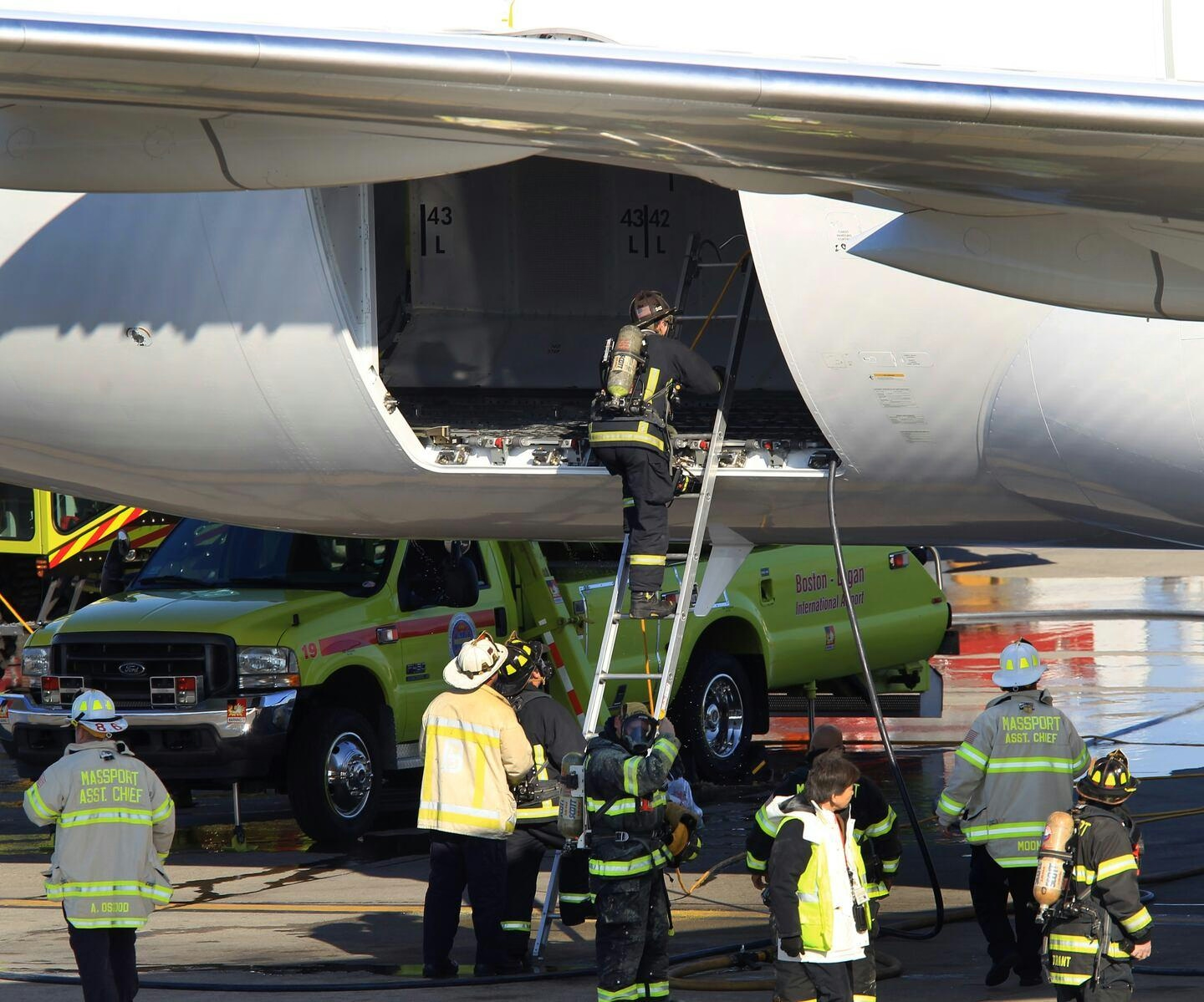
A persistent engine fire aboard a United Airlines Boeing 787-9 last month highlighted significant challenges in extinguishing in-flight blazes, causing extensive damage to critical engine components and prompting scrutiny of engine reliability and firefighting protocols within the aviation sector.

Incident Overview and Immediate Response

On 2 March, United flight 2127, departing Los Angeles International Airport for Newark Liberty, encountered a serious engine malfunction at approximately 17,000 feet. The aircraft, equipped with twin GE Aerospace GEnx-1B76A engines, experienced strong vibrations accompanied by a drop in the left engine’s N2 speed. Shortly thereafter, the flight crew received a “L ENGINE FIRE” warning via the engine indicating and crew alerting system (EICAS), initiating the engine fire checklist.

Despite deploying the first fire extinguisher bottle, the warning briefly ceased but reappeared within 30 seconds. A second fire bottle was discharged, yet the fire warnings persisted. The crew declared an emergency and returned to Los Angeles, ultimately landing safely on a single engine. Following the landing, an evacuation was conducted on the runway using emergency slides. All passengers and crew evacuated without injury.

Damage Assessment and Ongoing Investigation

Subsequent inspections revealed extensive sooting and thermal damage concentrated around the external surfaces of the engine core module, extending toward the pylon connection. Borescope examinations identified damage within the high-pressure turbine, although the thrust reverser halves on both sides showed minimal thermal impact. A flight attendant reported observing flames emanating from the left engine after landing.

The National Transportation Safety Board (NTSB) released a preliminary report detailing these findings but has yet to determine the root cause of the engine failure. The investigation remains active, with Boeing, GE Aerospace, and United Airlines yet to provide official comments.

Industry Implications and Market Reactions

The difficulties encountered in extinguishing the fire have intensified concerns regarding the reliability of the GEnx engine and the adequacy of current firefighting measures. Industry analysts suggest that this incident may prompt airlines and manufacturers to reassess safety protocols and engine design standards. Market responses could include increased scrutiny of fleets powered by GEnx engines and potential revisions to operational procedures at United Airlines and other carriers.

In response to growing safety considerations, some competitors have adjusted their fleet strategies. For instance, All Nippon Airways (ANA) has reportedly converted certain 787-10 orders to the 787-9 variant, reflecting a broader reevaluation of aircraft procurement decisions. Concurrently, United Airlines has recently reduced its capacity by 5% to mitigate rising fuel costs, a development that may further influence market dynamics as the industry balances operational efficiency with safety imperatives.

The NTSB’s investigation continues as the aviation community closely monitors the situation, anticipating potential impacts on engine safety standards and firefighting protocols worldwide.

More news
Five Aircraft Most Trusted by Pilots

Five Aircraft Most Trusted by Pilots

Five Aircraft Most Trusted by Pilots Aviation unites individuals from diverse backgrounds, yet pilots often share common instincts and experiences. Whether it is the relief of a maintenance-free day, the ritual of comparing hotel rooms, or the quiet satisfaction of securing an air traffic control shortcut, pilots worldwide communicate in a shared language within the cockpit. Central to this camaraderie is a fundamental belief encapsulated in the phrase, “In thrust we trust.” Half jest, half philosophy, this expression underscores the profound reliance pilots place on their aircraft. Some airplanes earn this trust over decades, while others command it almost immediately. Within aviation circles, reputations spread rapidly, especially among crews who accumulate thousands of hours assessing aircraft performance under pressure. The Cessna 172 Skyhawk: A Training Icon The Cessna 172 Skyhawk holds the distinction of being the most produced aircraft in history, with over 44,000 units built. It has served as the foundational platform for generations of pilots, teaching not only the mechanics of flight but also fostering a deep trust in the aircraft itself. Its high-wing design provides exceptional visibility, while its forgiving handling and inherent stability make it particularly well-suited for student pilots. Flight instructors appreciate its predictable behavior during critical maneuvers such as stalls, steep turns, and crosswind landings. The Skyhawk’s fatal accident rate, at just 0.56 per 100,000 flight hours, is notably lower than the general aviation average, reinforcing its reputation for safety. The aircraft’s mechanical simplicity and durability contribute to straightforward and affordable maintenance, ensuring its continued relevance for nearly seven decades. Modern variants equipped with Garmin G1000 avionics introduce students to advanced glass-cockpit technology, effectively bridging the gap between traditional training aircraft and contemporary jetliners. Trust and Technology: Navigating a Changing Landscape While legacy aircraft like the Cessna 172 continue to inspire confidence, the landscape of pilot trust is undergoing significant transformation. Regulatory scrutiny, exemplified by the recent US Trade Commission investigation into Joby Aviation for potential import violations, highlights the challenges faced by new entrants in the aviation market. Pilots are increasingly weighing the benefits of emerging technologies alongside enhanced safety features as market dynamics evolve. Established manufacturers are responding with aggressive innovation and marketing strategies, particularly in competitive regions such as the European business aviation sector. Simultaneously, the development of new models, including Horizon’s Cavorite X7 hybrid-electric aircraft, signals a future where pilot trust may be shaped by sustainability and cutting-edge design. As these innovations enter service, pilots will continue to assess which aircraft genuinely earn their confidence in the cockpit. From the enduring reliability of the Cessna 172 to the promise of the latest technological breakthroughs, the aircraft most trusted by pilots are those that consistently prove their worth—flight after flight, challenge after challenge.
Delta Concerned US Trade Commission Investigation Could Affect Joby Partnership

Delta Concerned US Trade Commission Investigation Could Affect Joby Partnership

Delta Raises Concerns Over US Trade Commission Investigation Impacting Joby Partnership Delta Air Lines has expressed serious concerns that an ongoing investigation by the US International Trade Commission (ITC) into Joby Aviation’s trade practices may jeopardize its strategic partnership with the electric air taxi developer. This probe threatens to disrupt Delta’s ambitions to introduce electric vertical takeoff and landing (eVTOL) aircraft services for urban air mobility. Background of the ITC Investigation The ITC inquiry, initiated in April, follows a complaint filed by Archer Aviation, a direct competitor in the eVTOL sector. Archer alleges that Joby violated the US Tariff Act of 1930 by importing eVTOL components, some of which were sourced from China, infringing on Archer’s patents. The complaint seeks to prevent Joby from importing, marketing, or selling the contested products within the United States. Delta, which announced its partnership with Joby in 2022, initially investing $60 million with the potential for an additional $200 million contingent on Joby’s certification progress, has warned that an adverse ruling could have profound consequences. In official filings with the ITC, Delta cautioned that a decision against Joby could effectively “shut down Joby’s existing product line,” thereby undermining Delta’s plans to deploy short-haul air taxi services at major airports in metropolitan hubs such as New York and Los Angeles. Delta’s Position and Industry Implications In a March 23 filing, Delta emphasized its vested interest in the outcome, stating, “The complaint implicates Delta because… Delta has partnered with [Joby] for the development of a new home-to-seat airport product using eVTOL aircraft.” The airline highlighted its significant financial commitments and strategic involvement aimed at delivering this innovative transportation solution. Delta further argued that excluding Joby’s eVTOLs from the US market would diminish competition, potentially granting Archer a monopolistic position in the nascent air taxi industry. The filing urged the ITC to assign fact-finding responsibilities to an administrative law judge and to carefully consider the broader competitive ramifications. “An exclusion order would shut down Joby’s existing product line, giving Archer an anticompetitive monopoly over the industry,” Delta warned. Escalating Legal Disputes and Market Dynamics The legal conflict between Archer and Joby has intensified in recent months. In November 2025, Joby initiated a lawsuit against Archer, accusing the company of stealing trade secrets related to aircraft design and operations—allegations Archer denies. Archer responded with a countersuit, accusing Joby of fraud and concealing business relationships with China, including purported misclassification of imported Chinese components to evade tariffs. Joby has dismissed Archer’s complaint as a “distraction” and affirmed its commitment to vigorously defend itself. Nevertheless, the ITC investigation has introduced significant uncertainty regarding the future of Delta’s air taxi initiatives. Meanwhile, United Airlines has aligned itself with Archer, collaborating to develop similar urban air mobility services using Archer’s in-development Midnight aircraft. Delta has not provided further comment on the matter. The ITC’s forthcoming decision is poised to have substantial implications for the competitive landscape of the US eVTOL market and the broader future of urban air transportation.
EU Authorizes Jet Fuel Use Alongside US, Canada, UK, Japan, and Singapore Amid Supply Chain Disruptions

EU Authorizes Jet Fuel Use Alongside US, Canada, UK, Japan, and Singapore Amid Supply Chain Disruptions

EU Authorizes Jet Fuel Imports Amid Global Supply Chain Disruptions The European Union has formally authorized the import and use of jet fuel sourced from the United States, joining a coalition that includes the US, Canada, the United Kingdom, Japan, and Singapore. This coordinated decision aims to alleviate the persistent supply chain disruptions that have severely impacted the aviation sector across Europe. Airlines have been contending with fuel shortages, rising costs, and operational delays, all of which pose significant risks to both domestic and international air travel. By permitting the importation of US jet fuel, the EU seeks to stabilize airline operations, maintain schedule integrity, and protect passenger experience. Importantly, the authorization mandates that all imported fuel complies with the EU’s rigorous safety, environmental, and regulatory standards, ensuring that operational safety remains uncompromised despite the urgent need to diversify supply sources. Tackling Supply Chain Constraints The EU’s move responds directly to ongoing challenges in jet fuel production and distribution. Refinery delays, constrained storage capacities, and logistical bottlenecks have placed considerable strain on major European aviation hubs such as Frankfurt, Paris, and Amsterdam. Expanding access to US jet fuel provides a vital contingency measure designed to prevent widespread flight cancellations and sustain reliable service during peak travel periods. Nevertheless, this strategy introduces complexities. European airlines now face intensified competition with carriers from other regions for limited jet fuel supplies, raising the prospect of bidding wars that could further escalate fuel prices. Market responses have already reflected these concerns, with rising costs prompting fears of additional flight cancellations and increased airfares as the global shortage heightens competition for available fuel. International Cooperation and Market Implications The EU’s authorization exemplifies a broader pattern of international collaboration within the aviation industry. The United States, as the principal supplier in this arrangement, has ramped up production and enhanced logistical coordination to meet both domestic demand and European export requirements. This transatlantic cooperation is expected to improve reliability for flights between the US and Europe, reinforcing tourism and business connections. Passengers can anticipate more consistent schedules and a reduced likelihood of delays or sudden fare increases linked to fuel scarcity. Canada has also joined this initiative, leveraging its robust aviation fuel supply chains to support stability across the North American-European corridor. Canadian airlines and airports, including Toronto Pearson and Vancouver International, stand to benefit from access to alternative fuel sources, thereby minimizing disruptions for transatlantic travelers and tourism operators. Advancing Sustainable Aviation Fuel Initiatives In light of the intensified competition and market volatility, the EU is accelerating efforts to develop sustainable aviation fuels and diversify its import portfolio. This includes exploring alternatives such as US Jet A fuel to reduce dependence on Middle Eastern suppliers and mitigate future supply risks. For travelers, these developments offer greater assurance when booking flights amid complex supply dynamics. Airlines are actively managing schedules and pricing strategies to maintain reliable service despite ongoing challenges. As the global aviation sector adapts to these disruptions, the EU’s proactive stance highlights the critical role of international cooperation and strategic planning in ensuring the uninterrupted movement of people and goods across borders.
Industry and Colleges Collaborate to Address Aviation Workforce Demand

Industry and Colleges Collaborate to Address Aviation Workforce Demand

Industry and Colleges Collaborate to Address Aviation Workforce Demand Bridging the Aviation Skills Gap OPELIKA, Ala. — The aviation industry is confronting a significant shortage of qualified mechanics and technicians, prompting local colleges and industry leaders to collaborate in addressing this critical workforce gap. Auburn University and Southern Union State Community College (SUSCC) have taken a leading role in aligning educational programs with the sector’s evolving demands, aiming to prepare students for the challenges of a rapidly changing industry. At SUSCC, the Aviation Maintenance Technology (AMT) program is providing students with essential skills to pursue successful careers in aviation. Ellie Cross, a first-year student benefiting from a full-ride scholarship, exemplifies this new generation of aviation professionals. She intends to continue her studies at Auburn University and ultimately become an Airframe and Powerplant (AMP) mechanic with inspection authorization. “We need more people in the aviation community,” Cross remarked. “It’s a good career to go into, and people want to support that.” The demand for aviation mechanics has intensified in recent years, a trend exacerbated by the COVID-19 pandemic. According to Brian Barnhart, an AMT instructor at SUSCC, the pandemic-induced slowdown in aircraft operations led to a wave of retirements among senior mechanics. “That created a big gap—not just in numbers, but in industry knowledge as well,” Barnhart explained. Industry Support and Educational Expansion To address this shortage, industry partners have increased their involvement by offering scholarships, internships, and employment opportunities. Pratt and Whitney, based in Columbus, has forged strong ties with SUSCC, providing internships and actively recruiting graduates. Additionally, a retired pilot affiliated with Auburn University has established a scholarship fund specifically for aviation students, while the aircraft project manager for Coca-Cola has contributed funding to reimburse students for licensing examinations. In a significant development, SUSCC and Auburn University inaugurated a new Aviation Maintenance Hangar at the Auburn University Regional Airport in April. This facility is expected to enhance workforce training capabilities and support the region’s growing need for skilled aviation mechanics. Despite these advances, challenges persist in synchronizing training programs with the fast-evolving requirements of the aviation industry. Securing adequate funding and addressing talent shortages in emerging fields such as drone operations remain pressing concerns. The market has responded with increased investment in aviation education and the formation of new partnerships. Meanwhile, competitors are developing proprietary training programs and expanding contracts, exemplified by Aura Aero’s pursuit of a military training contract. Barnhart, a retired Navy aircraft mechanic with extensive experience in general aviation, brings valuable real-world expertise to his teaching. He advocates for more retirees to contribute their knowledge to nurture the next generation of aviation professionals. As the aviation sector continues to evolve, the collaboration between educational institutions and industry stakeholders is increasingly recognized as vital to cultivating a skilled workforce and sustaining the industry’s long-term growth.
Aviation Influencer Participates in Lycoming Engines Service School

Aviation Influencer Participates in Lycoming Engines Service School

Aviation Influencer Steve Thorne Engages in Lycoming Engines Service School Training WILLIAMSPORT, Pa. – Steve Thorne, a prominent aviation influencer known for his “Flight Chops” channels, recently completed an intensive technical training program at the Lycoming Engines Service School. Hosted by Pennsylvania College of Technology’s Workforce Development division, the week-long course provided Thorne, a private pilot with nearly half a million social media followers, with an in-depth understanding of Lycoming reciprocating engines. During his time in Williamsport, Thorne not only participated in the 40-hour curriculum but also toured the Lycoming Engines factory, interacted with aviation students, and created content for his extensive online audience. Arriving at the Lumley Aviation Center in his self-built yellow Van’s RV-14, powered by a Lycoming YIO-390-EXP199 piston engine, Thorne’s involvement highlighted the practical and educational dimensions of the program. His aircraft, which he uses for both transportation and aerobatic competitions, was stationed at the Penn College hangar throughout the training period. Comprehensive Technical Training and Industry Impact The Lycoming Engines Service School draws participants globally, offering a thorough review of service publications, manuals, engine construction, operational theory, and troubleshooting techniques specific to Lycoming engines. The five-day course also includes instruction on inspecting and servicing related components, with training hours applicable toward Federal Aviation Administration Inspection Authorization renewal. For influencers like Thorne, adapting to the demanding technical curriculum alongside seasoned industry professionals presents a distinct challenge. Nevertheless, his participation is anticipated to elevate interest in Lycoming’s training programs. Endorsements from influential aviation content creators have the potential to inspire both aspiring and experienced pilots. This trend may prompt competitors within the industry to encourage their own influencers to pursue similar technical education, thereby maintaining relevance and expertise amid a rapidly evolving market. A Personal Journey Rooted in Aviation Heritage Thorne’s passion for aviation is deeply personal, tracing back to childhood stories of his grandfather’s service flying Spitfires during World War II. Although he never had the opportunity to speak with his grandfather directly, these early impressions profoundly influenced his path into aviation. Through Flight Chops, Thorne documents his flights for self-analysis, sharing insights and promoting a philosophy of “practice, review, improve” across platforms including Facebook, Instagram, X, Threads, and YouTube. Reflecting on his experiences, Thorne noted, “The Flight Chops channel has opened up a lot of amazing opportunities to capture and share various aspects of aviation a typical pilot wouldn’t have easy access to. I’m thankful for all of the opportunities that I’ve been able to capture and share via the Flight Chops project.” Among his most notable achievements are participating in Coast Guard rescue training on Lake Michigan, earning his T6/Harvard qualification—a trainer aircraft that prepared pilots like his grandfather for WWII fighters—and completing floatplane training in Alaska on a De Havilland Beaver. He also documented the entire process of building his RV-14 and developed aerobatic skills to a competitive level. Thorne’s engagement with the Lycoming Engines Service School not only advances his technical knowledge but also exemplifies the growing convergence of social media influence and professional aviation training. This development signals a potential shift in how pilots and enthusiasts approach ongoing education within the industry.
Delta Air Lines and Other Airlines Place Orders for New Airbus Aircraft to Expand Fleets

Delta Air Lines and Other Airlines Place Orders for New Airbus Aircraft to Expand Fleets

Delta Air Lines and Global Carriers Expand Fleets with Major Airbus Orders Amid Industry Shifts Delta Air Lines has joined a growing list of international carriers, including AirAsia, JetBlue, Air France, airBaltic, and Swiss International Air Lines, in placing substantial orders for new Airbus aircraft. This wave of acquisitions reflects a strategic effort by airlines to expand their fleets, introduce new routes, and capitalize on the resurgence in global travel demand. The move also aims to enhance network capabilities and improve operational efficiency in an increasingly competitive market. Focus on the Airbus A220 Central to these fleet expansions is the Airbus A220, a next-generation, fuel-efficient aircraft that has rapidly gained favor among airlines seeking to modernize their fleets. Delta has committed to acquiring 145 A220s, making it the largest customer of this model in North America. The airline intends to deploy these jets primarily on domestic routes such as New York to Boston and Los Angeles, leveraging the A220’s advanced technology to achieve better fuel efficiency and enhanced passenger comfort. This initiative aligns with Delta’s broader sustainability objectives and strengthens its competitive position within the evolving U.S. aviation landscape. AirAsia has placed a record $19 billion order for 150 A220s, marking one of the largest single orders in the aircraft’s history. The Southeast Asian low-cost carrier aims to consolidate its market dominance by expanding its network and offering more efficient service through the A220’s capabilities. Other airlines, including JetBlue, Air France, airBaltic, LOT Polish Airlines, Swiss International Air Lines, Air Tanzania, Ibom Air, and Air Niugini, have also made significant commitments to the A220. Collectively, these carriers have ordered over 1,000 A220 aircraft, underscoring the model’s growing appeal for both domestic and international operations. Comparative Fleet Orders and Industry Challenges In addition to the A220, many of these airlines continue to invest in Boeing 737 Max aircraft, reflecting a diversified approach to fleet modernization. For 2026 deliveries, Delta plans to receive 145 A220s alongside 50 Boeing 737 Max jets. AirAsia’s order includes 150 A220s and 80 737 Max aircraft, while JetBlue, Air France, airBaltic, and others have placed mixed orders for both models, balancing capacity needs and operational flexibility. Despite this momentum, the industry faces significant challenges. Rising fuel prices and persistent supply chain disruptions threaten to slow the pace of fleet expansion and delay aircraft deliveries. Airbus reported a year-over-year decline in first-quarter deliveries, signaling potential operational headwinds even as it secures record-breaking orders. The competitive landscape is also intensifying. Delta is responding to increased rivalry in premium cabin offerings by introducing new business-class suites on its Airbus A350-1000s and retrofitted A330s. Meanwhile, United Airlines has adopted unbundled basic fares in premium cabins, heightening competition for high-value travelers. As the aviation sector navigates these shifting dynamics, the emphasis on advanced, fuel-efficient aircraft like the Airbus A220 highlights airlines’ efforts to balance growth ambitions, sustainability commitments, and cost efficiency in a rapidly evolving environment. | Airline | Airbus A220 Orders | Boeing 737 Max Orders | |------------------------------|--------------------|----------------------| | Delta Air Lines | 145 | 50 | | AirAsia | 150 | 80 | | JetBlue | 61 | 45 | | Air France | 60 | 55 | | airBaltic | 90 | 40 | | LOT Polish Airlines | 40 | 30 | | Swiss International Air Lines| 30 | 25 | | Air Tanzania | 4 | 2 | | Ibom Air | 10 | 5 | | Air Niugini | 6 | 3 |
Lufthansa Begins Flight Testing of Its First Boeing 777X

Lufthansa Begins Flight Testing of Its First Boeing 777X

Lufthansa Begins Flight Testing of Its First Boeing 777X Boeing has successfully completed the maiden flight of a production-standard 777-9 aircraft destined for Lufthansa, marking a pivotal moment in the long-delayed 777X program. The test flight, conducted on May 7, departed from Everett’s Paine Field in Washington. The widebody jet executed a series of certification maneuvers east and southeast of Seattle, reaching altitudes up to 39,000 feet before returning after approximately three hours in the air. Progress Amidst Program Delays This flight represents a critical phase in the regulatory certification process, which mandates testing with a delivery-configured production aircraft. Registered as N20080 and bearing manufacturer serial number 1781, the jet is poised to become the first 777-9 delivered to Lufthansa, which has placed orders for 20 of the type. Photographs from the flight revealed the aircraft coated in Boeing’s distinctive green protective primer, an anti-corrosion layer applied during assembly, rather than the airline’s livery. The 777X program, initially scheduled to enter commercial service in 2020, has encountered numerous setbacks. Technical challenges have included a cargo door failure during ground stress testing in 2019 and issues with the General Electric GE9X engines. Additionally, the program has faced heightened regulatory scrutiny in the wake of the 737 Max crisis. In 2024, Boeing temporarily grounded its entire 777-9 test fleet to inspect a structural component connecting the engine to the wing after cracks were detected in the engine thrust links. Despite these obstacles, certification testing has progressed, highlighted by a recent maximum-energy brake test conducted at Edwards Air Force Base in California. Boeing now aims to deliver the first 777-9 to Lufthansa in 2027, reflecting a delay of at least six years from the original timeline. The manufacturer’s recent return to profitability and ongoing industrial restructuring may signal a shift in the competitive landscape. However, persistent geopolitical tensions, particularly with China, continue to pose risks to Boeing’s delivery schedules and order book. Lufthansa’s Strategic Challenges and Market Competition Lufthansa’s commencement of flight testing for its first 777X occurs amid significant operational challenges for the German flag carrier. The airline is grappling with an estimated $2 billion increase in fuel costs this year, largely driven by the ongoing conflict in the Middle East. To mitigate these expenses, Lufthansa plans to implement cost-saving measures alongside efforts to boost ticket revenues. Although travel demand remains strong, the airline reported a narrowed loss in the first quarter, underscoring ongoing pressures on profitability. Meanwhile, competition in the long-haul market is intensifying. Airlines such as Qantas are preparing for flight testing of the Airbus A350-1000, an aircraft designed to reduce long-range flight times while enhancing efficiency and passenger comfort. As Lufthansa and Boeing advance with the 777X program, both face a complex environment shaped by operational hurdles, evolving market dynamics, and global uncertainties. The successful certification and delivery of the 777-9 will serve as a crucial benchmark for the airline and manufacturer as they strive to regain momentum in the widebody aircraft sector.
SkyNook Turns the Last Row of Economy Into a Semi-Private Pod

SkyNook Turns the Last Row of Economy Into a Semi-Private Pod

SkyNook Transforms the Last Row of Economy Into a Semi-Private Pod The last row of economy class has long been regarded as the least desirable seating on an aircraft. Positioned adjacent to the lavatory wall, these seats offer no reclining option, while passengers contend with the constant presence of bathroom queues and the noise of galley activity. The proximity to the lavatory often brings unwelcome odors, compounding the discomfort. For years, travelers assigned to this section have accepted their fate with a resigned demeanor—neither openly frustrated nor content, but quietly enduring an unpleasant experience. Innovation in Economy Seating Collins Aerospace, a division of RTX and a leading name in aircraft interior design, identified an opportunity to address this persistent issue. After extensive research and development, the company introduced SkyNook, a semi-private pod concept tailored specifically for the last row of economy. Unveiled at the Aircraft Interiors Expo in Hamburg, Germany, in April 2026, SkyNook quickly garnered industry acclaim, receiving a Crystal Cabin Award for passenger comfort—a rare accolade in an industry more accustomed to recognizing ancillary fees than enhancements to passenger experience. SkyNook redefines the last row by creating a semi-enclosed space that offers increased privacy and comfort. The design effectively shields passengers from the noise and activity of the galley and lavatory, elevating the standard of economy seating and transforming what was once a dreaded spot into a potential refuge for travelers seeking a quieter, more secluded environment. Industry and Market Response Reactions to SkyNook’s introduction have been varied. Many passengers have welcomed the improved comfort and privacy, viewing the innovation as a much-needed upgrade to economy class. Conversely, some critics question the necessity and appropriateness of such enhancements in a cabin section traditionally characterized by its basic, no-frills nature. The concept has also prompted competitors to take notice, with some airlines and manufacturers exploring similar innovations to maintain competitiveness, while others emphasize their own distinct offerings to differentiate themselves from the SkyNook model. The emergence of SkyNook may signal a broader industry trend toward investing in economy-class improvements. Beyond enhancing passenger satisfaction, such innovations could create new revenue streams as airlines seek to monetize upgraded seating experiences. Whether SkyNook will become a widespread standard or remain a niche option, its debut represents a significant effort to transform the least favored seats into spaces that passengers might genuinely anticipate occupying. For now, the last row is no longer merely a place to endure but a space inviting reconsideration.
How Technology, Premium Cabins, and Sustainability Are Transforming Air Travel

How Technology, Premium Cabins, and Sustainability Are Transforming Air Travel

How Technology, Premium Cabins, and Sustainability Are Transforming Air Travel Global aviation is experiencing a significant transformation driven by rapid technological advancements, shifting passenger expectations, and increasing sustainability demands. Airlines are moving beyond traditional competition based solely on routes and pricing, instead investing heavily in intelligent cabin designs, AI-powered systems, and enhanced premium onboard experiences to attract and retain customers. As global passenger traffic continues to grow, the industry faces both remarkable opportunities and complex challenges. Technology at the Core of Modern Aviation Today’s airlines are evolving into technology-centric enterprises, utilizing artificial intelligence, predictive analytics, and automation to optimize operations and improve the customer experience. AI plays a pivotal role in areas such as flight scheduling, fuel efficiency, dynamic pricing, predictive maintenance, automated customer service, and personalized marketing offers. These technological innovations extend beyond operational back-ends, delivering tangible benefits to passengers. Features like real-time baggage tracking, biometric boarding, app-based airport navigation, and expedited rebooking systems are becoming standard, enabling a more connected and seamless journey from booking to arrival. Airports are also embracing digital transformation to manage increasing passenger volumes and enhance operational efficiency. Investments in facial recognition, contactless security screening, automated passport control, and AI-driven crowd management are helping to reduce congestion and streamline passenger flows. Major international hubs are already testing highly automated processes that minimize wait times and improve reliability. As airports become smarter, travelers spend less time in queues and more time enjoying lounges, retail outlets, and personalized services, contributing to higher satisfaction levels, particularly among premium travelers. The Rise—and Challenge—of Premium Air Travel Premium cabins have emerged as one of the most lucrative segments within the aviation industry, with airlines focusing heavily on attracting high-yield passengers. Significant investments in premium economy, business-class suites, exclusive lounges, high-speed Wi-Fi, and wellness-oriented seating are redefining the onboard experience. For instance, United Airlines has placed premium upgrades and customer experience at the core of its long-term strategy. Market responses have been favorable, with increased satisfaction reported in first and business class as airlines introduce new routes, lounges, and spacious suites. Premium economy, in particular, is experiencing rapid growth by offering enhanced comfort at a price point below business class. Nevertheless, this emphasis on premium travel presents notable challenges, especially in the context of sustainability. Environmental concerns are intensifying, particularly among younger generations such as Gen X, who face greater financial constraints compared to Boomers. While the industry is advancing efficiency and accessibility through new materials and technologies, the environmental impact of expanding premium cabins remains under scrutiny. Airlines continue to promote innovations like Bluetooth connectivity, wireless charging, and mood lighting, but the long-term sustainability and viability of these investments are uncertain amid evolving market dynamics and regulatory pressures. The Road Ahead As competition intensifies, airlines are responding with their own investments in technology and premium offerings, fueling a race to shape the future of air travel. Balancing profitability, passenger experience, and environmental responsibility remains a complex task. The ongoing transformation of the aviation industry will favor those capable of rapidly adapting to deliver innovation, comfort, and sustainability in equal measure.
Air Astana flight makes emergency landing in Aktobe after engine failure

Air Astana flight makes emergency landing in Aktobe after engine failure

Air Astana Flight Makes Emergency Landing in Aktobe Following Engine Failure An Air Astana Airbus A321, operating flight KZR921 from Astana to Frankfurt, was compelled to execute an emergency landing in Aktobe on May 8, 2026, after experiencing an engine failure shortly after departure from Astana Airport. The aircraft, registered as EI-KGJ, was carrying 93 passengers—including four children and one infant—and nine crew members at the time of the incident. Upon detecting the malfunction, the flight crew promptly issued a PAN-PAN urgency signal and diverted the flight to Aktobe Airport. Safe Landing and Immediate Response The aircraft touched down safely at Aktobe Airport at 11:34 a.m. local time. According to the Ministry of Transport, the crew followed established Quick Reference Handbook (QRH) procedures meticulously, enabling the plane to taxi to the parking stand under its own power. Emergency rescue teams and airport ground services were deployed as a precautionary measure. Fortunately, no injuries were reported, and the aircraft sustained no damage. Preliminary assessments attribute the incident to a technical malfunction within the aircraft’s powerplant. Context and Industry Implications This event occurs amid ongoing challenges related to engine reliability, particularly concerning Pratt & Whitney GTF engines, which have affected Air Astana’s Airbus A320neo fleet in recent months. These maintenance issues have intensified scrutiny over operational safety standards and may result in insurance claims. The incident also presents an opportunity for competing airlines to highlight their own fleet reliability, especially if they remain unaffected by similar engine concerns. The Ministry of Transport has classified the event as a serious incident under Kazakhstan’s aviation accident investigation regulations. The Department for the Investigation of Transport Accidents and Incidents will conduct a formal inquiry, with representatives expected to visit the site to collect evidence and initiate investigative procedures. Broader Aviation Safety Concerns The emergency landing underscores the critical importance of decisive and well-trained crew responses during in-flight emergencies. It also draws attention to broader industry challenges regarding technical reliability. This incident follows a recent emergency landing by a Swiss International Air Lines flight in Almaty, prompted by a medical emergency involving a crew member, further highlighting the complexities airlines face in maintaining passenger safety amid unforeseen circumstances.
line










