
Zet AI‑inzichten om in gerichte actie

Trending
Categories
US Air Force Showcases AI-Driven X-62 Intercept in Autonomous Air Combat Test
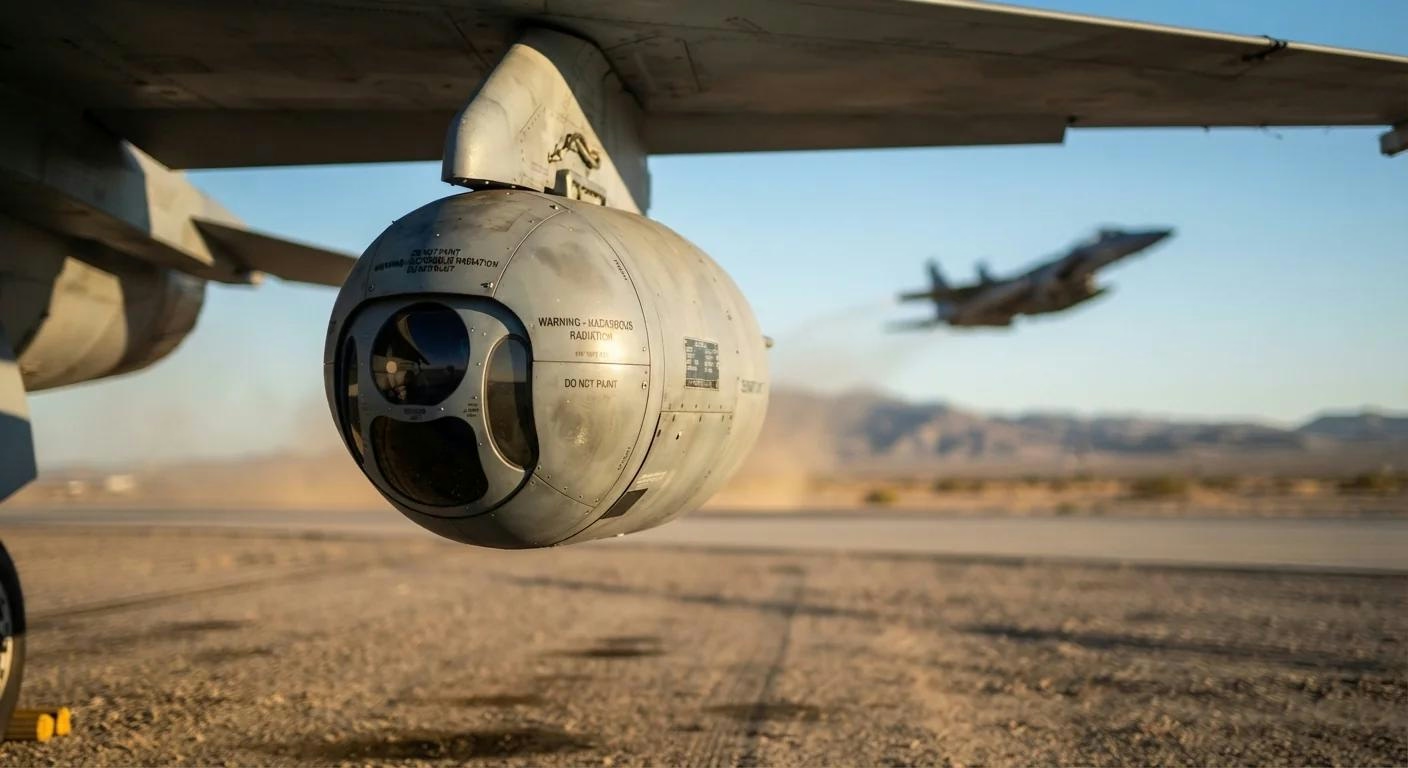
US Air Force Demonstrates AI-Controlled X-62 Intercept in Autonomous Combat Test
The United States Air Force has reached a pivotal milestone in autonomous aviation by successfully conducting an artificial intelligence-driven airborne interception using its X-62A VISTA experimental aircraft. This test, carried out by the Air Force Test Pilot School at Edwards Air Force Base, represents the first publicly disclosed instance of AI directing a full intercept mission. This development moves beyond earlier demonstrations that primarily focused on defensive maneuvers or within-visual-range dogfighting scenarios.
Advanced Capabilities of the X-62A VISTA
The X-62A VISTA, a heavily modified F-16D Block 30, functions as the Air Force’s principal platform for testing cutting-edge autonomous flight algorithms. Its Variable Stability In-flight Simulator Architecture enables engineers to quickly integrate and evaluate various AI systems, allowing the aircraft to replicate the flight control characteristics of multiple fighter types. This adaptability has facilitated a series of autonomy achievements, including AI-controlled supersonic flight, autonomous dogfighting against human pilots, and cooperative autonomous flight behaviors.
The recent demonstration extends these capabilities into the demanding domain of airborne interception. Unlike pre-scripted maneuvers, interception requires the AI to rapidly process sensor data to detect and track targets, predict dynamic flight paths, and maneuver within aircraft performance limits. The system must select optimal intercept geometry and closure rates while adapting in real time to unexpected target movements. These tasks necessitate split-second decision-making under stringent safety constraints, balancing tactical effectiveness with secure aircraft handling throughout the engagement.
Strategic Implications and Challenges
This accomplishment aligns with the Department of the Air Force’s broader initiative to develop Collaborative Combat Aircraft (CCA), designed to operate alongside manned fighters such as the F-35A and the forthcoming Next Generation Air Dominance (NGAD) platform. Rather than replacing human pilots, these autonomous systems are intended to undertake missions including forward scouting, airborne interception, defensive counter-air, and electronic warfare.
Nonetheless, integrating AI into high-stakes combat environments presents significant challenges. Ensuring the reliability and security of AI systems is critical, particularly in light of potential adversarial interference or system malfunctions. The fusion of advanced AI with existing military infrastructure also demands overcoming complex technical and operational obstacles. Moreover, ethical considerations surrounding the deployment of autonomous weapons continue to provoke debate within defense and policy circles.
The successful X-62A demonstration is expected to heighten interest among defense contractors and technology firms in AI-driven solutions, as the defense sector increasingly prioritizes autonomy and machine learning. In response, competitor nations and companies are likely to accelerate their own AI combat technology programs, underscoring the growing strategic importance of artificial intelligence in future air superiority and collaborative combat operations.

Etihad Airways Suspends Airbus A380 Flights on Key Route

Aditya Birla Group Seeks Approval for Aircraft Leasing in GIFT City

Qatar Airways Highlights Innovation and Connectivity at Arabian Travel Market 2026

Hong Kong's Five-Year Plan Includes Andrew Fan's Aircraft Parts Processing Hub Proposal

ACIA Aero Leasing Delivers ATR72-600 to Air Nostrum

RTX Appoints Jill Albertelli as Head of Pratt & Whitney

TAT Technologies Joins Beyond Aero Hydrogen Aircraft Program

AURAK Study Highlights Barriers to Air Taxi Adoption in Emerging Economies

Xiamen Air Selects Altitude for 787 Maintenance at Heathrow

Etihad and Swissport Extend Global Partnership
