
Zet AI‑inzichten om in gerichte actie

Trending
Categories
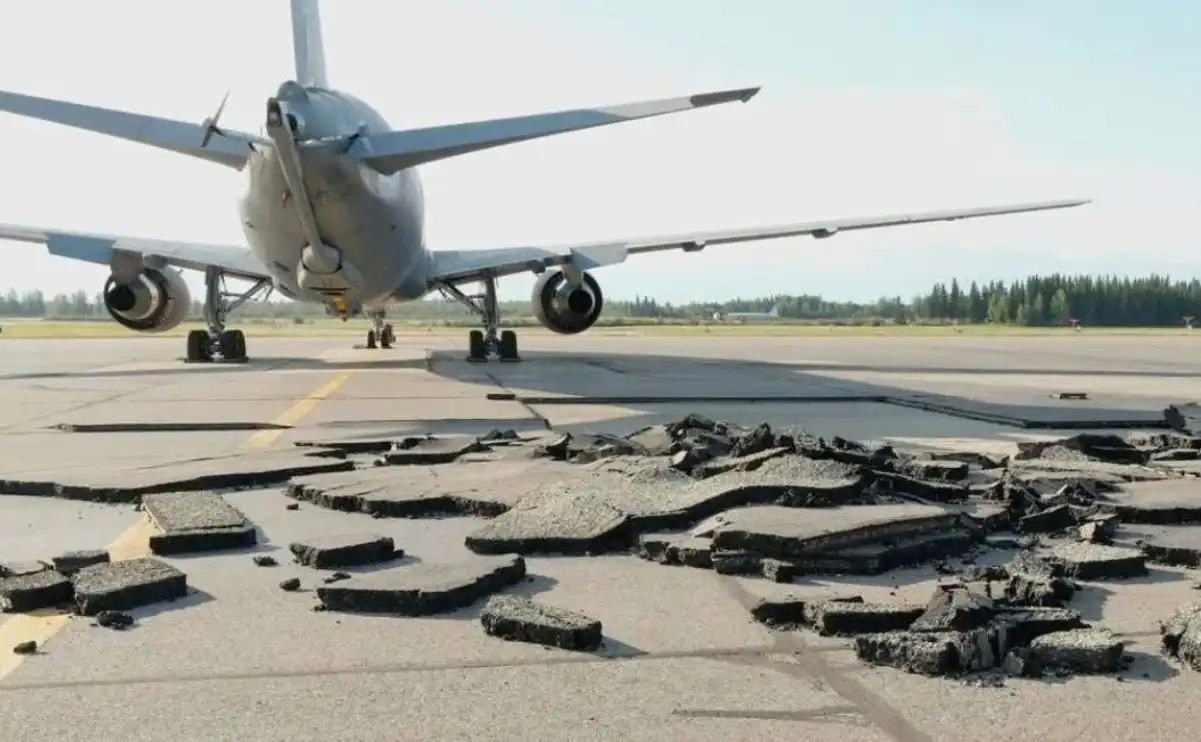
USAF KC-46 Dislodges Asphalt at Alaska Airport During Engine Test
USAF KC-46 Dislodges Asphalt at Alaska Airport During Engine Test
Incident Overview and Immediate Impact
In July 2025, a US Air Force KC-46A Pegasus tanker, operated by the New Hampshire Air National Guard, caused significant damage to the tarmac at Fairbanks International Airport, Alaska, during an engine test. The aircraft, bearing tail number 18-6054, had arrived from Yokota Air Base, Japan, when abnormal engine vibrations were detected, prompting urgent maintenance. A recovery team from McConnell Air Force Base, Kansas, arrived two days later to conduct high-power engine runs aimed at balancing and certifying the engines.
During these tests on July 16, the right engine’s exhaust force dislodged two large asphalt blocks, each approximately 25 feet square, behind the aircraft. The powerful exhaust lifted the asphalt into the air, scattering debris up to 100 feet away. Although the aircraft itself sustained no damage, the airport incurred repair costs totaling $147,044.
Investigation Findings and Operational Implications
An Air Force investigation determined that repeated exposure to the engine’s heat and exhaust velocity had critically degraded the asphalt’s sealant, leading to the surface failure. This incident highlights the operational risks associated with the KC-46’s maintenance procedures and underscores the necessity for appropriate infrastructure to support high-power engine testing.
The KC-46A Pegasus, developed by Boeing since 2011, has encountered numerous mechanical and operational challenges throughout its service. These issues have prompted the Air Force to pause a contract for an additional 75 KC-46 tankers until Boeing addresses persistent deficiencies, particularly those affecting the aircraft’s refueling boom and overall reliability. Despite this pause, the Air Force has approved a revised acquisition strategy targeting a total fleet size of 263 KC-46s.
Broader Context Within the Air Force’s Refueling Fleet
The Fairbanks incident occurs amid broader challenges facing the Air Force’s aerial refueling capabilities. Earlier in 2025, an Iranian missile strike in Saudi Arabia damaged five KC-135 tankers, further straining operational capacity. Additionally, the KC-46 has been involved in several mid-air incidents, including damage to or detachment of the refueling boom during operations.
While responses from competitors to the KC-46’s ongoing issues remain unclear, the Air Force continues to prioritize resolving technical problems to ensure the tanker’s operational readiness. The Fairbanks event serves as a stark reminder of the importance of addressing both aircraft vulnerabilities and supporting infrastructure as the Air Force advances its refueling fleet modernization efforts.

Etihad Airways Suspends Airbus A380 Flights on Key Route

Aditya Birla Group Seeks Approval for Aircraft Leasing in GIFT City

Qatar Airways Highlights Innovation and Connectivity at Arabian Travel Market 2026

Hong Kong's Five-Year Plan Includes Andrew Fan's Aircraft Parts Processing Hub Proposal

ACIA Aero Leasing Delivers ATR72-600 to Air Nostrum

RTX Appoints Jill Albertelli as Head of Pratt & Whitney

TAT Technologies Joins Beyond Aero Hydrogen Aircraft Program

AURAK Study Highlights Barriers to Air Taxi Adoption in Emerging Economies

Xiamen Air Selects Altitude for 787 Maintenance at Heathrow

Etihad and Swissport Extend Global Partnership
