Afbeelding

Zet AI‑inzichten om in gerichte actie

Meld je vandaag nog aan voor de AeroGenie-wachtlijst!

Trending

Categories

Vertical Aerospace Achieves First Piloted eVTOL Wingborne Flight and Secures Airframe Deal
August 5, 2025By ePlane AI
Vertical Aerospace Achieves First Piloted eVTOL Wingborne Flight and Secures Airframe Deal
0
0
Vertical Aerospace
VX4 eVTOL
Piloted Wingborne Flight

Vertical Aerospace Achieves First Piloted eVTOL Wingborne Flight and Secures Airframe Deal

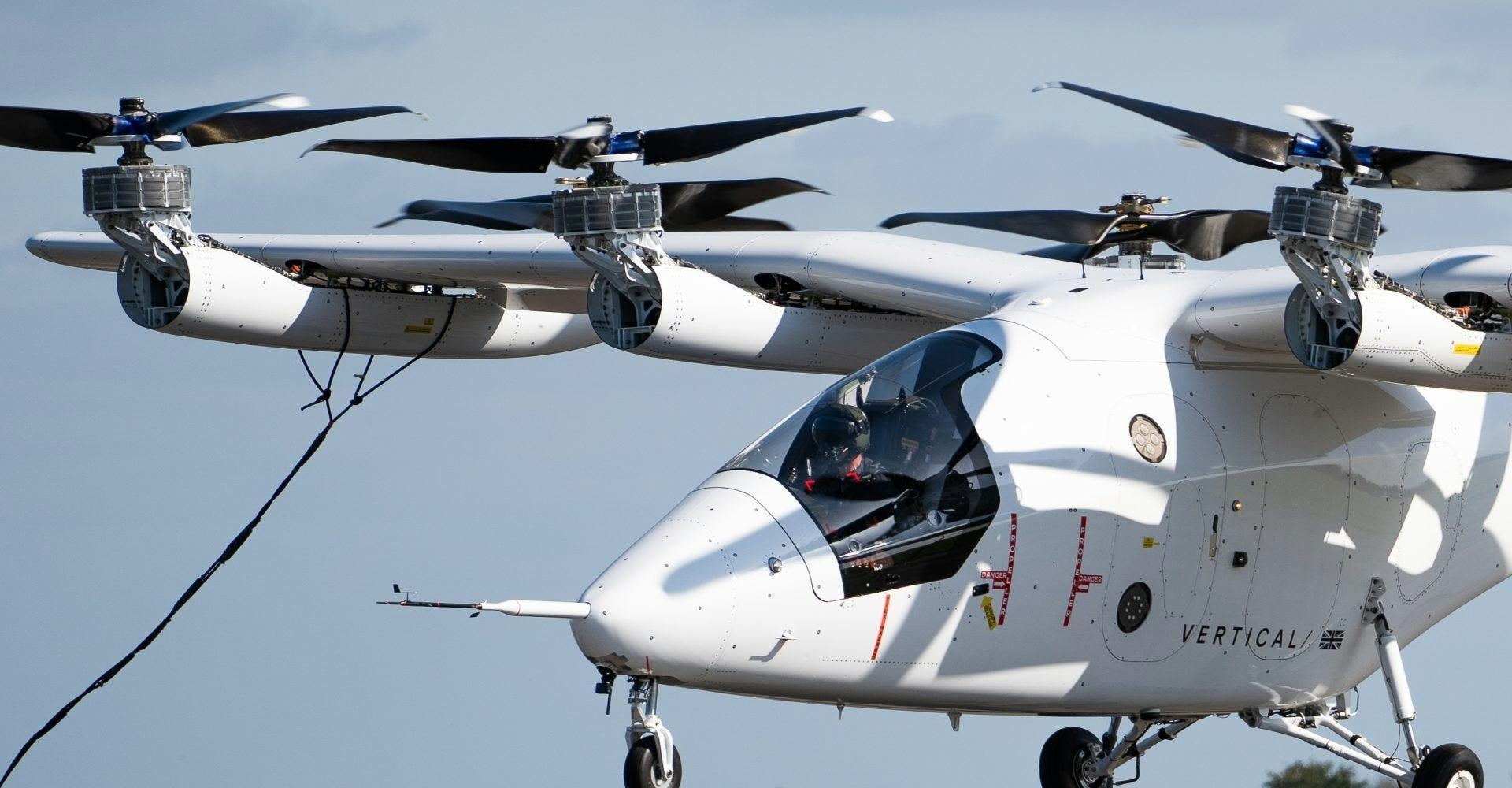
LONDON & NEW YORK, August 5, 2025 – Vertical Aerospace (NYSE: EVTL), a prominent innovator in electric aviation, has announced significant progress in its 2025 first half operating update. The company successfully completed the first piloted wingborne flight of its VX4 electric vertical takeoff and landing (eVTOL) aircraft and secured a long-term airframe manufacturing partnership with Aciturri Aerostructures.

Milestones in Flight Testing and Manufacturing

Vertical Aerospace marked a major advancement by conducting the first-ever piloted wingborne flight of a winged eVTOL in European open airspace. This milestone is part of an expanding flight test program that has included multiple wingborne flights and the company’s inaugural airport-to-airport operations. These tests, carried out under a Permit to Fly granted in the second quarter, featured participation at the Royal International Air Tattoo, the world’s largest military air show, underscoring the program’s growing maturity.

In parallel with its flight testing achievements, Vertical Aerospace formalized a strategic partnership with Aciturri Aerostructures. The agreement entrusts Aciturri with the manufacture of the entire VX4 airframe—including the wing, empennage, pylons, and fuselage—for both pre-production and, subject to certification, commercial aircraft. Aciturri’s extensive experience with leading aerospace manufacturers such as Airbus, Boeing, and Embraer is expected to facilitate scalable production and support Vertical’s certification objectives.

Strengthening Supply Chain, Commercial Readiness, and Leadership

Vertical Aerospace has also deepened its collaboration with Honeywell to certify critical flight control and aircraft management systems for the VX4, reflecting a strategic focus on supply chain robustness and industrial readiness. Additionally, the company expanded its partnership with Bristow, which will operate the VX4 under a full-service, ready-to-fly model aimed at accelerating commercial deployment and enhancing customer confidence in the platform.

The company has further reinforced its leadership team with key appointments. Lord Andrew Parker, former Director General of MI5 and Lord Chamberlain, has joined the Board, while Mark Higson has been named Chief Operating Officer. Steve Vellacott also joined as Vice President of Airworthiness and Head of Design Organisation, bringing extensive operational and engineering expertise to the team.

Industry Context and Future Outlook

Vertical Aerospace’s recent accomplishments highlight the growing momentum within the eVTOL sector. The successful piloted flights and the partnership with Aciturri are likely to attract increased investor interest and may prompt competitors to accelerate their own development and collaboration efforts. Despite these advances, the company continues to face challenges related to regulatory approval, technological integration, and competition from other eVTOL developers.

CEO Stuart Simpson emphasized the company’s progress, stating, “Our first airport-to-airport flights, the new agreement with Aciturri, and our expanded partnership with Honeywell all demonstrate a program moving with pace and precision. With every step, we’re building confidence in our aircraft, our team, and our ability to deliver a scalable, certifiable product to the global market.”

Vertical Aerospace remains on track to complete its piloted transition flight—the final phase of its flight test program—in the second half of 2025, maintaining its position as a frontrunner in the race to commercialize electric vertical aviation.

The company’s H1 2025 results call is scheduled for today at 08:30 am ET (13:30 BST).

More news
Embraer Delivers 65 Aircraft in Second Quarter

Embraer Delivers 65 Aircraft in Second Quarter

Embraer Reports Strongest Second-Quarter Deliveries in 16 Years Embraer delivered 65 aircraft in the second quarter of 2026, marking its most successful Q2 performance since 2010. This achievement highlights robust demand across both commercial and executive aviation sectors. The Brazilian manufacturer’s deliveries increased by 48% compared to the previous quarter and rose 7% year-on-year, demonstrating sustained momentum despite persistent supply chain challenges affecting the global aerospace industry. In the first half of 2026, Embraer delivered a total of 109 aircraft, representing a 20% increase from the 91 aircraft delivered during the same period in 2025. This growth was supported by the company’s production leveling initiatives, which have helped mitigate supply chain disruptions and maintain consistent output. Commercial and Executive Aviation Drive Growth The commercial aviation segment delivered 20 new aircraft in the second quarter, including six E195-E2 jets, Embraer’s largest model currently in production. This segment doubled its deliveries compared to the previous quarter and posted a 5% increase over Q2 2025. Executive aviation experienced even stronger growth, delivering 45 aircraft—an increase of 55% from the first quarter and 18% year-on-year. This surge was driven by higher deliveries in both small and medium jet categories, reflecting sustained demand and effective operational execution. There were no deliveries in the Defense & Security segment during the quarter. Embraer’s commercial aircraft backlog currently stands at $14.5 billion, underscoring strong market demand while also placing pressure on the company to maintain production rates and meet delivery schedules. The company remains confident in achieving its 2026 delivery targets, projecting between 80 and 85 commercial aircraft and 160 to 170 executive jets for the year. Both targets represent a midpoint increase of 6% compared to 2025. Market Response and Industry Context Investor response to Embraer’s performance has been positive, with confidence in the company’s ability to navigate supply chain challenges and capitalize on rising demand. Nevertheless, Embraer faces intensifying competition from rivals such as Gulfstream, Bombardier, and Dassault, all of which are expanding their offerings in the lucrative business jet market. Since its founding in 1969, Embraer has delivered more than 9,000 aircraft. Today, an Embraer-built aircraft takes off somewhere in the world approximately every 10 seconds, transporting over 150 million passengers annually. In related industry developments, Air India recently inducted VT-AWC, its third line-fit Boeing 787-9, into its fleet. The aircraft completed a 17-hour, 14-minute non-stop flight from Boeing’s Charleston facility to Delhi on July 4, 2026. Featuring a three-class cabin with 30 Business Class suites, 28 Premium Economy seats, and 238 Economy seats, the new 787-9 is equipped with Thales’ AVANT Up inflight entertainment system. This addition furthers Air India’s fleet modernization efforts and enhances the long-haul travel experience for its passengers.
Striving for 85% Localization in Fighter Jet Development

Striving for 85% Localization in Fighter Jet Development

Striving for 85% Localization in Fighter Jet Development Breakthroughs in Aerospace Engine Technology At Hanwha Aerospace’s Changwon Business Establishment 1 in Changwon, Gyeongsangnam-do, South Korea, a significant advancement in aerospace technology was recently unveiled. On June 6, the company showcased two prototype long-life aerospace engines: a 5,500-pound-class turbofan engine measuring approximately two meters in length, and a 1,400-horsepower turboprop engine. These engines represent South Korea’s first independent development of powerplants capable of thousands of hours of repeated operation, marking a departure from the short-life engines traditionally used in missile systems. This milestone underscores South Korea’s transition from merely localizing unmanned aircraft engines to pursuing full self-sufficiency in advanced aerospace engine technology. The 5,500-pound-class turbofan engine is intended for integration into a low-observable unmanned aerial vehicle (UAV) squadron tasked with reconnaissance, electronic warfare, and attack missions, operating in conjunction with the KAI KF-21 Boramae fighter jet. Meanwhile, the 1,400-horsepower turboprop engine will power medium-altitude UAVs designed for extended surveillance and reconnaissance operations. Both engines have completed assembly and initial test runs, with further ground and flight testing scheduled. Upon successful development, South Korea aims to deploy an unmanned aircraft system powered entirely by domestically developed engines. The long-term objective is to achieve 85% localization of parts, reflecting broader ambitions within the nation’s defense industry to enhance technological independence and reduce reliance on foreign suppliers. Challenges and Global Context Achieving such a high degree of localization in fighter jet development presents considerable challenges. The complexity and cost associated with developing advanced, sixth-generation aerospace technologies can strain even the most established aerospace sectors. South Korea’s efforts are emblematic of a wider global trend, as seen in initiatives like the Global Combat Air Programme (GCAP), led by the United Kingdom, Italy, and Japan. While GCAP offers an alternative to American, Chinese, and Russian fighter jets, its ambitious technological demands and financial burden have raised questions about the feasibility of meeting similar localization targets. These challenges are not unique to South Korea. Other countries, including Indonesia, have reportedly reconsidered their manufacturing strategies, sometimes opting to purchase off-the-shelf warplanes rather than engage in co-production of advanced jets such as the KF-21. Market dynamics are also evolving, with growing interest in European-led defense programs driven by their geopolitical significance. For Europe, successful defense modernization depends on balancing innovation with established manufacturing capabilities and maintaining effective international partnerships. Jung Hyeong-dong, head of Hanwha Aerospace’s Changwon Business Establishment 1, highlighted the strategic importance of these developments, stating, “Independence in aerospace engine technology is a core element of self-reliant national defense and will provide a foundation for expanding the defense export market without restrictions or approvals from other countries.” As South Korea advances its aerospace capabilities, the pursuit of 85% localization in fighter jet and engine development remains an ambitious goal that reflects the shifting dynamics of the global defense landscape.
SOCAR Türkiye and Pegasus Airlines Agree on Sustainable Aviation Fuel Partnership

SOCAR Türkiye and Pegasus Airlines Agree on Sustainable Aviation Fuel Partnership

SOCAR Türkiye and Pegasus Airlines Announce Partnership to Promote Sustainable Aviation Fuel SOCAR Türkiye and Pegasus Airlines have formalized a cooperation agreement aimed at accelerating the development and adoption of Sustainable Aviation Fuel (SAF) in Türkiye. This collaboration marks a significant advancement in efforts to decarbonize the country’s aviation sector and foster a more sustainable future for air transport. Objectives and Collaborative Efforts The memorandum of understanding between the two companies focuses on expediting the energy transition within aviation by promoting lower-carbon alternatives. Together, SOCAR Türkiye and Pegasus Airlines will assess the national demand for SAF, undertake technical and economic feasibility studies, and work on developing the SAF value chain. Their partnership also encompasses supporting business development initiatives and raising awareness about sustainable aviation, while exploring opportunities for SAF projects both within Türkiye and internationally. To oversee these efforts, a joint working group composed of senior executives from both organizations will be established. This group will evaluate Türkiye’s readiness for producing and utilizing sustainable aviation fuel, contributing to the growth of the country’s sustainable aviation ecosystem and helping to reduce carbon emissions from the industry. Roles and Strategic Importance As Türkiye’s largest integrated industrial group, SOCAR Türkiye is expanding its activities in SAF production, supply chain development, and technological partnerships. Pegasus Airlines intends to leverage its operational expertise to assess market demand and facilitate the integration of SAF into existing aviation fuel supply chains. Elchin Ibadov, CEO of SOCAR Türkiye, highlighted the importance of the partnership, stating, “Sustainable aviation fuel plays a vital role in reducing the aviation industry’s carbon footprint, and we attach great importance to collaborating with strong, forward-looking partners in this field. The agreement we have signed with Pegasus marks an important step toward evaluating Türkiye’s potential in sustainable aviation fuel and expanding future cooperation. We are confident this initiative will benefit both the industry and the country as a whole.” Pegasus Airlines CEO Güliz Öztürk underscored the airline’s commitment to sustainability, noting that Pegasus has been utilizing SAF since 2022. She remarked, “Our agreement with SOCAR Türkiye will enable us to deepen our expertise in sustainable aviation fuel while contributing to the development of Türkiye’s SAF ecosystem. We view this partnership as a strategic step that will help us better understand the industry’s needs and unlock new opportunities for the development of cleaner, more sustainable aviation.” Challenges and Industry Context Despite the promising outlook, the partnership faces potential challenges. Airlines in the UK and EU have expressed concerns regarding the sufficiency of SAF supplies, which could affect the reliability and cost-effectiveness of such initiatives. Additionally, the partnership will be scrutinized in the context of evolving regulatory demands and increasing competition, particularly as other major collaborations, such as the recent alliance between American Airlines and Google, gain momentum. This competitive environment may prompt other airlines to pursue similar agreements to maintain their market position in the rapidly evolving aviation sector. Nonetheless, the agreement between SOCAR Türkiye and Pegasus Airlines represents a proactive and strategic effort to advance sustainable aviation in Türkiye, positioning the country to play a more prominent role in the global transition toward greener air travel.
Avia Solutions Group Appoints Director of MRO Division as CEO

Avia Solutions Group Appoints Director of MRO Division as CEO

Avia Solutions Group Names New CEO Amid Strategic Restructuring Avia Solutions Group, a prominent global provider of wet-lease services, has announced the appointment of Zilvinas Lapinskas as its new chief executive officer, effective July 7. Lapinskas, who currently leads the company’s FL Technics maintenance, repair, and overhaul (MRO) division, will assume the top executive role as the group undertakes a significant restructuring process and contends with increasing operational complexities across its international fleet of 136 aircraft. Leadership Transition and Strategic Focus Lapinskas succeeds Jonas Janukenas, who will transition from CEO to chief financial officer. Janukenas will concentrate on maintaining the company’s financial discipline and strategic agility during this period of transformation. “As head of finance, I will concentrate on ensuring the company maintains financial discipline and strategic agility,” Janukenas remarked, underscoring the importance of financial stewardship amid ongoing changes. The appointment of Lapinskas reflects a strategic decision to leverage his extensive operational expertise. He is widely credited with transforming FL Technics into a robust and scalable MRO division, successfully navigating the challenges of complex and highly regulated markets. His leadership is expected to be instrumental as Avia Solutions Group adapts to evolving market conditions and continues its restructuring efforts. Navigating Challenges and Future Priorities Lapinskas emphasized the group’s solid foundation for sustainable growth built over recent years and expressed his commitment to accelerating this momentum. His immediate priorities include strengthening Avia Solutions’ operational footprint and reinforcing long-term partnerships critical to the company’s future success. The leadership change occurs at a pivotal moment for Avia Solutions Group, which has recently witnessed the cessation of operations by some of its carriers as part of its restructuring strategy. Lapinskas faces the challenge of managing the operational intricacies of the group’s global wet-lease providers while addressing the impact of geopolitical pressures on supply chains within the MRO sector. Industry analysts are closely monitoring the transition, particularly how Lapinskas’ experience in regulated environments will shape the company’s strategic direction. Competitors may also adjust their maintenance strategies in response to potential shifts in Avia Solutions’ market positioning. Under Lapinskas’ leadership, Avia Solutions Group remains committed to sustainable growth and operational excellence as it navigates industry headwinds and positions itself for future opportunities.
RateGain Secures Philippine Airlines Deal to Deploy AI Pricing for 25+ Global Flight Markets

RateGain Secures Philippine Airlines Deal to Deploy AI Pricing for 25+ Global Flight Markets

RateGain Partners with Philippine Airlines to Deploy AI Pricing Across 25+ Flight Markets RateGain Travel Technologies (NSE: RATEGAIN) has announced a strategic partnership with Philippine Airlines (PAL), marking a significant expansion of its AI-driven pricing solutions in Southeast Asia. Under this collaboration, PAL will integrate RateGain’s AirGain platform, enabling real-time fare tracking and dynamic pricing insights across more than 25 international and domestic markets. This move represents a shift from traditional manual fare monitoring to automated, AI-powered data streams, allowing for near-instantaneous fare updates and enhanced revenue management capabilities. Technology Integration and Strategic Impact The adoption of AirGain positions PAL to improve its pricing agility amid a recovering travel demand that is approaching pre-pandemic levels in the region. By leveraging AI, the airline can respond more effectively to market fluctuations, volatile fuel costs, and intense pricing competition. For RateGain, securing a major flag carrier like PAL broadens its SaaS client base and reinforces its foothold in the high-growth Southeast Asian aviation sector. This partnership exemplifies the broader industry trend toward real-time intelligence and revenue optimization, as airlines increasingly prioritize efficiency in their pricing strategies. Challenges and Market Dynamics Implementing AI pricing solutions across PAL’s extensive network presents operational and logistical challenges, particularly in the context of ongoing global supply chain disruptions. Additionally, external factors such as fluctuating energy prices and trade tariffs may affect the pace and effectiveness of AI adoption within the aviation industry. RateGain also faces intensifying competition from both established and emerging AI travel technology providers, who are accelerating their own innovations to capture market share. Despite these challenges, the partnership underscores robust demand for AI-centric SaaS solutions in travel technology amid persistent macroeconomic uncertainties. For RateGain, onboarding PAL is expected to drive higher revenue per customer and support a projected 15–18% revenue growth trajectory for its SaaS business units. The deal further highlights a capital shift toward technology providers delivering clear returns through revenue optimization, while traditional global distribution system (GDS) platforms face declining relevance. Recent Performance and Outlook In the most recent quarter, RateGain reported a 20% year-over-year revenue increase and successfully integrated advanced ‘Navigator’ features into its hotel SaaS suite, enhancing demand forecasting for global online travel agencies. The company also completed the integration of recent acquisitions, achieving cost synergies of approximately ₹12 crore. Market sentiment remains bullish, with key growth drivers including new airline contracts, expansion of EBITDA margins beyond 19%, and continued growth in Asia-Pacific air travel volumes. The sector outlook favors travel technology, enterprise SaaS, and aviation support services, while legacy GDS providers are viewed less favorably over the medium term. Risks and Considerations Potential risks to this partnership and RateGain’s growth include geopolitical instability affecting Southeast Asian travel volumes, currency fluctuations impacting international SaaS billing, and escalating competition from regional AI travel startups. Nonetheless, the collaboration with Philippine Airlines highlights the increasing ‘stickiness’ of AI-led pricing solutions in aviation, where real-time, data-driven insights are becoming essential for navigating pricing volatility and operational complexity despite ongoing economic and competitive pressures.
Air Data Test System Market Expected to Grow Through 2035 Amid Fleet Expansion and Maintenance Demand

Air Data Test System Market Expected to Grow Through 2035 Amid Fleet Expansion and Maintenance Demand

Air Data Test System Market Expected to Grow Through 2035 Amid Fleet Expansion and Maintenance Demand The global Air Data Test System (ADTS) market is projected to experience steady growth through 2035, propelled by the expansion of commercial aircraft fleets and an increasing demand for maintenance, repair, and overhaul (MRO) services. According to the latest IndexBox report, airlines worldwide anticipate a 30 to 40 percent increase in fleet size between 2026 and 2035. This growth is expected to accelerate the need for ADTS units, which are essential for simulating and measuring pitot-static pressure parameters critical to aircraft air data systems. Market Dynamics and Pricing Trends Currently, replacement and lifecycle support account for 60 to 70 percent of annual ADTS procurement. This demand is largely driven by mandatory recalibration cycles and regulatory compliance enforced by civil aviation authorities. The remaining 30 to 40 percent of demand arises from new-system purchases, primarily for original equipment manufacturer (OEM) integration and facility expansion. This segment benefits from increased production rates of both narrowbody and widebody aircraft. Pricing for ADTS units varies significantly depending on the system’s capabilities. Standard-grade units are priced between $12,000 and $35,000, while high-precision, automated multi-channel systems command prices ranging from $40,000 to $80,000. The premium segment is expanding rapidly, reflecting the stricter accuracy requirements of next-generation aircraft. Portable and handheld units now constitute 35 to 45 percent of global shipments, highlighting the growing need for flexible line-maintenance solutions and cost-effective options favored by regional MRO providers. Technological Innovation and Supply Chain Evolution Technological advancements are reshaping the ADTS market, with digital pressure-sensing and wireless data-logging capabilities becoming standard features. These innovations have contributed to rising average selling prices but have also extended service intervals, thereby offering greater value to operators. However, the rapid pace of technological progress presents challenges, as existing systems risk obsolescence more quickly, compelling operators to seek innovative and cost-effective solutions. The market’s supply chain is undergoing significant transformation. Southeast Asia and the Middle East are emerging as key demand centers and regional assembly hubs, with calibration service centers proliferating in cities such as Singapore, Dubai, and Doha. This geographic shift is helping to diversify supply architecture and reduce lead times, although critical pressure-sensor components continue to face delivery windows of 20 to 30 weeks. Supply-side constraints are expected to ease after 2027 as new manufacturing capacity comes online in Asia. Challenges and Competitive Strategies Despite positive growth prospects, the market faces several challenges. High initial investment costs for advanced testing equipment and the need for skilled technicians to operate increasingly sophisticated systems remain significant barriers. Regulatory fragmentation across civil aviation authorities complicates qualification processes, although ongoing harmonization efforts by the European Union Aviation Safety Agency (EASA) and the Federal Aviation Administration (FAA) may gradually reduce compliance costs. In response, industry competitors are focusing on developing more efficient and user-friendly products, forming strategic partnerships, and pursuing acquisitions to strengthen market share and technological capabilities. The shift toward digital and automated test systems is expected to support value growth, with higher-priced multi-channel units gaining traction. Market Outlook Looking ahead, the baseline scenario projects a compound annual growth rate (CAGR) of approximately 5.8 percent for the global ADTS market from 2025 to 2035. The market index is expected to reach 176 by 2035, using 2025 as the base year (2025=100). Recurring demand will be driven by the typical 7 to 10-year replacement cycle for installed units, while new installations in emerging markets and expanded airline maintenance bases will contribute additional volume. Demand is anticipated to become increasingly concentrated in the Asia-Pacific region and the Middle East, whereas North America and Europe will remain mature markets focused on technology upgrades and compliance-driven replacements.
India’s Bullet Train Project Faces Delays as It Enters Aircraft Leasing Market

India’s Bullet Train Project Faces Delays as It Enters Aircraft Leasing Market

India’s Bullet Train Project Faces Delays Amid Expansion into Aircraft Leasing Market Setbacks in the High-Speed Rail Initiative India’s flagship bullet train project, designed to connect Mumbai and Ahmedabad, has encountered significant delays and cost overruns. Originally scheduled to commence operations in 2023, the project is now projected to open its first section by August 2027, marking a three-year delay. The budget has also ballooned by approximately 83% beyond initial estimates. Spanning 508 kilometers, the high-speed corridor aims to revolutionize travel between the two cities by reducing the current six-hour journey to under two hours, with trains operating at speeds up to 320 km/h. This initiative represents a major technological leap for India’s vast railway network, which covers around 130,000 route kilometers and serves millions of passengers daily. Unlike conventional trains, the bullet train will operate on a narrower gauge with advanced signalling systems and infrastructure tailored for unprecedented speeds. It is India’s first venture into high-speed rail built to international standards, reflecting a fundamental shift in the country’s transportation capabilities. Strategic Diversification into Aircraft Leasing While advancing the bullet train project, India is simultaneously making a strategic entry into the global aircraft leasing market, a sector traditionally dominated by established firms such as Avolon and KKR’s Altavair. This move comes amid a surge of investment activity in aircraft leasing worldwide. For example, Avolon recently acquired 11 Airbus A321neos from Frontier Airlines, and KKR has committed $1.4 billion to its leasing partnership with Altavair. These developments underscore the intensifying competition within the industry. India’s dual focus on high-speed rail and aircraft leasing presents complex challenges. The country must contend with well-capitalized global competitors in the leasing market, which could potentially divert financial and managerial resources from the bullet train project. This raises critical questions about the allocation of priorities and the sustainability of pursuing both ambitious ventures concurrently. The Significance of the Bullet Train The concept of the bullet train traces back to Japan’s Shinkansen, inaugurated in 1964, which connected Tokyo and Osaka with speeds comparable to commercial aircraft. These trains, characterized by their streamlined design and dedicated tracks, operate at speeds between 300 and 350 km/h, made possible only through specialized infrastructure. India’s bullet train aspires to join this elite category, marking a bold step in modernizing its transportation network. However, the country’s simultaneous ambitions in aviation finance complicate this journey. As India navigates the challenges of developing a world-class high-speed rail system while establishing a presence in the competitive aircraft leasing sector, the outcomes of these parallel efforts will significantly influence the future of its transportation landscape.
Aircraft Hangar Heating Systems Expected to Grow Through 2035 Amid Fleet Expansion and MRO Development

Aircraft Hangar Heating Systems Expected to Grow Through 2035 Amid Fleet Expansion and MRO Development

Aircraft Hangar Heating Systems Market Set for Sustained Growth Through 2035 The global market for aircraft hangar heating systems is projected to experience steady expansion through 2035, driven primarily by the growth of commercial aviation fleets, modernization of maintenance, repair, and overhaul (MRO) infrastructure, and increasingly stringent energy-efficiency regulations, especially in colder climates. According to the latest IndexBox report, demand for specialized heating solutions—including radiant tube heaters, forced-air unit heaters, infrared panels, integrated HVAC systems, and associated controls—is expected to grow at a compound annual growth rate (CAGR) of approximately 5.1% between 2026 and 2035. By 2035, the market index is forecast to reach 156, up from a baseline of 100 in 2025, reflecting both volume growth and value gains driven by technological advancements. The commercial aircraft fleet is anticipated to expand at an average annual rate of 3% over the same period, propelled by rising passenger traffic in the Asia-Pacific and Middle East regions, alongside ongoing fleet renewal efforts in North America and Europe. This expansion is directly increasing the demand for advanced climate control solutions in hangar facilities worldwide. Market Dynamics and Technological Trends MRO providers across North America, Europe, and parts of Asia-Pacific are investing heavily in new wide-body hangars and retrofitting existing facilities with high-efficiency heating systems. These upgrades aim to reduce operational costs and comply with carbon-reduction targets. Radiant tube and infrared heating technologies currently dominate the market, accounting for an estimated 55 to 65 percent of global market value. Their effectiveness in large, high-ceiling spaces and ability to minimize energy waste make them preferred choices. However, electric heat pumps and hybrid systems are gaining momentum, particularly in mild-climate regions and retrofit projects. This shift is supported by declining renewable electricity costs and government incentives promoting electrification. The aftermarket segment, which includes spare parts, burner replacements, and preventive maintenance contracts, is becoming an increasingly significant revenue source as operators focus on maximizing system efficiency and extending equipment lifespan. Despite these positive trends, the market faces notable challenges. High initial investment costs and the complexity of advanced technologies can deter some operators. Additionally, potential supply chain disruptions threaten the availability of critical components, posing risks to project timelines and system reliability. In response, industry players are accelerating the development of more cost-effective and energy-efficient heating solutions. Strategic partnerships and acquisitions are also being pursued to strengthen market positions and better address evolving customer requirements. Energy efficiency regulations are playing a pivotal role in shaping market developments. Updated building codes in the European Union, such as revisions to the Energy Performance of Buildings Directive (EPBD), alongside U.S. state-level standards like California’s Title 24, are compelling hangar operators to replace older gas-fired units with high-efficiency radiant tube systems or electric heat pumps. The share of electric heating systems in new installations is projected to increase from approximately 20 percent in 2026 to 30 percent by 2035, further bolstered by the declining cost of renewable electricity. Smart controls and Internet of Things (IoT)-enabled building management systems are becoming standard features in new hangar projects. These technologies enable zone heating, occupancy-based temperature adjustments, and remote monitoring, all of which contribute to significant reductions in energy consumption and operational costs. Overall, the aircraft hangar heating systems market is positioned for robust growth, supported by fleet expansion, regulatory pressures, and ongoing innovation, even as it contends with investment and supply chain challenges.
Singapore Changi Airport’s 10-Second Border Clearance Highlights AI’s Role in Aviation

Singapore Changi Airport’s 10-Second Border Clearance Highlights AI’s Role in Aviation

Singapore Changi Airport’s 10-Second Border Clearance Highlights AI’s Expanding Role—and Its Challenges in Aviation At Singapore’s Changi Airport, residents now clear immigration in just 10 seconds without the need to present a passport. Facial and iris recognition technologies verify identities swiftly, allowing gates to open automatically and travelers to pass through seamlessly. This rapid and efficient process is emerging as a benchmark for airports worldwide, particularly as the aviation sector prepares for a significant increase in global air traffic. AI Transforming Aviation Operations According to air transport technology provider Sita, the number of airline passengers is expected to reach up to eight billion annually within the next two decades, potentially rising to 10 billion by 2050—double the current figures. However, expanding airport infrastructure or staffing proportionally is not a feasible solution. “How do we move twice as many travellers without doubling our infrastructure?” asks Sita CEO David Lavorel. The answer lies in the adoption of next-generation technologies, with artificial intelligence (AI) at the forefront. Sita’s Impact Report 2025 projects that by the end of 2026, 97% of airlines and 82% of airports will have invested in AI solutions. These technologies are already reshaping various facets of the industry. In flight operations, Sita’s fuel-optimisation software employs machine learning and digital twin technology to recommend more efficient flight profiles. In 2025 alone, it processed 2.9 million flights for 59 airlines, resulting in fuel savings exceeding 127,000 tonnes and a reduction of 403,000 tonnes in carbon emissions. On the ground, AI is addressing baggage mishandling through innovative partnerships with Apple and Google. Passengers can now share the live location of AirTag-equipped luggage with airlines, reducing lost baggage incidents by 90%. Thai Airways has implemented AI-driven routing systems that have cut the time required to rebook delayed bags from three minutes to just one second. Within airport terminals, AI-powered management tools, initially trialed at Toronto Pearson Airport and now adopted by Abu Dhabi Airports, optimize aircraft stand and gate allocation. These systems have demonstrated the ability to reduce delays by 15% and taxi times by up to 8%. In Aruba, biometric checks combined with digital travel credentials have shortened arrivals processing times to eight seconds, a 78% improvement over previous durations. Globally, Sita supports risk assessments for more than 271 million travelers annually, with most assessments completed in under four seconds. These platforms also enhance operational resilience; during last year’s CrowdStrike outage, Sita’s Maestro system maintained the operation of over 460 flights. Challenges and Concerns Surrounding AI Adoption Despite the clear benefits, the rapid integration of AI in aviation presents significant challenges. Transparency and control over AI-generated information remain pressing concerns, particularly as public skepticism towards AI persists. Recent surveys indicate that 80% of Americans express distrust in AI, a sentiment that could impede widespread acceptance of AI-driven border clearance systems like those at Changi Airport. Additionally, government intervention introduces further uncertainty. The recent decision by the U.S. administration to restrict foreign nationals’ access to Anthropic PBC’s advanced AI models, citing security concerns, highlights the potential for political actions to disrupt AI companies and their global operations. Such measures may influence market dynamics and compel competitors to adjust their strategies as the industry grapples with issues of trust, transparency, and regulatory oversight. As airports and airlines accelerate the adoption of AI to enhance efficiency and capacity, striking a balance between technological innovation, public trust, and regulatory compliance will be essential to the future of seamless international travel.
Delta Flight from Bay Area Diverts to Fresno Due to Engine Trouble

Delta Flight from Bay Area Diverts to Fresno Due to Engine Trouble

Delta Flight Diverts to Fresno Following Engine Trouble A Delta Air Lines flight en route from San Francisco International Airport (SFO) to Los Angeles International Airport (LAX) was forced to divert to Fresno Yosemite International Airport on Monday after the flight crew reported an engine issue, according to the Federal Aviation Administration (FAA). Incident Details and Response Delta Flight 2725, operated by a Boeing 737-800 and carrying 157 passengers alongside six crew members, safely landed in Fresno at approximately 3:30 p.m. The diversion was prompted by an onboard indicator signaling a potential malfunction in one of the aircraft’s engines. Acting as a precautionary measure, the crew elected to divert the flight. Upon landing, the aircraft taxied to a gate without incident, and all passengers disembarked safely. In a statement, Delta expressed regret for the disruption, noting, “The flight landed uneventfully and we are assessing the aircraft while we work to reaccommodate our customers. We apologize to them for the delay and inconvenience to their travel.” Fresno airport officials confirmed the safe landing and the smooth disembarkation of all passengers. Ongoing Investigation and Industry Implications The FAA has initiated an investigation into the incident and continues to monitor similar technical issues involving Delta flights. The airline now faces the critical task of addressing the engine problem to uphold passenger safety and operational reliability. Aviation authorities are expected to increase scrutiny, with Delta’s response under close observation by regulators and the public alike. Industry analysts emphasize that such incidents can affect an airline’s reputation and customer confidence, particularly as competitors may leverage the situation to underscore their own safety measures. Delta’s management of the event—including transparent communication and prompt technical resolution—will be pivotal in sustaining trust among passengers and stakeholders. As the investigation unfolds, Delta has committed to keeping customers informed and prioritizing safety across all facets of its operations.
line









