
Zet AI‑inzichten om in gerichte actie

Trending
Categories
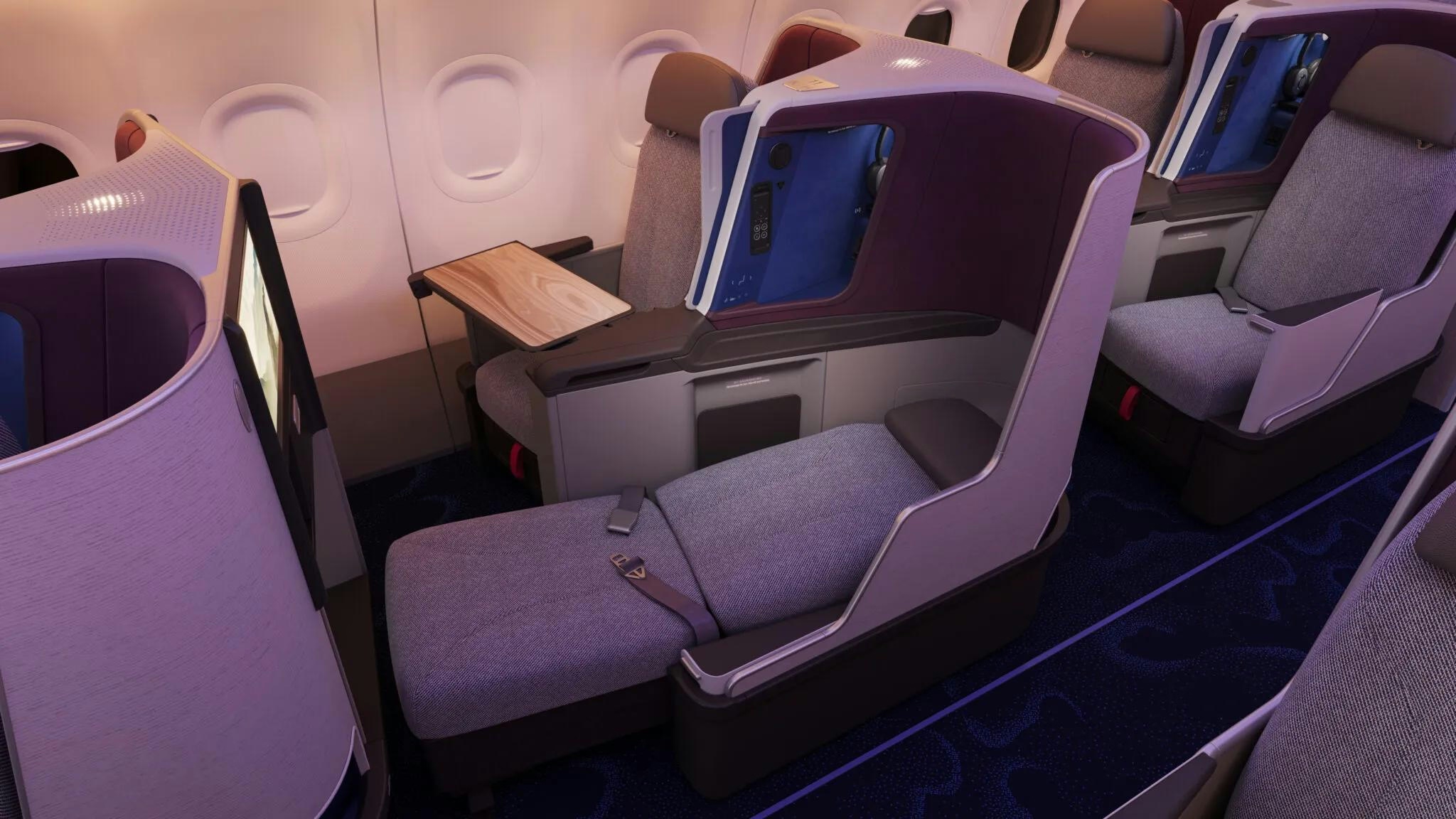
Why Airlines Are Adding Lie-Flat Beds to Narrowbody Jets
Why Airlines Are Adding Lie-Flat Beds to Narrowbody Jets
The traditional perception of narrowbody aircraft as cramped and uncomfortable for international travel is rapidly changing. Once associated with basic reclining seats and limited amenities, these single-aisle jets are now being outfitted with high-end lie-flat suites, a feature previously exclusive to widebody aircraft. This transformation reflects more than a commitment to passenger comfort; it represents a strategic effort by airlines to unlock new revenue opportunities and redefine the economics of long-haul flights.
The Revenue Dynamics of Lie-Flat Seating
Long-haul routes have historically depended on widebody aircraft, whose large cabins allow airlines to distribute operating costs across hundreds of seats. Narrowbody jets, with their smaller cabins, compel carriers to optimize revenue per square foot. Installing lie-flat beds in business class is central to this strategy. A single premium passenger paying between $3,000 and $6,000 for a transatlantic ticket can generate more net revenue than an entire economy cabin filled with $400 seats. By dedicating the forward section of a narrowbody to premium seating, airlines significantly enhance their revenue potential.
This model enables carriers to charge fares comparable to those on widebody services while benefiting from the lower operating costs inherent to single-aisle jets. Without the ability to attract high-spending corporate travelers through lie-flat beds, operating narrowbodies on extended international routes would be financially unsustainable. The presence of these premium seats is thus essential to justifying and maintaining such routes.
Operational Challenges and Competitive Pressures
Retrofitting narrowbody aircraft with lie-flat beds presents several challenges. The high costs of installation and the limited cabin space necessitate careful compromises in seat count and layout. Despite these obstacles, competition among airlines to enhance in-flight comfort has intensified. For instance, Air New Zealand is pushing the envelope with innovations like the Skynest bunk beds, aiming to redefine passenger rest on long-haul flights.
Technological amenities have also become a critical factor in the competitive landscape. American Airlines’ choice to equip its Airbus fleet with Starlink Wi-Fi, while excluding its Boeing aircraft, underscores the difficulties in delivering a consistent customer experience across diverse fleets. Such inconsistencies can affect passenger perceptions and loyalty, adding complexity to the market dynamics.
The Emergence of the Long-Thin Route Model
The introduction of premium narrowbody fleets has given rise to what industry experts term the “long-thin” route revolution. Aircraft such as the Airbus A321XLR are designed specifically for routes connecting secondary cities—markets too small to support a 250-seat widebody but well suited to a fully equipped narrowbody. These jets, featuring lie-flat beds, enable airlines to profitably serve city pairs that previously required inconvenient connections through major hubs.
In this evolving landscape, the lie-flat bed is more than a comfort enhancement; it is a critical component of a business model that maximizes revenue from limited cabin space, opens new direct routes, and intensifies competition for premium travelers. As airlines continue to innovate, the capabilities of single-aisle jets are being redefined—one flat bed at a time.

Etihad Airways Suspends Airbus A380 Flights on Key Route

Aditya Birla Group Seeks Approval for Aircraft Leasing in GIFT City

Qatar Airways Highlights Innovation and Connectivity at Arabian Travel Market 2026

Hong Kong's Five-Year Plan Includes Andrew Fan's Aircraft Parts Processing Hub Proposal

ACIA Aero Leasing Delivers ATR72-600 to Air Nostrum

RTX Appoints Jill Albertelli as Head of Pratt & Whitney

TAT Technologies Joins Beyond Aero Hydrogen Aircraft Program

AURAK Study Highlights Barriers to Air Taxi Adoption in Emerging Economies

Xiamen Air Selects Altitude for 787 Maintenance at Heathrow

Etihad and Swissport Extend Global Partnership
