
Zet AI‑inzichten om in gerichte actie

Trending
Categories
Why American Airlines Chooses the Boeing 787 Over the Airbus A350
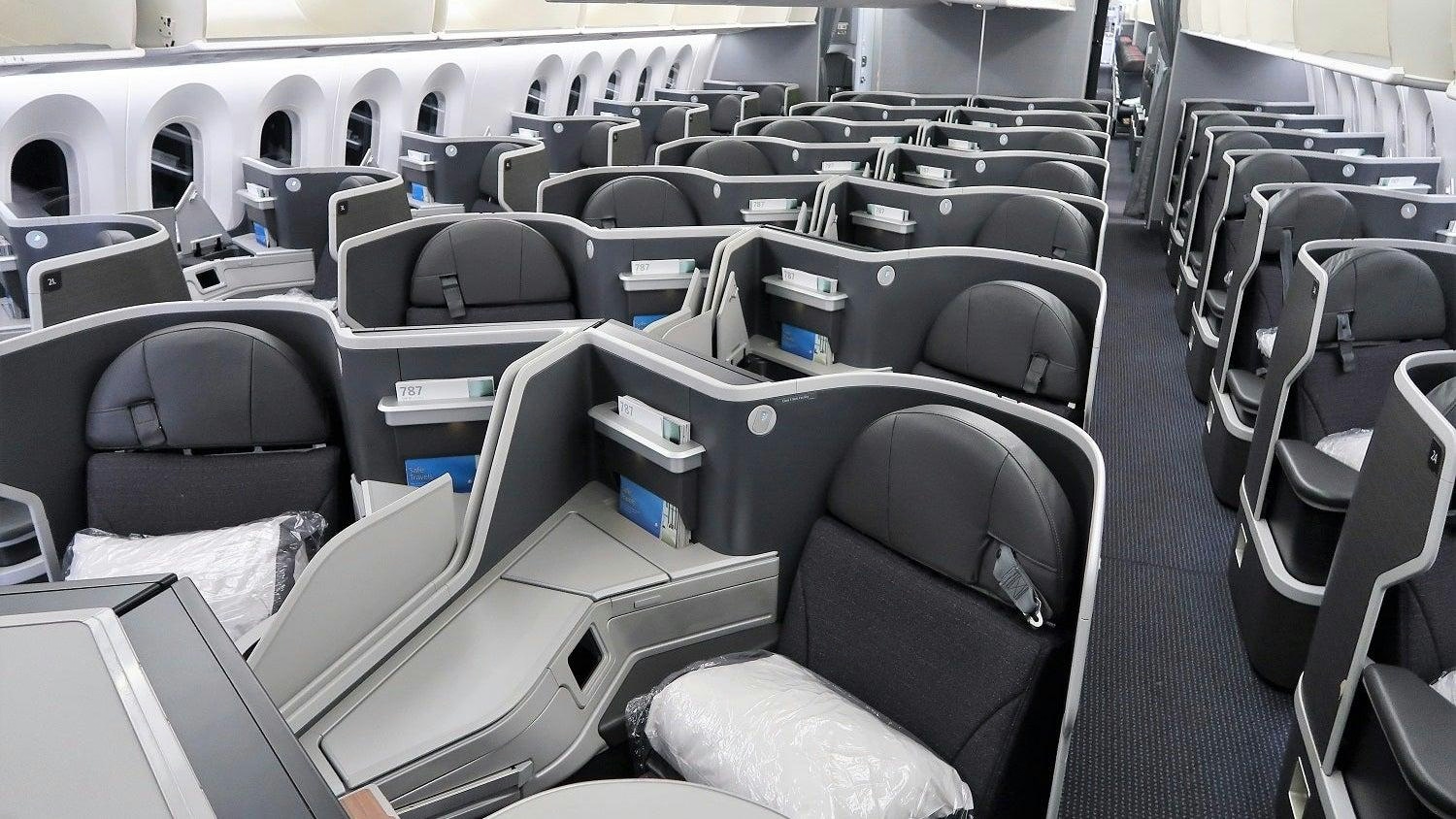
Why American Airlines Chooses the Boeing 787 Over the Airbus A350
The Airbus A350 has gained recognition as a premier widebody aircraft, celebrated for its advanced composite construction, extended range, and fuel efficiency. Numerous leading international carriers have incorporated the A350 into their long-term fleet strategies, capitalizing on its lower operating costs and enhanced passenger comfort. However, American Airlines presents a notable divergence from this trend, having selected the Boeing 787 Dreamliner as the cornerstone of its long-haul operations.
The Airbus A350’s Market Position
The A350 family, equipped with Rolls-Royce Trent XWB engines and featuring a carbon-fiber fuselage, offers a compelling combination of range, capacity, and reduced emissions. The A350-900 variant is optimized for long, thin routes, while the larger A350-1000 is designed to serve high-demand trunk routes. Airlines benefit from operational efficiencies through shared training and maintenance across these variants, while passengers experience improved cabin pressurization and humidity levels, contributing to enhanced comfort and premium yields. Additionally, the A350 includes an ultra-long-range version, currently operated by Singapore Airlines, and a forthcoming freighter model, the A350F, aimed at modernizing cargo fleets in response to increasingly stringent environmental regulations.
American Airlines’ Fleet Strategy
American Airlines’ engagement with the A350 began indirectly through US Airways, which had placed an order for 20 A350s in 2005 to support its long-haul ambitions following restructuring. After the merger with American Airlines, the combined carrier reevaluated its fleet requirements and ultimately canceled the A350 order, opting instead to concentrate on the Boeing 787 for its future widebody needs.
This decision was influenced by several factors. The Boeing 787’s operational flexibility, fuel efficiency, and compatibility with American’s existing Boeing fleet presented a more attractive proposition. The airline concluded that the 787 better aligned with its network strategy and capacity demands, facilitating streamlined pilot training, maintenance, and scheduling processes.
Industry Dynamics and Market Implications
American Airlines’ exclusive commitment to the Boeing 787 occurs amid intensified competition between Boeing and Airbus. In February, Boeing reported its highest aircraft delivery figures in nine years, while Airbus maintained steady deliveries despite a slower start to the year. American’s choice may have broader implications for market share, potentially strengthening Boeing’s position and prompting strategic responses from Airbus.
In response, competitors might adjust their fleet strategies or seek to leverage the A350’s advantages. Airbus may pursue technological enhancements or targeted marketing initiatives to bolster the A350’s appeal and regain traction in the North American market.
Influence on Route Expansion
The selection of the Boeing 787 also impacts transatlantic route development. As American Airlines, alongside carriers such as Aeromexico and Alaska Airlines, plans new long-haul services, the preference for the 787 over the A350 could affect route economics, flight frequency, and passenger experience. This decision highlights the intricate relationship between aircraft capabilities, market forces, and airline strategy in shaping the future landscape of international air travel.
While the Airbus A350 remains a foundational aircraft for many global airlines, American Airlines’ choice of the Boeing 787 reflects a deliberate alignment of fleet efficiency, operational requirements, and market positioning—factors that continue to influence the competitive dynamics of commercial aviation.

Etihad Airways Suspends Airbus A380 Flights on Key Route

Aditya Birla Group Seeks Approval for Aircraft Leasing in GIFT City

Qatar Airways Highlights Innovation and Connectivity at Arabian Travel Market 2026

Hong Kong's Five-Year Plan Includes Andrew Fan's Aircraft Parts Processing Hub Proposal

ACIA Aero Leasing Delivers ATR72-600 to Air Nostrum

RTX Appoints Jill Albertelli as Head of Pratt & Whitney

TAT Technologies Joins Beyond Aero Hydrogen Aircraft Program

AURAK Study Highlights Barriers to Air Taxi Adoption in Emerging Economies

Xiamen Air Selects Altitude for 787 Maintenance at Heathrow

Etihad and Swissport Extend Global Partnership
