
Zet AI‑inzichten om in gerichte actie

Trending
Categories
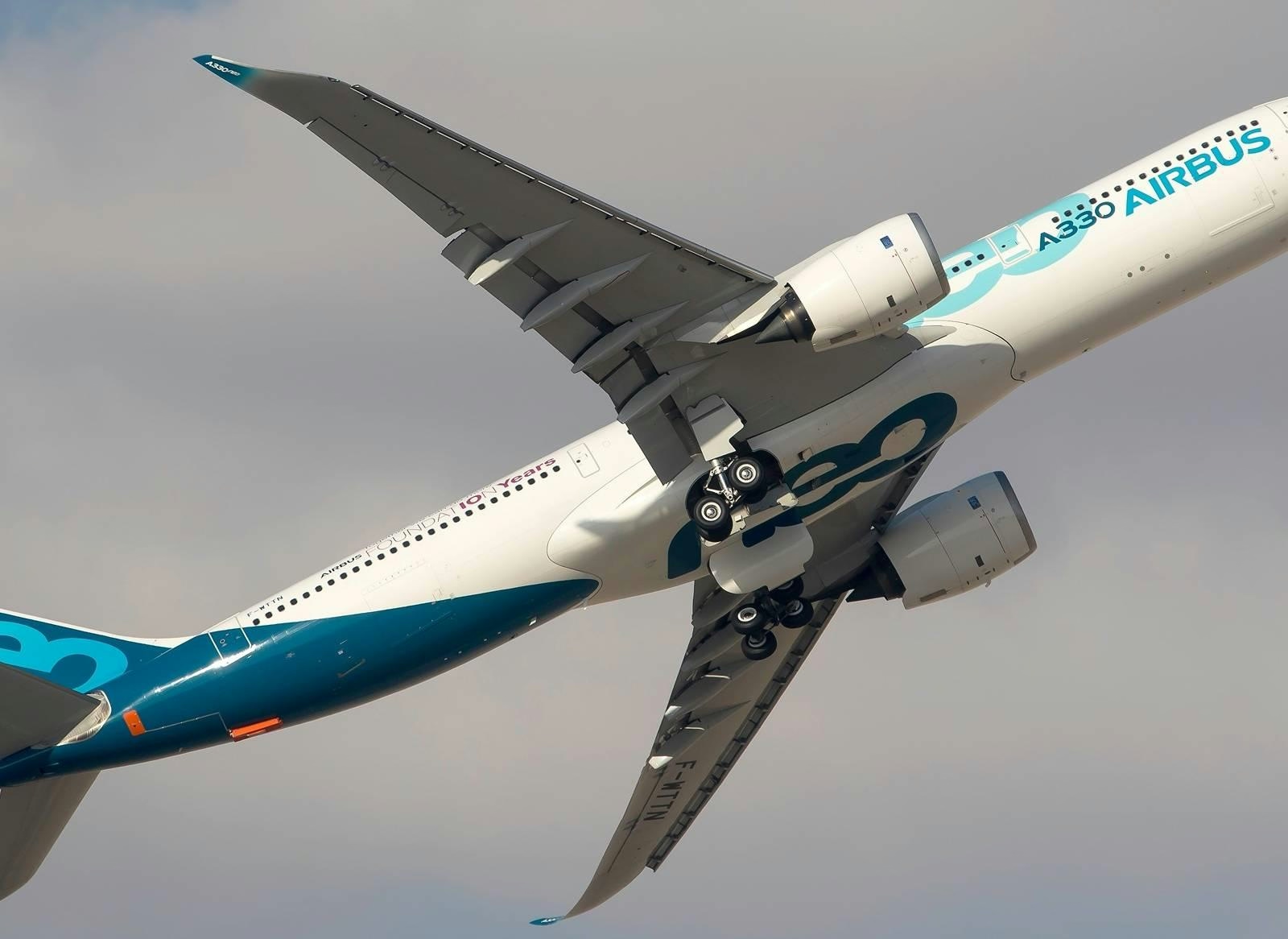
Why Emirates Dropped the Airbus A330neo from Its Fleet Plans
Why Emirates Dropped the Airbus A330neo from Its Fleet Plans
Initial Plans and Strategic Shift
In early 2019, Emirates appeared set to integrate the Airbus A330neo as a key component of its future fleet. The Dubai-based carrier announced intentions to acquire up to 40 A330-900s alongside 30 A350-900s, marking a notable departure from its traditional reliance on the Airbus A380 and Boeing 777. This dual acquisition was part of a broader strategy to diversify the fleet and better align capacity with varying route demands. However, within a few months, the A330neo was quietly removed from Emirates’ plans, supplanted by a larger commitment to the A350.
This shift coincided with Emirates’ reassessment of its long-term fleet strategy. On 14 February 2019, Emirates and Airbus jointly announced a reduction in the airline’s A380 order from 162 to 123 aircraft, effectively signaling the end of the superjumbo’s production due to waning demand. Alongside this, Emirates revealed a provisional agreement for 40 A330-900s and 30 A350-900s, valued at $21.4 billion based on list prices at the time. Deliveries of the A330neos were anticipated to begin in 2021, with the A350s scheduled from 2024.
Nature of the Agreement and Operational Considerations
Despite public references to an “order,” the arrangement was a non-binding Heads of Agreement rather than a finalized purchase contract. Emirates’ financial disclosures characterized the deal as a commitment rather than a firm order. The A330neo was a logical choice given Emirates’ prior experience operating 29 earlier-generation A330s until 2016. Reintroducing a smaller widebody aircraft promised greater operational flexibility on regional and medium-haul routes where the A380 or 777 were considered too large. The A350, by contrast, was intended to serve longer-haul markets and expand the airline’s reach to new destinations.
Factors Leading to the A330neo’s Exclusion
Several factors contributed to the A330neo’s quiet removal from Emirates’ fleet plans. By the time of the Dubai Airshow in November 2019, Emirates had signed a firm order for 50 A350-900s valued at $16 billion, with no mention of the A330neo. Since no binding order had been placed for the A330neo, the airline did not issue a formal cancellation.
Industry insiders attribute the decision largely to production challenges faced by Airbus. The manufacturer encountered quality issues with the A330neo’s horizontal tail plane, which led to temporary delivery suspensions and raised concerns about the aircraft’s reliability and delivery schedule. These setbacks made the A350 a more attractive and dependable option for Emirates as it adapted to evolving operational requirements.
Market Context and Regional Dynamics
The broader market environment also played a role in Emirates’ decision. Competitors have adopted varied approaches to fleet modernization: American Airlines, for instance, has focused on upgrading its Boeing 777-300ERs to enhance premium offerings, while Gulf Air has explored innovative alternatives such as JetZero’s blended-wing-body Z4. Additionally, ongoing conflicts in the Middle East have introduced further uncertainty into fleet planning, complicating long-term commitments for carriers in the region.
Emirates’ decision to forgo the A330neo reflects a pragmatic response to operational realities, production challenges, and shifting market dynamics. By concentrating on the A350, the airline positions itself to meet changing demand patterns while maintaining flexibility amid an uncertain industry landscape.

Etihad and Swissport Extend Global Partnership
Sepehran Airlines B737 Returns to Mashhad After Tyre and Engine Issues

Etihad Deploys Widebody Fleet to Meet Strong Demand

Korean Air Finalizes $36.2 Billion Deal with Boeing

Australia’s RFDS Queensland Section Orders Six King Air 260Cs

Korean Air Finalizes Order for 103 Boeing Jets and Engines
Embraer E195-E2 Features Distinctive Engine Placement Among Regional Jets
What Passengers Can Expect on Boeing’s New 777X Jet

How Ethiopian Airlines Became Africa’s Leading Carrier Amid Gulf Competition

Joby Aviation Extends Autonomous Flight Capabilities with Cross-Country Tour
