
Zet AI‑inzichten om in gerichte actie

Trending
Categories
Why Is the Airbus A330neo Limited to a Single Engine Type?
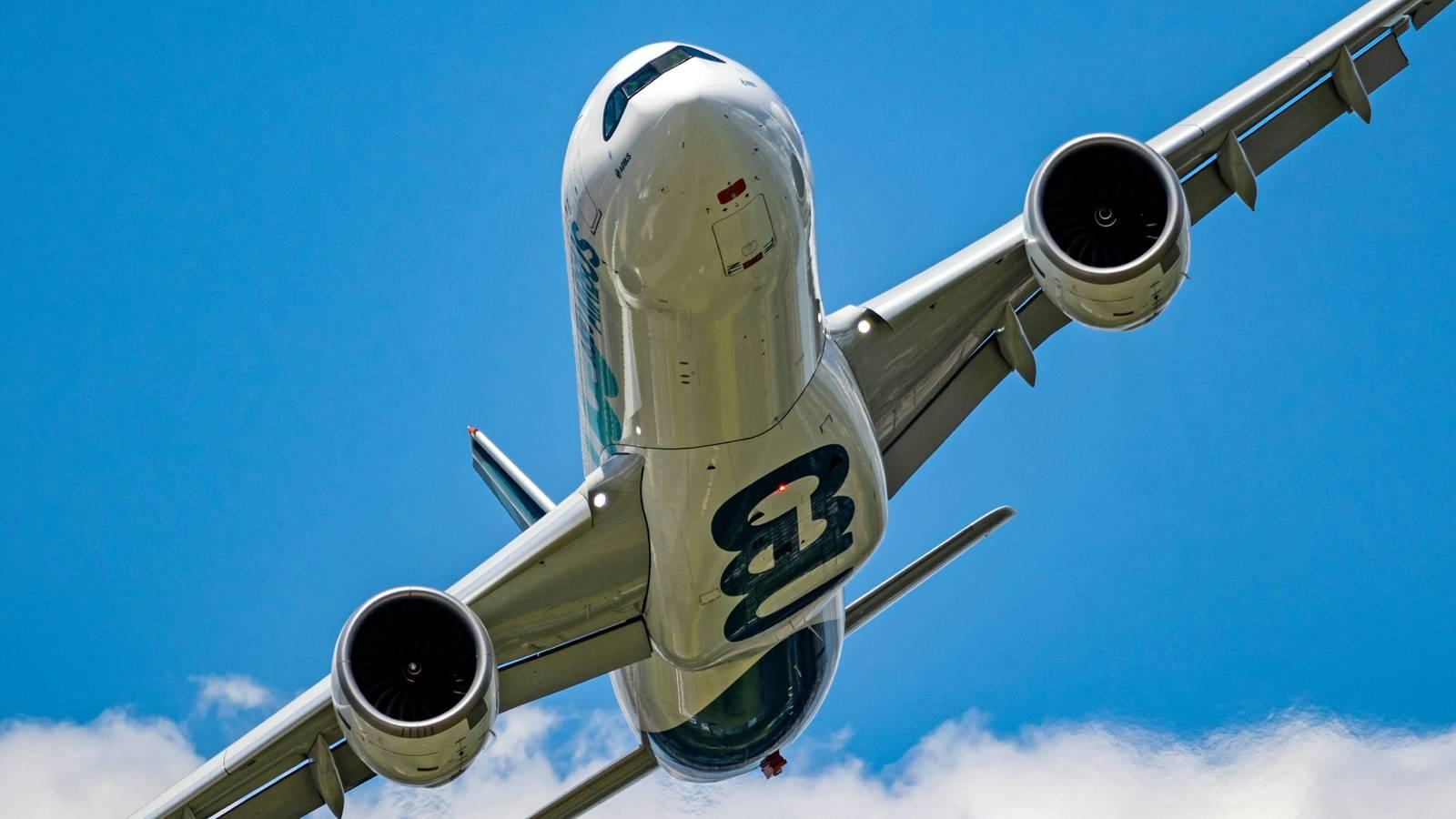
Why the Airbus A330neo Is Limited to a Single Engine Type
The Airbus A330neo is exclusively powered by the Rolls-Royce Trent 7000 engine, a decision driven by a combination of commercial, financial, and technical factors. This choice was not due to limitations from other engine manufacturers but rather a strategic collaboration between Airbus and Rolls-Royce aimed at streamlining development and maximizing aircraft performance.
Strategic Development and Design Considerations
Airbus introduced the A330neo (new engine option) as a modernization of its well-established A330 airframe, which is recognized for its efficiency and reliability. Unlike the entirely new A350, designed to meet higher capacity and performance requirements, the A330neo serves as a cost-effective upgrade, effectively replacing the smallest A350 variant, the A350-800. By committing to a single engine type, Airbus was able to simplify the aircraft’s design and maintenance processes, thereby reducing development timelines and operational complexity for airlines.
The exclusive partnership with Rolls-Royce enabled Airbus to optimize the A330neo’s systems and aerodynamics specifically around the Trent 7000’s capabilities. This engine builds upon the proven reliability of the Trent XWB and incorporates advanced compressor technology derived from the Trent 1000. It offers an 11% improvement in specific fuel consumption compared to the Trent 700 engine used on the earlier A330ceo model. Additionally, the Trent 7000’s higher bypass ratio significantly reduces noise levels—halving the perceived noise footprint—and lowers fuel burn, which contributes to decreased CO2 emissions.
Market Implications and Competitive Challenges
While the single-engine approach has clear technical and operational advantages, it also presents challenges in a competitive market. Rolls-Royce’s confidence in the Trent 7000 is supported by its strong performance and reliability record, yet Airbus’s lack of alternative engine options contrasts with competitors such as Boeing, which offers multiple engine choices for the 787 Dreamliner. This limitation may influence airline purchasing decisions, as some operators prefer the flexibility to select engines that align with their specific operational requirements or existing maintenance infrastructure.
The absence of engine choice could also affect Airbus’s future negotiations and partnerships with other engine manufacturers, potentially impacting the A330neo’s competitiveness in a market where airlines increasingly prioritize customization and flexibility. Nonetheless, Airbus’s streamlined approach has allowed the company to deliver a highly optimized and cost-effective aircraft package, leveraging new technologies and aerodynamic improvements originally developed for the A350 program.
Ultimately, the decision to limit the A330neo to a single engine type reflects a deliberate balance between enhancing a proven airframe with advanced efficiency and accepting certain market trade-offs. For many airlines, this results in a reliable, modern widebody aircraft that offers improved performance and lower operating costs, albeit with fewer engine options.

Etihad Airways Suspends Airbus A380 Flights on Key Route

Aditya Birla Group Seeks Approval for Aircraft Leasing in GIFT City

Qatar Airways Highlights Innovation and Connectivity at Arabian Travel Market 2026

Hong Kong's Five-Year Plan Includes Andrew Fan's Aircraft Parts Processing Hub Proposal

ACIA Aero Leasing Delivers ATR72-600 to Air Nostrum

RTX Appoints Jill Albertelli as Head of Pratt & Whitney

TAT Technologies Joins Beyond Aero Hydrogen Aircraft Program

AURAK Study Highlights Barriers to Air Taxi Adoption in Emerging Economies

Xiamen Air Selects Altitude for 787 Maintenance at Heathrow

Etihad and Swissport Extend Global Partnership
