
Zet AI‑inzichten om in gerichte actie

Trending
Categories
Wisk Tests Autonomous Air Taxi Operations with Single Supervisor
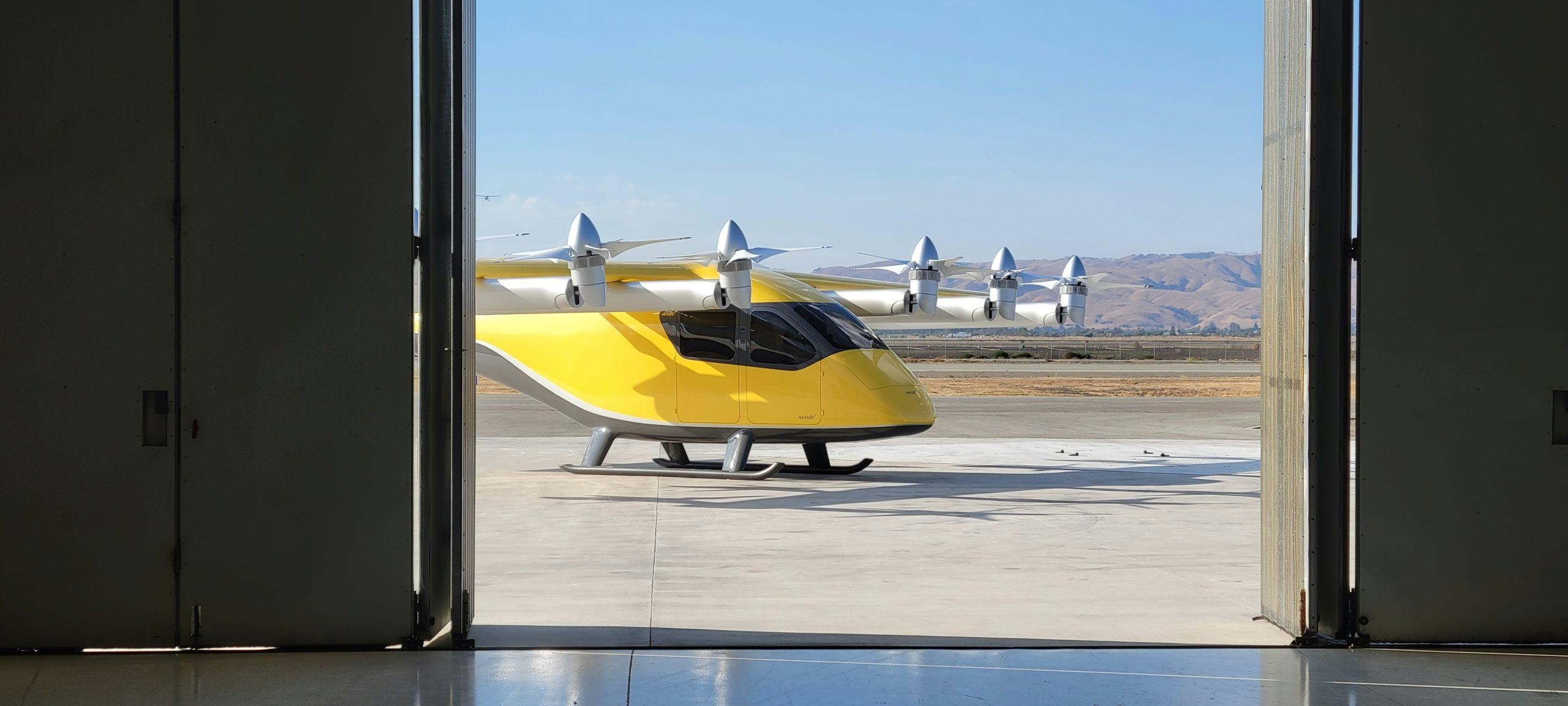
Wisk Advances Autonomous Air Taxi Operations with Single-Supervisor Model
Boeing-owned Wisk Aero has made a notable advancement in the development of scalable autonomous air taxi services by successfully simulating a scenario in which a single ground-based supervisor manages three autonomous air taxis operating within controlled airspace. Conducted in partnership with NASA at two California locations, these tests represent the first evaluation of a 1:3 supervisor-to-aircraft ratio—a model considered vital for achieving commercial viability and operational scalability in autonomous air mobility (AAM).
Although no physical aircraft were flown during the simulations, Wisk underscored the significance of these high-workload exercises in demonstrating how pilotless air taxis could safely navigate congested airspace while transporting passengers in the future. The simulations linked Wisk’s Autonomy Lab in Mountain View with NASA’s Future Flight Central at the Ames Research Center, employing a 360-degree, full-scale airport simulation environment. Test flights adhered to instrument flight rules between Moffett Federal Airfield and San Martin Airport, replicating real-world conditions in the San Francisco Bay Area.
Simulation Details and Operational Insights
The “human-in/over-the-loop” simulations involved air traffic controllers interacting with Wisk’s supervisors across a variety of routine and contingency scenarios. The primary objective was to validate standardized procedures and evaluate the resilience of Wisk’s operating model under demanding conditions. Data collected during the tests included communication response times, task latency, situational awareness, and cognitive workload, measured using NASA’s Task Load Index and the Bedford Workload Scale.
Central to the tests were Wisk’s Multi-Vehicle Supervisor system and remote supervision technologies, which the company described as critical components in building the ecosystem necessary for safe and scalable autonomous flight. This initiative forms part of a five-year Non-Reimbursable Space Act Agreement with NASA, aimed at advancing AAM operations under instrument flight rules.
Safety Concerns and Industry Context
Wisk’s progress unfolds amid increased scrutiny over safety practices within the autonomous aviation sector. A former employee has filed a lawsuit alleging termination after raising concerns about reduced software testing intended to meet project deadlines. This legal action has drawn attention to potential safety risks and may prompt further regulatory examination by agencies such as the Federal Aviation Administration (FAA). These developments underscore the broader challenges the industry faces in balancing rapid technological innovation with stringent safety standards.
The competitive environment is also intensifying, with companies like Waymo expanding autonomous ride-hailing services and emphasizing safety and operational milestones as key differentiators. As Wisk and its competitors move closer to commercial deployment, demonstrating both technological feasibility and robust safety protocols will be essential to securing public trust and regulatory approval.
Wisk asserts that its latest simulation campaign not only confirms the technical viability of single-supervisor operations but also reflects its commitment to fostering a safe and scalable future for autonomous air taxis. Continued collaboration with regulators and transparent safety practices will remain crucial as the advanced air mobility industry evolves.

Etihad and Swissport Extend Global Partnership

Sepehran Airlines B737 Returns to Mashhad After Tyre and Engine Issues

Etihad Deploys Widebody Fleet to Meet Strong Demand

Korean Air Finalizes $36.2 Billion Deal with Boeing
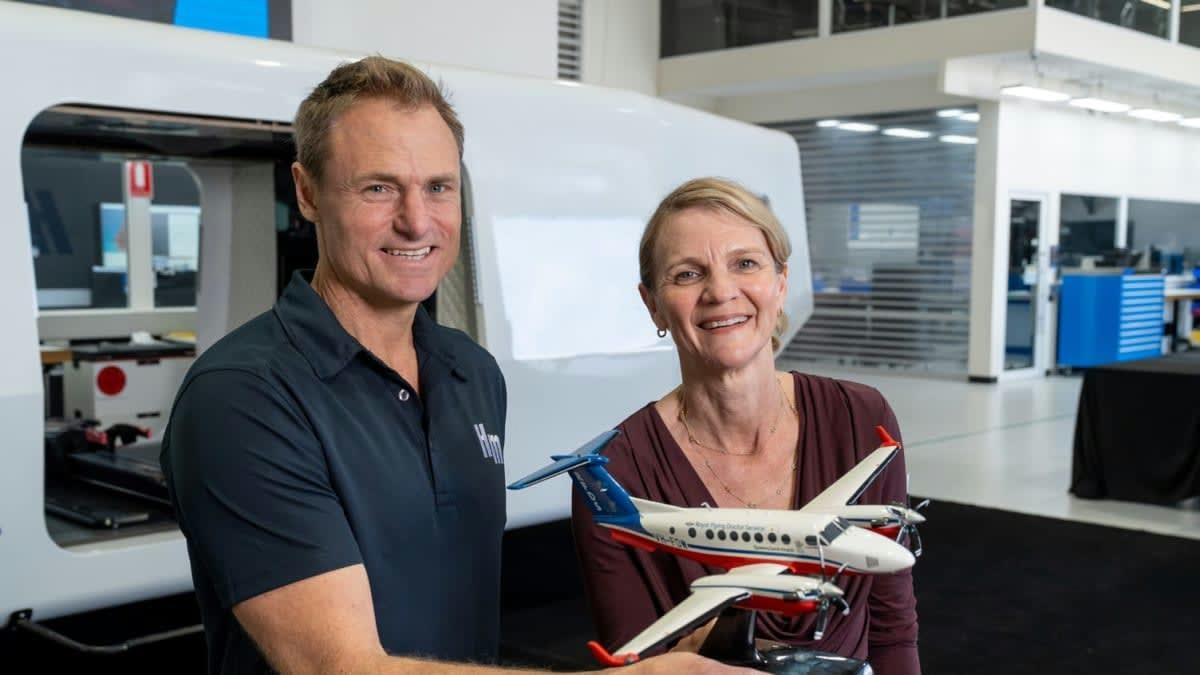
Australia’s RFDS Queensland Section Orders Six King Air 260Cs

Korean Air Finalizes Order for 103 Boeing Jets and Engines
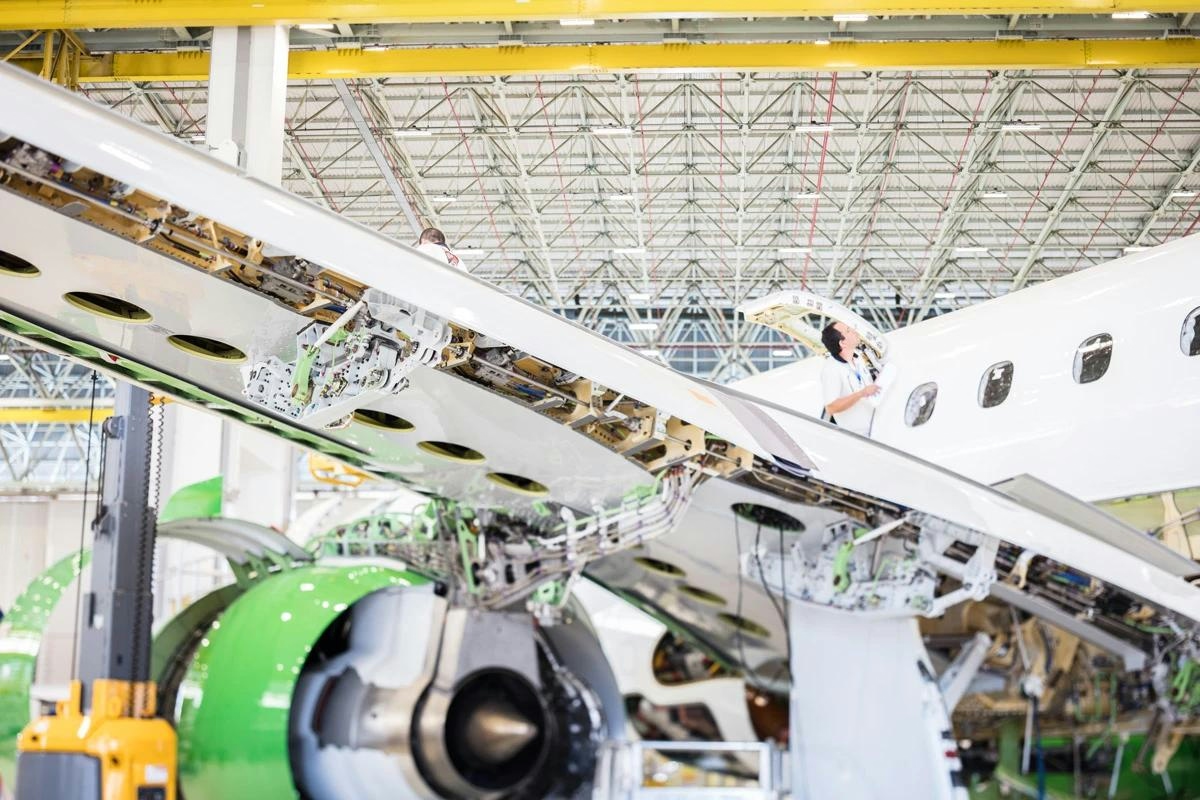
Embraer E195-E2 Features Distinctive Engine Placement Among Regional Jets
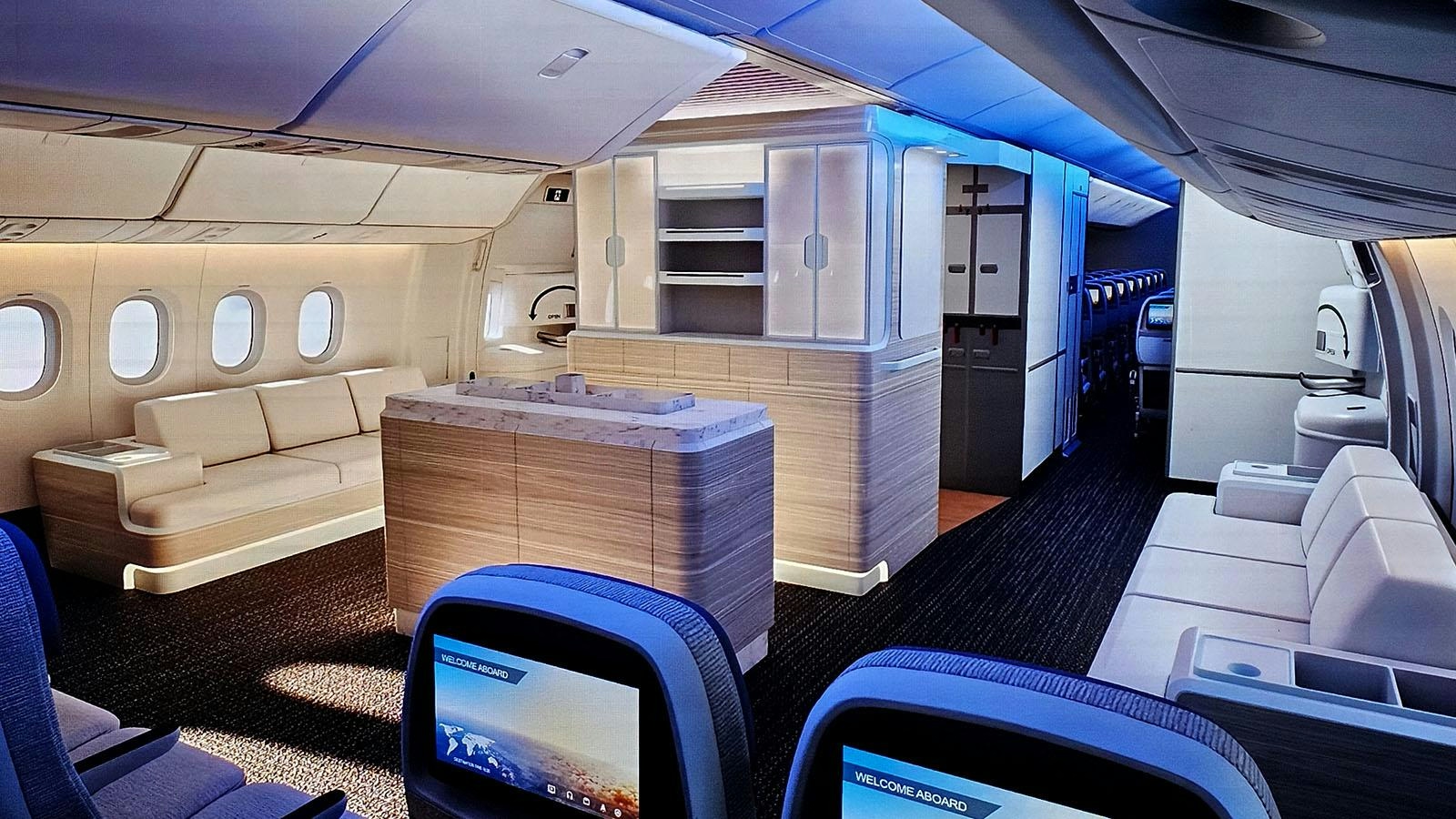
What Passengers Can Expect on Boeing’s New 777X Jet
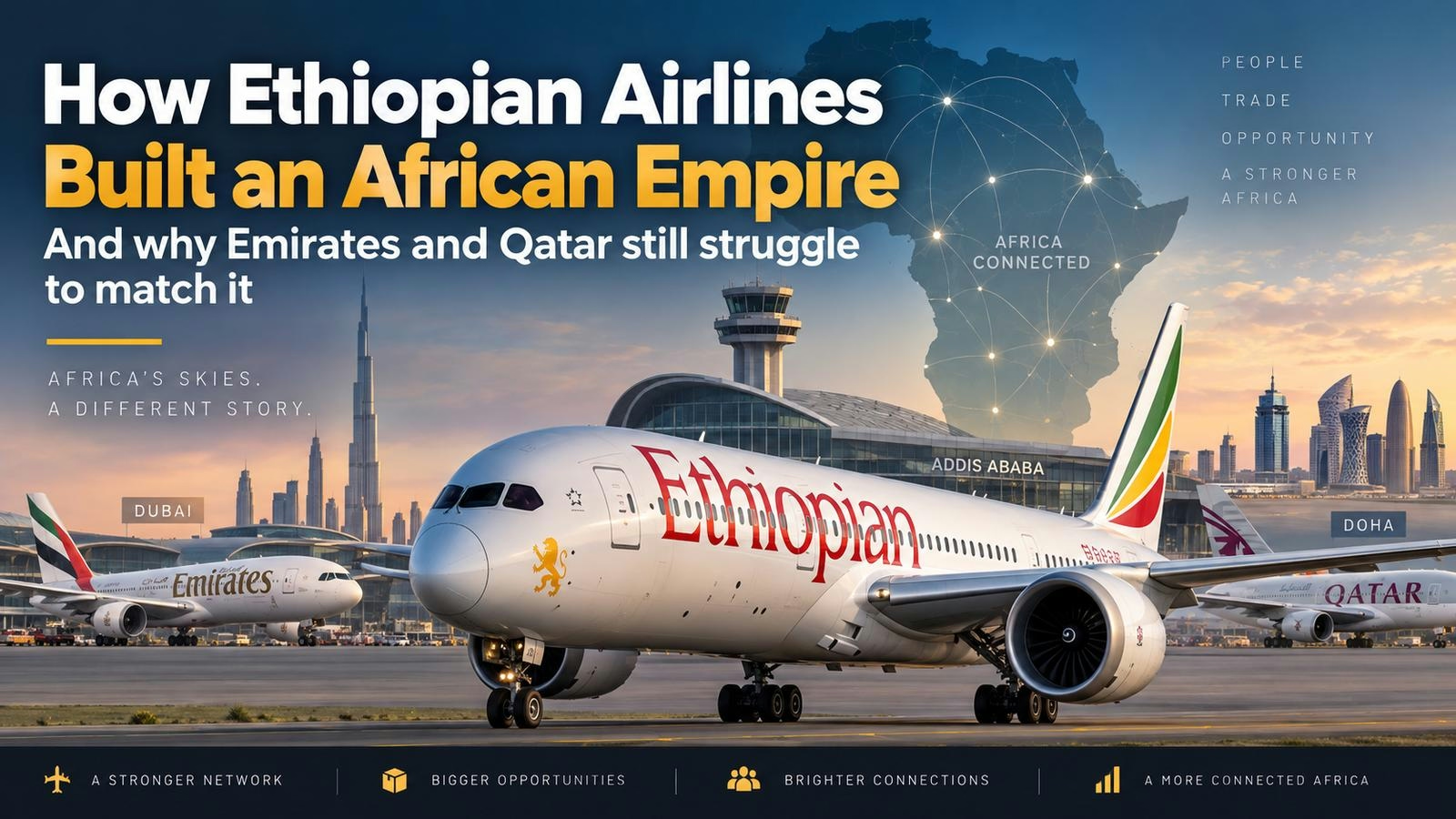
How Ethiopian Airlines Became Africa’s Leading Carrier Amid Gulf Competition

Joby Aviation Extends Autonomous Flight Capabilities with Cross-Country Tour
