Afbeelding

AeroGenie — Uw intelligente copiloot.

Vraag wat je wilt. Analyseer alles. Handel onmiddellijk.

Trending

Categories

WLFC Finalizes Leaseback of Six Dash 8-400 Aircraft with Porter Airlines
March 4, 2026By ePlane AI
WLFC Finalizes Leaseback of Six Dash 8-400 Aircraft with Porter Airlines
0
0
Willis Lease Finance
Porter Airlines
Dash 8-400

WLFC Finalizes Leaseback of Six Dash 8-400 Aircraft with Porter Airlines

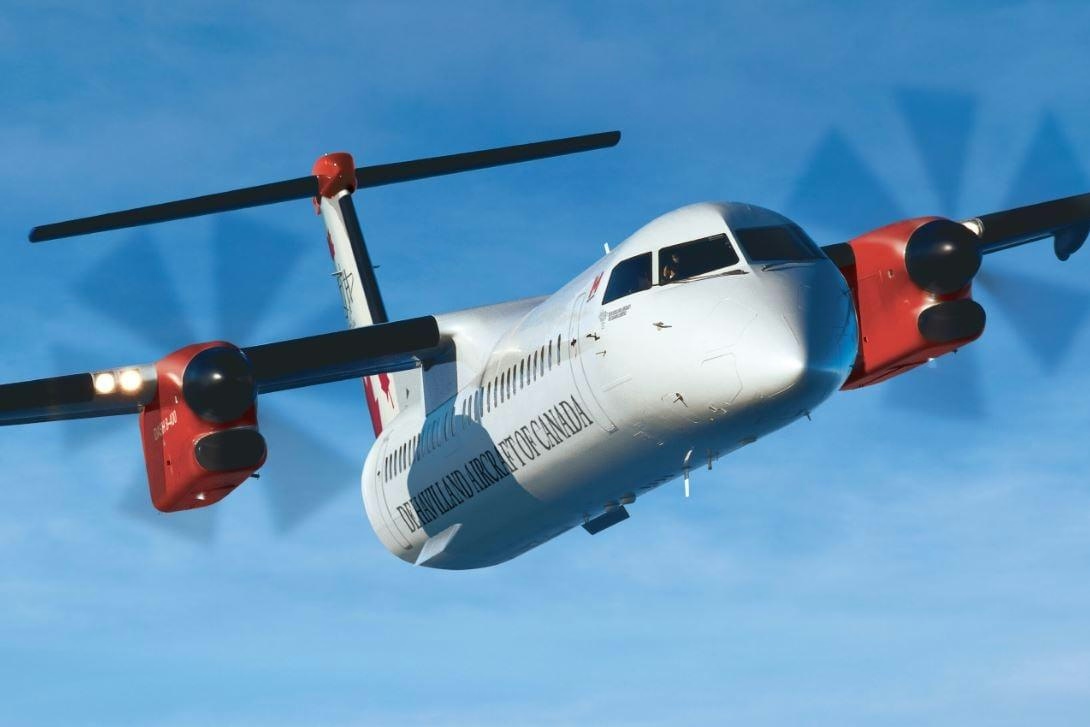
Willis Lease Finance Corporation (WLFC) has completed a significant transaction involving the purchase and leaseback of six De Havilland Dash 8-400 aircraft with Porter Airlines. This deal underscores the ongoing commitment of both companies to the regional turboprop market. The aircraft, operated from Porter’s Toronto base, will remain central to the airline’s regional network, continuing to provide essential connectivity across its routes.

Strategic Importance of the Transaction

Austin Willis, Chief Executive Officer of WLFC, highlighted the strategic value of the agreement, emphasizing the company’s confidence in the turboprop sector. He noted that the investment complements WLFC’s extensive turboprop engine portfolio and expressed optimism about expanding the partnership with Porter through future aircraft and engine opportunities. From Porter Airlines’ perspective, Executive Vice President and Chief Financial Officer Robert Palmer stressed the critical role the Dash 8-400 fleet has played in the airline’s operations for nearly two decades. He described the leaseback arrangement as a means to strengthen Porter’s growth trajectory by partnering with an experienced lessor.

Context Within the Aviation Industry

This leaseback transaction occurs amid broader challenges facing the aviation industry, particularly concerning aircraft reliability and supply constraints. AerCap CEO Aengus Kelly recently observed that airlines are increasingly turning to additional aircraft acquisitions to offset the impact of heightened downtime, highlighting the growing importance of flexible leasing solutions. Concurrently, other carriers are pursuing fleet renewal strategies to enhance operational efficiency. For instance, Croatia Airlines’ transition to Airbus A220 aircraft has introduced both opportunities and financial complexities, while Air Astana’s large order for Airbus A320neo family jets reflects sustained demand for modern, fuel-efficient fleets.

WLFC’s Role in Supporting Regional Aviation

The deal with Porter Airlines exemplifies WLFC’s capacity to provide strategic, value-driven leasing and financing solutions tailored to the evolving needs of airline partners worldwide. Turboprop aircraft continue to serve as a vital element of regional air connectivity, offering efficient and reliable service to communities across North America and beyond. By facilitating this leaseback, WLFC reinforces its commitment to supporting airlines through flexible arrangements that address current market dynamics.

As the regional aviation sector navigates ongoing industry trends and operational pressures, partnerships such as that between WLFC and Porter Airlines are poised to play a crucial role in sustaining reliable service and fostering future growth.

More news
Dubai Opens First Commercial Air Taxi Vertiport

Dubai Opens First Commercial Air Taxi Vertiport

Dubai Launches First Commercial Air Taxi Vertiport Dubai has inaugurated its first commercial air taxi vertiport, marking a pivotal advancement in the city’s pursuit of cutting-edge urban air mobility. Situated near Dubai International Airport, the newly opened four-story facility covers approximately 3,000 square meters and includes two dedicated takeoff and landing pads designed for electric vertical takeoff and landing (eVTOL) aircraft. The vertiport also features a two-level parking structure and is engineered to handle up to 170,000 passengers annually. Commercial operations are anticipated to commence by the end of 2026. Expanding Urban Air Mobility Infrastructure This development forms part of a larger strategy to establish a network of four vertiports throughout Dubai, with future sites planned for the city center, Palm Jumeirah, and Dubai Marina. The initiative aims to significantly reduce travel times within the city; for instance, a flight from Dubai International Airport to Palm Jumeirah is expected to take approximately 10 minutes, a substantial improvement over the current 45-minute car journey. The vertiport is equipped with state-of-the-art infrastructure, including charging stations for electric aircraft, underscoring Dubai’s commitment to sustainable and technologically advanced transportation solutions. Dubai authorities have hailed the project as a “first of its kind,” highlighting its importance in shaping the future landscape of urban mobility. The launch coincides with a rapidly evolving competitive environment in autonomous and aerial transport. Notably, companies such as WeRide and Uber have recently introduced fully driverless robotaxi services in Dubai, signaling a broader regional shift toward autonomous mobility. Challenges and Global Competition Despite the promising outlook, the air taxi sector faces potential challenges stemming from ongoing legal disputes among major industry players. In the United States, Joby Aviation and Archer Aviation are engaged in legal battles, including a U.S. Trade Commission investigation into Joby for alleged import violations. These conflicts may influence global market dynamics and regulatory frameworks, potentially affecting the pace at which air taxi services are adopted in Dubai and other international markets. In response to these challenges, competitors are intensifying efforts to secure regulatory approvals and expand their operational footprint. For example, Port San Antonio in Texas is emerging as a significant testing ground for air taxi technology through a federal pilot program, reflecting the global race to lead in urban air mobility innovation. As Dubai advances its vertiport network, the city is not only establishing a benchmark for sustainable urban transportation but also navigating the complexities of a fast-changing and highly competitive global market.
Cresta Expands Enterprise AI Collaborations with United Airlines, Aqua Finance, and Accenture

Cresta Expands Enterprise AI Collaborations with United Airlines, Aqua Finance, and Accenture

Cresta Expands Enterprise AI Collaborations with United Airlines, Aqua Finance, and Accenture Cresta is solidifying its position in the enterprise AI market by expanding collaborations with prominent organizations including United Airlines, Aqua Finance, and Accenture. The company’s unified platform integrates AI agents, real-time guidance, and conversation analytics, enabling enterprises to optimize customer interactions and drive measurable business value. Strengthening Partnerships and Industry Presence A key highlight of Cresta’s recent activities was its participation in the Accenture AI Leaders Podcast, where company executives explored how AI can transform customer conversations into a strategic advantage. By deepening its alliance with Accenture, a leading global consulting firm, Cresta is enhancing its role in large-scale customer experience (CX) transformation initiatives. This partnership aligns with Accenture’s reported revenue growth fueled by AI adoption, reflecting a broader market trend and increasing demand for enterprise AI solutions. At the HumanX event in San Francisco, Cresta further demonstrated its commitment to innovation and customer engagement. The company hosted an exhibition booth alongside an AI-powered “Wellness Lounge,” where its AI agent facilitated scheduling massages for attendees. Cresta’s executive Ping Wu contributed to panel discussions focused on scaling AI from pilot projects to enterprise-wide deployments, underscoring the company’s thought leadership in the AI sector. Operational Impact Across Sectors Cresta showcased significant operational improvements achieved by United Airlines through the use of its real-time AI insights. The airline reported a 50% reduction in response times, a 50% decrease in contacts for key inquiries, and a 15% improvement in handle time. These results highlight Cresta’s ability to deliver efficiency gains in high-volume, service-intensive environments, reinforcing its appeal to blue-chip clients. In the financial services sector, Aqua Finance serves as a notable reference customer. The deployment of Cresta’s Knowledge Agent, which integrates CRM data, knowledge bases, and workflows, resulted in a 50% reduction in after-call work and a 61% increase in dollars collected per hour. These improvements not only enhance productivity and revenue but also contribute to higher agent satisfaction and more effective coaching, reflecting Cresta’s dual focus on operational performance and employee experience. Navigating a Competitive Landscape Cresta operates within a rapidly evolving and competitive enterprise AI market. Rivals such as OpenAI are intensifying their efforts, with internal revenue growth and strategic moves targeting competitors like Anthropic. Meanwhile, Accenture’s partnerships—including its collaboration with Anthropic to scale AI-driven cybersecurity operations and its investment in General Robotics to advance AI-powered robotics in manufacturing and logistics—illustrate the dynamic environment in which Cresta competes. In response, Cresta has launched a U.S. campaign titled “AI Agents That Pass the Test,” emphasizing key attributes such as performance, latency, security, guardrails, and customer experience. With April designated as Customer Appreciation Month and a series of success stories from enterprise clients, Cresta’s initiatives underscore a strategic focus on delivering demonstrable return on investment, building trust, and driving scaled adoption of AI agents. As the enterprise AI sector grows increasingly competitive, Cresta’s emphasis on operational results and strategic partnerships positions it for continued advancement.
Association of Flight Attendants Urges Airlines to Address Engine Oil Fume Incidents

Association of Flight Attendants Urges Airlines to Address Engine Oil Fume Incidents

Association of Flight Attendants Urges Airlines to Address Engine Oil Fume Incidents Persistent Safety Concerns Over Contaminated Bleed Air Contaminated bleed air events, which occur when heated engine oil leaks into the aircraft cabin air, have posed a significant safety and health concern for decades. Flight crews currently serve as the primary line of defense, relying heavily on their sense of smell to detect these fume incidents. The odors are often described as resembling “dirty socks” or a similarly foul scent. Without chemical sensors installed onboard, the ability of crew members to recognize these odors promptly is crucial for immediate response and accurate post-flight reporting. The Association of Flight Attendants (AFA) has recently voiced concerns regarding the introduction of Eastman Turbo Oil 2330, a new “low odor” engine oil designed to have an “inoffensive odor profile.” The union warns that the absence of a distinctive unpleasant smell could hinder crews’ ability to quickly identify contaminated bleed air, potentially jeopardizing both health and flight safety. “Odor is a matter of safety,” the AFA emphasized, underscoring the importance of timely detection by crew members to effectively track and address fume events. Advocacy for Safer Alternatives and Industry Implications In contrast to low odor oils, the AFA advocates for alternatives such as TN 940SE, an engine oil that maintains a detectable odor when heated while offering a lower toxicity profile. This balance aims to reduce health risks during fume incidents without compromising the crew’s ability to identify contamination. The union has formally urged the airlines it represents to oppose the adoption of low odor oils and to support the certification and use of safer, more detectable alternatives. This issue arises amid increasing legal and regulatory pressures on airlines concerning toxic fume incidents. Industry experts warn that unresolved fume events could result in substantial insurance claims and litigation, drawing parallels to the costly asbestos cases of previous decades. Regulatory authorities are intensifying scrutiny, with the possibility of fines for airlines that fail to adequately address or disclose such incidents. Market forces are also evolving, as airlines face growing public demand for enhanced safety measures and transparency. Some carriers may proactively adopt safer engine oils and improved detection protocols, potentially establishing new industry benchmarks. Concurrently, labor relations are experiencing shifts; United Airlines recently reached a tentative agreement with its flight attendants’ union, marking the first wage increase in six years. This development may influence broader negotiations and working conditions across the sector, with engine oil fume management remaining a key issue in labor discussions. The AFA continues to encourage airlines to collaborate in preventing the widespread use of low odor oils and to prioritize the safety of both crew and passengers. For further information on fume events and ongoing advocacy efforts, the union directs interested parties to its website and resources such as the Aluminum Lady series, which provides both informative and satirical insights into the issue.
US and Leading Nations Accelerate AI Adoption in Global Air Transport

US and Leading Nations Accelerate AI Adoption in Global Air Transport

US and Leading Nations Accelerate AI Adoption in Global Air Transport The global air transport industry is undergoing a profound digital transformation, with artificial intelligence (AI) emerging as a pivotal force in enhancing operational efficiency and passenger experience. The United States has joined other major economies—including India, Germany, the United Kingdom, France, Italy, Spain, and China—in intensifying efforts to integrate AI technologies across various facets of aviation. This collective momentum marks the beginning of a new era characterized by innovation in flight operations, cargo management, maintenance, and sustainability initiatives. US Leadership in AI-Driven Aviation In the United States, both governmental agencies and private enterprises are making substantial investments in AI and digital technologies. The Federal Aviation Administration (FAA), in collaboration with leading airlines such as American Airlines and Delta Air Lines, has incorporated AI into flight operations, customer service, and safety management systems. The US also stands at the forefront of autonomous aircraft testing and the automation of air traffic control, aiming to streamline operations and reduce delays. According to the 2025 SITA Air Transport IT Insights report, American carriers are utilizing AI for real-time decision-making in disruption management, predictive maintenance, and operational efficiency. These technological advancements have contributed to shorter turnaround times, optimized flight scheduling, and improved fuel efficiency, thereby supporting broader environmental sustainability goals. The FAA continues to explore AI applications in autonomous flight technologies to enhance air traffic management and safety protocols, with plans to expand AI integration across both public and private aviation sectors. India’s Digital Initiatives as a Model India is rapidly emerging as a significant player in AI adoption within the air transport sector, propelled by government-led initiatives such as the National Digital Tourism Mission and the Incredible India Digital Platform. The Ministry of Civil Aviation has forged partnerships with AI firms to optimize flight operations, airport management, and passenger services. Prominent Indian airlines, including IndiGo and Air India, have invested heavily in AI-driven predictive maintenance and scheduling systems. Furthermore, the broader Digital India initiative is positioning the country as a global hub for AI innovation in aviation. Global Momentum and Emerging Challenges Across Europe and Asia, nations are similarly accelerating AI adoption to foster a more efficient, safe, and environmentally sustainable aviation ecosystem. However, this rapid transformation presents significant challenges. Regulatory complexities, concerns over data privacy, and the necessity for substantial investments in infrastructure and workforce training remain critical obstacles to widespread AI implementation. The competitive landscape is intensifying, with technology providers such as Palantir, Thales, and Air Space Intelligence actively competing for FAA contracts to develop advanced AI systems for air traffic management. In response, companies are forming strategic partnerships—exemplified by collaborations between Pearson and Tata Consultancy Services—to prepare the workforce for AI integration. The aviation sector is also drawing lessons from the automotive industry’s early adoption of AI, which serves as a benchmark influencing strategic approaches. Looking Ahead As global travel demand recovers in the post-pandemic period, the pace of AI adoption in air transport is expected to accelerate further. While the benefits of AI—enhanced efficiency, improved safety, and greater sustainability—are increasingly evident, the industry must address regulatory, technical, and workforce challenges to fully harness AI’s transformative potential. The ongoing competition among nations and technology providers will play a decisive role in shaping the future landscape of global aviation.
Why the Airbus A380 Remains the World's Most Recognizable Airliner

Why the Airbus A380 Remains the World's Most Recognizable Airliner

Why the Airbus A380 Remains the World's Most Recognizable Airliner The Airbus A380, despite having ceased production several years ago, continues to hold its place as the world’s most instantly recognizable airliner. In an industry where many widebody jets often appear similar to the general public, the A380’s distinctive design and imposing presence set it apart. Its enormous size, full-length double-deck configuration, and unique silhouette have established a visual identity unmatched by any other commercial aircraft. Design and Distinctiveness Introduced in the early 2000s to address increasing congestion at major hub airports, the A380 was conceived with a singular, ambitious objective: to transport unprecedented numbers of passengers on a single flight. This goal influenced every element of its design. Unlike the Boeing 747, which features an upper deck limited to the front section of the fuselage, the A380’s second deck extends along the entire length of the aircraft. This design choice results in a taller, fuller, and more commanding profile—one that is immediately recognizable even to casual observers. As the largest passenger airliner in the world and the only commercial jet with a full-length upper deck, the A380 is virtually impossible to mistake for any other aircraft. In typical multi-class configurations, it accommodates well over 500 passengers, with some all-economy layouts capable of seating more than 800. Its immense double-decked structure places it in a category of its own, distinguishing it even from the iconic Boeing 747. Passenger Experience and Market Challenges Beyond its striking appearance, the A380 quickly earned a reputation for delivering a quieter, more spacious, and distinctive onboard experience compared to most other jets. Airlines such as Emirates elevated the aircraft to flagship status for premium travel, and passengers came to associate the superjumbo with a unique style of flying—one that contrasted sharply with the more conventional twin-engine widebodies that followed. However, the A380 has faced considerable challenges. While its size and capacity enable airlines to maximize passenger numbers on long-haul routes, these benefits come with high operational costs and the requirement for specialized airport infrastructure. The market’s response has been mixed: some carriers have retired their A380 fleets due to economic pressures, whereas others continue to operate them, leveraging their unique appeal and capacity. Meanwhile, competitors have concentrated on developing more fuel-efficient widebody aircraft to rival the A380’s range and seating, further influencing the evolution of long-haul aviation. Continued Relevance Despite production having ended, the A380 remains relevant in ways few anticipated. Its return to service following the pandemic, the absence of a direct one-for-one replacement, and its ongoing deployment on flagship routes have ensured it remains prominent in the public consciousness. The A380’s status as commercial aviation’s most recognizable aircraft endures, a testament to a design and presence that no other airliner has been able to replicate.
Rolls-Royce’s Dual-Engine Approach to Collaborative Combat Aircraft

Rolls-Royce’s Dual-Engine Approach to Collaborative Combat Aircraft

Rolls-Royce’s Dual-Engine Approach to Collaborative Combat Aircraft Proven Power and Future Innovation Collaborative Combat Aircraft (CCA) signify a transformative shift in military aviation, integrating autonomous unmanned systems with crewed platforms to enhance range, survivability, and mission adaptability. In response to the growing demand for versatile and efficient propulsion systems, Rolls-Royce has adopted a dual-engine strategy aimed at addressing both current operational requirements and future technological advancements. At the core of this strategy is the established Allison Engine (AE) family, which has been widely deployed across various military platforms. These engines power a range of vehicles, including helicopters, tiltrotors, and unmanned systems. Notable examples include the Bell Boeing V-22 Osprey, equipped with the AE 1107C engine enabling tiltrotor capabilities; the Boeing MQ-25 Stingray, powered by the AE 3007N engine delivering over 10,000 pounds of thrust; the Bell V-280 Valor, utilizing the AE 1107F engine for extended range and speed; and the Textron Ship-to-Shore Connector hovercraft, which benefits from the AE 1107C MT7 gas turbine’s enhanced efficiency. Since the 1990s, Rolls-Royce has delivered more than 7,500 AE engines, underscoring its extensive experience and reliability across military and commercial sectors. Parallel to this, Rolls-Royce is developing the next-generation Orpheus engine family, designed to meet the complex demands of future CCAs. These scalable and configurable engines aim to support advanced sensors, autonomy, and survivability systems essential for sophisticated missions. While comprehensive prototype testing is underway, the AE family continues to provide a dependable propulsion solution until Orpheus reaches maturity. Kaare Erickson, Senior Vice President of Strategic Campaigns for Combat and Strategic Systems at Rolls-Royce, highlights the rationale behind this approach: “We strongly believe the fastest way to deliver capability to the warfighter is to leverage proven engines today while advancing next-generation architectures in parallel and injecting the technologies to add capability only as necessary.” Market Challenges and Competitive Dynamics Despite the strength of its dual-engine strategy, Rolls-Royce confronts significant challenges within the rapidly evolving CCA market. Competitors such as the XQ-58A Valkyrie and MQ-28 Ghost Bat have already established strong footholds, particularly in Europe, intensifying competition and potentially accelerating technological innovation and pricing pressures across the sector. Reactions to Rolls-Royce’s approach have been mixed. While some industry stakeholders appreciate the balance of proven reliability and incremental innovation, others question the company’s ability to deliver cost-effective and dependable engines amid persistent supply-chain disruptions. These factors may test Rolls-Royce’s capacity to sustain its leadership position as the CCA market continues to develop at pace. Rolls-Royce’s dual-engine strategy thus represents a careful balancing act between addressing immediate operational demands and investing in the propulsion technologies that will define the future of collaborative combat aviation.
India Invests in Sarla Aviation to Launch 15-Minute Air Taxi Service Between Gurugram and Noida

India Invests in Sarla Aviation to Launch 15-Minute Air Taxi Service Between Gurugram and Noida

India Invests in Sarla Aviation to Launch 15-Minute Air Taxi Service Between Gurugram and Noida IndiGo Ventures, the investment arm of IndiGo Airlines, has announced a ₹10 crore (INR 100 million) investment in Sarla Aviation, a Bengaluru-based startup focused on developing electric vertical take-off and landing (eVTOL) aircraft for air taxi services. This strategic funding, disclosed on April 17, 2026, aims to accelerate the establishment of India’s first air taxi network, which promises to reduce travel times between key business hubs such as Gurugram and Noida to just 15 minutes. Air Taxis: Addressing Urban Congestion India’s major metropolitan areas are plagued by severe traffic congestion, with commutes between cities like Gurugram and Noida frequently exceeding an hour. The introduction of eVTOL air taxis offers a transformative solution by significantly cutting travel times and providing a faster, greener, and more efficient alternative to traditional road transport. By circumventing ground traffic, these air taxis have the potential to revolutionize daily commutes for millions, making urban travel more predictable and less stressful. IndiGo’s Strategic Investment and Industry Challenges IndiGo’s investment in Sarla Aviation reflects a broader commitment to sustainable and innovative urban mobility solutions. Electric air taxis not only promise to reduce travel durations but also present an environmentally friendly alternative to conventional vehicles, addressing the pressing issue of urban pollution in cities such as Delhi, Mumbai, and Bangalore. Nonetheless, the path to widespread adoption of air taxis in India faces significant challenges. The emerging market contends with competition from established global players like Joby and Archer, both currently embroiled in legal disputes involving trade secrets and import violations. These ongoing legal battles may influence the pace of technological development and market entry strategies within India. Market responses to the proposed air taxi service have been mixed. While some stakeholders express optimism about the potential to alleviate congestion and enhance connectivity, others raise concerns regarding the reliability and safety of these novel services. Competitors are expected to intensify efforts to secure regulatory approvals and expand their market presence, potentially leading to aggressive pricing strategies and rapid technological innovation. Furthermore, India’s broader aviation sector faces structural constraints, including a shortage of widebody aircraft and escalating costs of sustainable aviation fuel. These factors could affect the scalability and long-term viability of air taxi operations, as operators navigate the balance between innovation, economic feasibility, and regulatory compliance. Future Prospects If successfully implemented, the air taxi initiative could redefine urban travel for both commuters and tourists, enabling swift transfers between suburban cities and major airports. As global cities explore urban air mobility, India’s early investment in eVTOL technology positions it as a potential leader in this emerging sector. However, the ultimate success of the 15-minute air taxi service will depend on overcoming regulatory, competitive, and operational challenges in the coming years.
Boeing Has Built Over 20 777-9 Jets Ahead of 2027 Service Start

Boeing Has Built Over 20 777-9 Jets Ahead of 2027 Service Start

Boeing Advances 777-9 Production Ahead of 2027 Service Entry Boeing has completed assembly of more than 20 units of its next-generation 777-9 aircraft, despite a seven-year delay that has postponed its commercial debut until 2027. This substantial pre-production effort highlights Boeing’s confidence in the aircraft’s market potential and its commitment to fulfilling airline demand promptly once certification is achieved. Strategic Pre-Production to Address Market Demand The decision to manufacture dozens of 777-9 jets prior to final regulatory approval reflects a deliberate and strategic approach by Boeing. By building aircraft in advance, the company aims to expedite deliveries and manage the significant backlog of orders accumulated over years of airline commitments. This strategy also positions Boeing to respond swiftly to evolving market needs and to reclaim market share lost to Airbus’s A350, which has dominated the widebody segment in recent years. Maintaining a pre-built inventory is intended to reduce delivery delays that have historically frustrated carriers, particularly following previous program setbacks. It also serves as a tangible demonstration of Boeing’s manufacturing capabilities to customers concerned about execution risks. The accelerated production schedule is further driven by competitive pressures, as numerous airlines worldwide—including major U.S. carriers—have placed substantial orders for the 777-9. Technological Innovation and Market Impact The 777-9 represents a significant advancement in long-haul aviation technology. Building upon the established 777 platform, the aircraft incorporates new engines, advanced avionics, and a distinctive folding wingtip mechanism. This innovation enables the jet to operate at existing airports despite its expansive 135-foot wingspan, thereby avoiding costly infrastructure modifications. Passengers will experience enhanced comfort through larger windows, improved cabin pressurization, and quieter interiors. Airlines are attracted to the 777-9’s fuel efficiency, which is expected to reduce operating costs by 10 to 12 percent compared to current widebody aircraft. The jet can accommodate up to 416 passengers in high-density configurations and offers extended range capabilities suitable for nonstop intercontinental flights. Additionally, cargo operators are investing in the 777-9 freighter variant, drawn by its payload capacity and sustainability features, including lower carbon emissions per ton-mile. Market Dynamics and Challenges Boeing’s pre-production initiative unfolds amid a dynamic and competitive market environment. The company reported delivering more commercial aircraft in the first quarter of 2026 than in any comparable period since 2019, signaling robust demand and positive market reception. Nevertheless, Boeing continues to face challenges, including geopolitical tensions with China that could impact delivery schedules and order volumes in the Asia-Pacific region. Competition remains intense, with carriers such as Air Premia, SAS, and Air China launching new international routes that heighten rivalry in the long-haul sector—the very market Boeing targets with the 777-9. Path to Commercial Service The 777-9 is scheduled to enter commercial service in 2027, pending final certification from the Federal Aviation Administration and other international regulatory bodies. Initial deliveries will prioritize airlines with the largest pre-orders, particularly major U.S. and international carriers. Route planning is already underway, focusing on long-haul international corridors where the 777-9’s capabilities will have the greatest impact. As Boeing continues rigorous quality assurance and certification testing, its proactive production strategy aims to facilitate a smooth and timely introduction of its flagship widebody aircraft, heralding a new chapter in global air travel.
Pratt & Whitney PW500 Engine to Power Northrop Grumman YFQ-48 Autonomous Fighter

Pratt & Whitney PW500 Engine to Power Northrop Grumman YFQ-48 Autonomous Fighter

Pratt & Whitney PW500 Engine Selected for Northrop Grumman YFQ-48 Autonomous Fighter Northrop Grumman has announced the selection of Pratt & Whitney’s PW500 turbofan engine to power its new YFQ-48A Talon Blue autonomous fighter. This marks the first instance of a Pratt & Whitney engine being integrated into an uncrewed fighter prototype. The announcement, made on April 17, underscores a growing trend among developers of Collaborative Combat Aircraft (CCA) to adopt business jet engines. This approach aims to meet the stringent cost and production targets set by the U.S. Air Force and other potential operators. Adapting a Proven Engine for Military Use The PW500 engine, widely recognized for its reliability in commercial aviation, has accumulated over 24 million flight hours powering small and mid-sized business jets. Pratt & Whitney undertook an extensive testing program to adapt the engine for military applications. Jill Albertelli, president of military engines at Pratt & Whitney, emphasized that the company leveraged a proven production engine, investing in key validation and capability enhancements to integrate it into the autonomous platform. The first YFQ-48A prototype, registered as N444LX, is currently undergoing ground trials in preparation for its initial flight test campaign. Northrop Grumman, which self-funded the Talon Blue’s development after being excluded from a previous Air Force competition, received the YFQ-48A designation from the U.S. Air Force in recognition of the design’s potential. The company confirmed that the Talon Blue continues its progression toward first flight in collaboration with the Air Force. The Growing Role of Business Jet Engines in Autonomous Combat Aircraft The adoption of commercial business jet engines has become increasingly prevalent among CCA developers. These engines offer a cost-effective alternative to the expensive propulsion systems found in modern fourth- and fifth-generation fighters. This cost advantage is critical for the “optionally attritable” role envisioned for CCAs, which are designed to operate alongside manned fighters such as the Lockheed Martin F-22. These autonomous jets can be deployed on high-risk missions where their recovery is not assured. Despite Pratt & Whitney’s early lead, the company faces significant competition in this emerging market. Other engine manufacturers, including Honeywell Aerospace and GE Aerospace, are developing new small turbofans in the 800 to 1,600-pound thrust range. The U.S. Air Force has recently awarded contracts for the SkyShot1600 and GEK1500 engines, intensifying the competitive landscape. Additionally, companies like Anduril Industries and General Atomics are advancing their own CCA prototypes, the YFQ-44A and YFQ-42A respectively, utilizing the Williams International FJ44 engine through existing partnerships. Industry Challenges and Market Implications The dynamics of the CCA propulsion market are further complicated by broader supply chain and production challenges. Recent disputes between engine manufacturers and airframers, such as ongoing issues between Airbus and Pratt & Whitney over engine delays and supply priorities, highlight the fragility of the supply chain. Moreover, CFM International’s LEAP engine represents another competitive factor as manufacturers vie for market share in this rapidly evolving sector. As Northrop Grumman and Pratt & Whitney advance the YFQ-48A program, the market’s response will hinge on the ability of engine suppliers to deliver reliable and cost-effective propulsion solutions at scale. This capability is essential to fulfilling the U.S. Air Force’s vision for affordable, mass-produced autonomous combat aircraft.
Survey Finds AI Less Trusted Than Social Media and Airlines, With Grok Ranking Lowest

Survey Finds AI Less Trusted Than Social Media and Airlines, With Grok Ranking Lowest

Survey Reveals AI Platforms Lag Behind Social Media and Airlines in Public Trust A recent American Customer Satisfaction Index (ACSI) survey has found that artificial intelligence platforms continue to face significant public skepticism, ranking below social media, airlines, and mortgage lenders in customer satisfaction. The survey, released on Thursday, assigned AI platforms an overall satisfaction score of 73 out of 100, marginally trailing social media’s 74 and matching energy utilities. Trust Ratings Among AI Platforms and Competitors Among the five AI platforms evaluated, Google Gemini emerged as the most trusted, achieving a score of 76. It was followed by Microsoft Copilot with 74, Claude and ChatGPT tied at 73, and Grok alongside Perplexity at the lower end with 71. In comparison, social media platforms TikTok and YouTube outperformed all AI services, scoring 77 and 78 respectively, underscoring the higher level of trust users place in these platforms. Despite Google Gemini’s extensive availability across devices such as smart speakers, televisions, phones, and computers, and ChatGPT’s widespread use through web and mobile applications, the survey highlights persistent public concerns about AI. The most frequently cited worry, expressed by 43% of respondents, is the reduction of human-to-human interaction. Other significant concerns include potential job losses for future generations (37%) and personal job security (31%). Demographic Insights and Public Perception The survey, which gathered responses from 2,711 U.S. adults, revealed notable demographic differences in attitudes toward AI. Baby Boomers emerged as the most skeptical group, with 35% expressing strong apprehension about AI’s impact, in stark contrast to only 6% who hold an extremely favorable view. Overall, just 21% of respondents reported an “extremely favorable” outlook on AI, while an equal proportion expressed deep concern about its consequences. These findings align with a recent YouGov poll indicating that only 29% of Americans believe AI’s benefits outweigh its risks, whereas 36% perceive its net effects as negative. More than half of those surveyed (56%) reported no recent experience with AI, but among the 44% who had engaged with AI technologies, half use them at least daily. This daily usage is particularly prevalent among individuals earning over $100,000 annually. Challenges in Bridging the Trust Gap The survey results underscore a broader challenge facing the AI industry: the disconnect between rapid technological adoption and public trust. Despite platforms like ChatGPT reportedly reaching up to one billion weekly users, widespread anxieties persist regarding privacy, misinformation, and employment disruption. Forrest Morgeson, associate professor of marketing at Michigan State University and ACSI’s director of research emeritus, observed that consumers’ longstanding distrust of social media’s data practices appears to have extended to AI, contributing to its lower privacy scores. The competitive landscape for AI adoption is further complicated by controversies surrounding certain platforms. Elon Musk’s efforts to promote his Grok chatbot, including targeting SpaceX IPO investors and advertising on his social media platform X, have been overshadowed by allegations of generating non-consensual explicit deepfakes and legal investigations in France. Prosecutors there suspect Musk of artificially inflating X’s value through these controversies, which have damaged Grok’s reputation. This growing divide between AI experts’ optimism and public apprehension, as highlighted in Stanford’s recent AI report, illustrates the ongoing challenge for the industry: to build trust and effectively address the concerns shaping public perception of artificial intelligence.
line










