
Zet AI‑inzichten om in gerichte actie

Trending
Categories
YFQ-42A CCA Resumes Flight Following Software Update After Crash
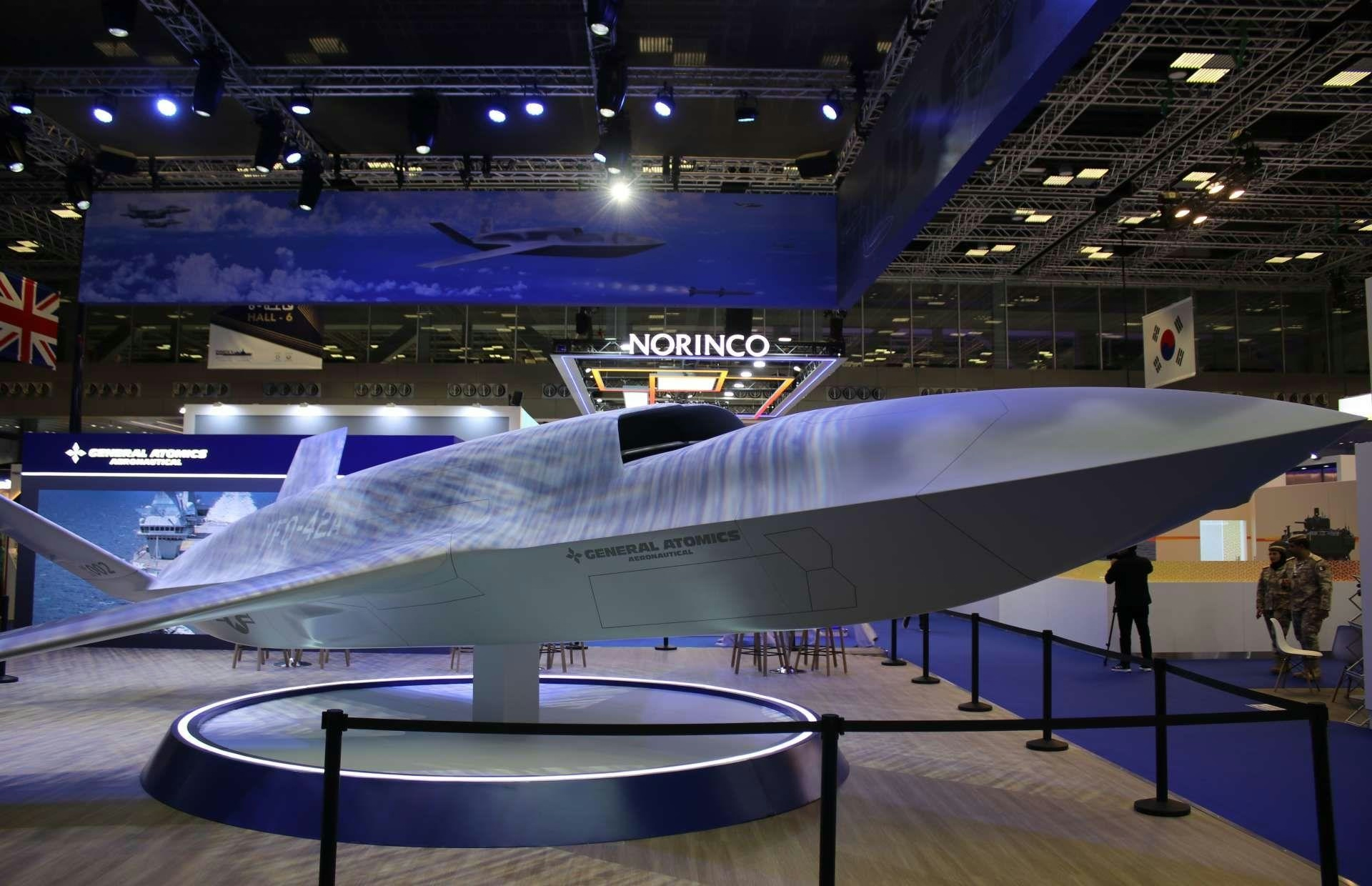
YFQ-42A Collaborative Combat Aircraft Resumes Flight After Software Update
The YFQ-42A Collaborative Combat Aircraft (CCA) has returned to flight testing following a six-week suspension caused by a crash in early April. General Atomics Aeronautical Systems, the manufacturer of the drone, announced the resumption of flights on May 21 after completing a joint safety review with the U.S. Air Force. The investigation revealed that the crash resulted from an autopilot miscalculation related to the aircraft’s weight and center of gravity, which led to the drone’s destruction near a General Atomics facility in the California desert. Fortunately, no injuries were reported.
Software Update and Program Continuity
In response to the incident, General Atomics implemented a software update to correct the autopilot issue. The company clarified that the autopilot software, responsible for managing basic flight operations, is separate from the mission autonomy software being developed by Shield AI and Collins Aerospace for the broader CCA program. While the autopilot ensures safe and stable flight, the mission autonomy software functions as an “AI pilot,” executing complex maneuvers based on commands from human operators.
During the flight suspension, General Atomics continued ground testing and other program activities. Both the Air Force and the defense contractor emphasized the critical role of rigorous safety reviews and timely software updates in maintaining operational readiness. The incident also intensified scrutiny within the defense sector regarding the reliability of the YFQ-42A, especially as competitors such as Northrop Grumman advance their own projects. Northrop’s YFQ-48A recently completed taxi tests and is a potential contender in future CCA competitions.
Program Status and Future Prospects
Several YFQ-42A units have been produced under low-rate production, with the Air Force currently evaluating both the YFQ-42A and Anduril’s YFQ-44A for the initial increment of the CCA program. Both platforms are designed primarily as strike aircraft, with plans to expand future increments into electronic warfare, intelligence, surveillance, and reconnaissance roles.
The Air Force is expected to make a production decision by the end of fiscal year 2026. David R. Alexander, president of General Atomics Aeronautical Systems, expressed optimism about the program’s progress, stating, “It’s been said that you learn more from your setbacks than your successes. We are applying what we’ve learned to our growing fleet of CCAs, as we continue building the most dependable and cost-efficient unmanned fighters in the world.”
Air Force officials highlighted the program’s acquisition strategy, which embraces risk during testing rather than operational deployment. Col. Timothy Helfrich, portfolio acquisition executive for fighters and advanced aircraft, noted, “The CCA program was and is set up to learn, even when the learning comes from ‘failing forward.’ We pushed the envelope, identified a risk, learned from the data, and have cleared the YFQ-42A to return to flight. Even when flight testing on the YFQ-42 was temporarily paused, the program was not.”
As the CCA program progresses, the Air Force and its industry partners remain committed to prioritizing safety, innovation, and adaptability in the development of the next generation of unmanned combat aircraft.

Etihad Airways Suspends Airbus A380 Flights on Key Route

Aditya Birla Group Seeks Approval for Aircraft Leasing in GIFT City

Qatar Airways Highlights Innovation and Connectivity at Arabian Travel Market 2026

Hong Kong's Five-Year Plan Includes Andrew Fan's Aircraft Parts Processing Hub Proposal

ACIA Aero Leasing Delivers ATR72-600 to Air Nostrum

RTX Appoints Jill Albertelli as Head of Pratt & Whitney

TAT Technologies Joins Beyond Aero Hydrogen Aircraft Program

AURAK Study Highlights Barriers to Air Taxi Adoption in Emerging Economies

Xiamen Air Selects Altitude for 787 Maintenance at Heathrow

Etihad and Swissport Extend Global Partnership
