AeroGenie — ваш интеллектуальный второй пилот.

В тренде
Categories
Seoul Invests 3.35 Trillion Won in New Fighter Jet Engine Development
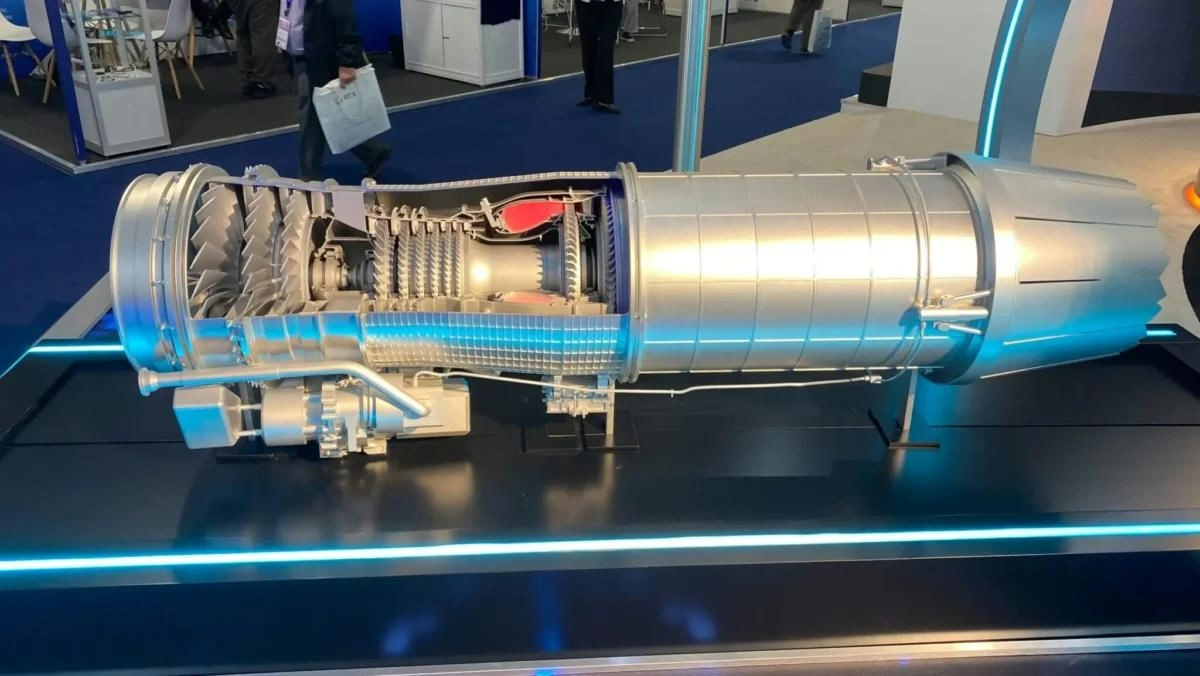
Seoul Commits 3.35 Trillion Won to Indigenous Fighter Jet Engine Development
A Strategic Move Toward Defense Self-Reliance
South Korea has embarked on an ambitious 3.35 trillion won (approximately $2.4 billion) program to develop a domestically produced fighter jet engine, marking a pivotal step in the nation’s pursuit of defense autonomy. Led by the Defense Acquisition Program Administration (DAPA), the initiative unites multiple government ministries and key aerospace industry players, including Korean Air, Hanwha Aerospace, and Doosan Enerbility, under a newly established interagency council headquartered in Seoul.
This council, which will convene for the first time later this month, comprises representatives from the Ministry of National Defense, Ministry of Trade, Industry and Energy, Korea Aerospace Administration, and Ministry of Land, Infrastructure and Transport. Its primary role is to enhance coordination across technical planning, certification, and project management, addressing previous challenges caused by fragmented decision-making that have delayed major defense and aerospace undertakings.
Technical Ambitions and Operational Implications
Central to the program is the development of a 16,000-pound-force class engine designed for the KF-21 Boramae, South Korea’s next-generation fighter jet. The new engine is expected to improve fuel efficiency by reducing specific fuel consumption by 15 percent compared to the imported General Electric F414 engine currently powering the KF-21. The target is to integrate this indigenous engine into the KF-21 Block 3 variant, projected to enter service around 2040.
Officials underscore the program’s importance in enhancing operational independence, boosting aircraft performance, and lowering long-term costs. Presently, South Korea’s fighter fleet, including the KF-21 and FA-50, depends heavily on foreign engines, primarily sourced from the United States. This reliance imposes export restrictions and necessitates external approvals for overseas sales, thereby limiting South Korea’s strategic flexibility in the global defense market. Additionally, maintenance challenges arise as certain engine repairs require sending components abroad, resulting in prolonged aircraft downtime.
The development of a domestic engine is anticipated to alleviate these vulnerabilities, improve fleet readiness, and potentially catalyze advancements in commercial aviation propulsion technologies. Initial funding for the upcoming year allocates 8.6 billion won toward advanced component research, focusing on critical elements such as combustors, turbines, compressors, and afterburners.
Challenges and Competitive Pressures
Despite its strategic significance, the program faces considerable obstacles. The substantial financial investment required to develop an indigenous fighter jet engine raises concerns about the long-term sustainability of South Korea’s defense budget. Industry analysts have expressed skepticism regarding the feasibility and competitiveness of the new engine relative to established foreign alternatives. In response, international manufacturers may intensify efforts to secure contracts or partnerships within South Korea’s defense sector while accelerating their own technological innovations to maintain market dominance.
Furthermore, rapid advancements in fighter engine technology by the United States and Russia exert additional pressure on South Korea to ensure its engine meets evolving global standards. The success of the program will depend not only on overcoming technical challenges but also on effective interagency collaboration and sustained financial commitment.
South Korea’s 3.35 trillion won investment in fighter jet engine development represents a bold stride toward aerospace and defense independence. However, its ultimate impact will be determined by the nation’s ability to navigate financial constraints, technical complexities, and fierce international competition in a swiftly advancing global market.
Thai Airways Receives First A321neo Aircraft
Can the A321XLR Replace Widebody Aircraft?
Airline Uses AI to Hold Flights for Passengers with Tight Connections
How Airlines Use AI to Set Flight Prices and What Consumers Can Do
Juniper Expands Fleet with Converted Freighter Leasing

FlyOnE Launches Air-Taxi Service to Rottnest Island
U.S. Plans to Resume Civil Supersonic Flights with Industry Support

MIT Proposes Method to Reduce Airplane Contrails and Climate Effects
The Boeing 747-8: Why It’s Rare on U.S. Routes and How to Experience It Abroad