
AeroGenie — 您的智能副驾驶。

热门趋势
Categories
Inside Vertical Aerospace’s New Flying Taxi Featuring F-35 Hover Technology
Inside Vertical Aerospace’s New Flying Taxi Featuring F-35 Hover Technology
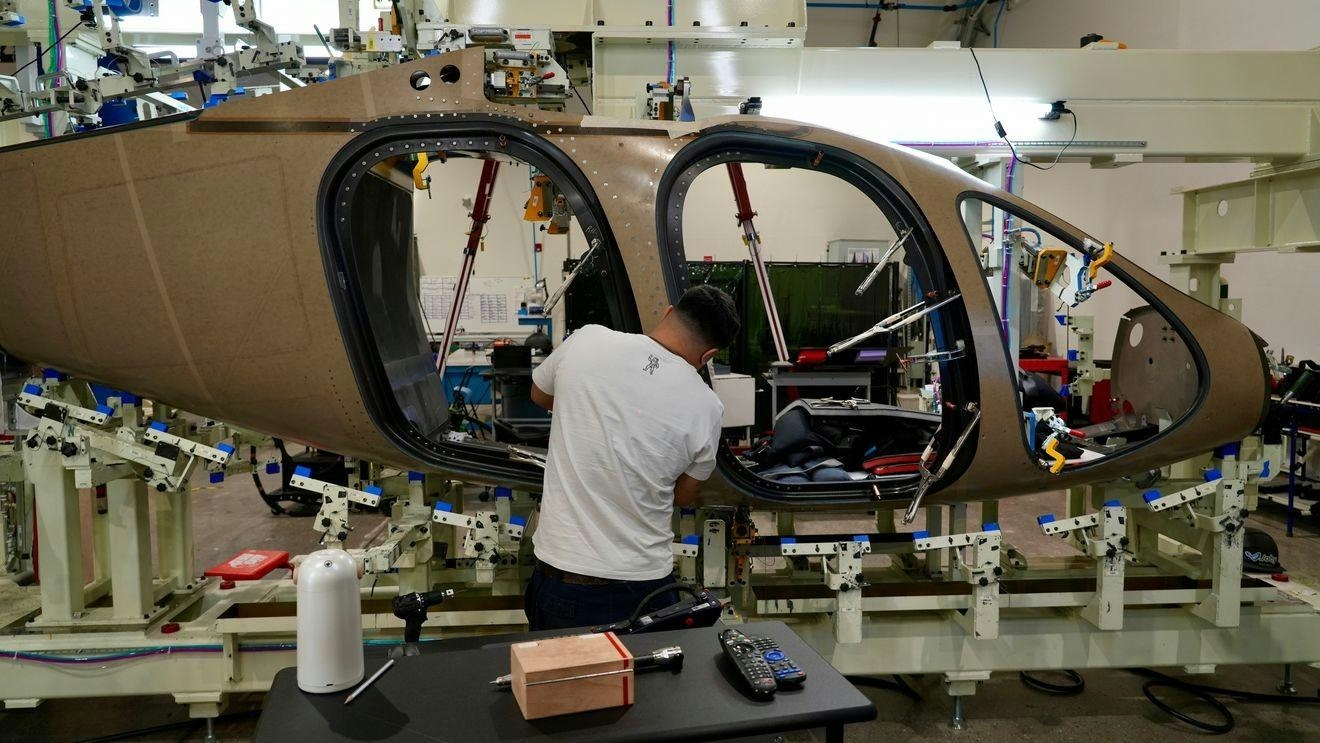
Vertical Aerospace has introduced its latest electric vertical takeoff and landing aircraft (eVTOL), the Valo, positioning it as a transformative solution for urban and regional air mobility. Prior to its official unveiling, Business Insider was granted an exclusive tour of the flying taxi, which integrates hover technology inspired by the F-35 fighter jet, underscoring the aircraft’s advanced engineering.
Revolutionizing Urban and Regional Transport
The Valo promises to significantly reduce travel times between city centers and airports. Vertical Aerospace claims the aircraft can complete the journey from Canary Wharf to London Heathrow in just 12 minutes, a trip that currently takes over an hour by car or public transit. Beyond this, the company envisions establishing a broader network connecting major English cities, potentially stimulating regional economic development. The Valo’s design also emphasizes versatility, with plans to deploy the aircraft for emergency medical services and cargo transport. Looking ahead, Vertical Aerospace is developing a hybrid version equipped with autonomous capabilities, targeting regulatory approval from the UK’s Civil Aviation Authority by 2028.
Dómhnal Slattery, chair of Vertical Aerospace, described the Valo as “bigger, safer, and more capable than anything in the sector,” framing it as a breakthrough in aviation and a testament to the UK’s leadership in aerospace innovation.
Navigating Industry Challenges and Regulatory Hurdles
Despite its technological promise, Vertical Aerospace faces considerable challenges in bringing the Valo to market. The eVTOL sector is becoming increasingly competitive, with established companies such as Joby, Archer, and Beta actively pursuing regulatory approvals in regions including the UAE and Saudi Arabia. Vertical Aerospace plans to reveal its certification design on December 10 in London, highlighting its distinctive aircraft design, clear certification pathway, and differentiated business model as competitive advantages.
However, the company’s strategy to launch operations in the Middle East prior to securing certifications in the US and Europe has attracted criticism. Industry executives have expressed concerns about “certification tourism,” a practice involving the pursuit of regulatory approval in jurisdictions perceived as less stringent before addressing more rigorous standards elsewhere. This approach has ignited debate over the optimal path to achieving global acceptance and ensuring operational safety for emerging eVTOL technologies.
Advanced Design and Passenger Experience
The Valo’s cabin design reflects its cutting-edge engineering, drawing inspiration from fighter jets to enhance both safety and passenger comfort. Vertical Aerospace aims to distinguish the Valo through these innovations, coupled with a focus on quieter and cleaner flight operations. As the race to commercialize flying taxis intensifies, the Valo embodies both the technological ambitions and the regulatory and competitive challenges confronting the next generation of urban air mobility.
Cowling Detaches in Flight and Strikes Windshield
SMBC Aviation Capital Signs Agreement for 737 MAX 9 with United

AerFin Acquires CFM56-5B PIP Engines for Teardown
xCelle Asia Expands APAC Nacelle Support Network
Boeing Shares Fall 0.8% Amid DHS 737 Contract and Airbus Competition
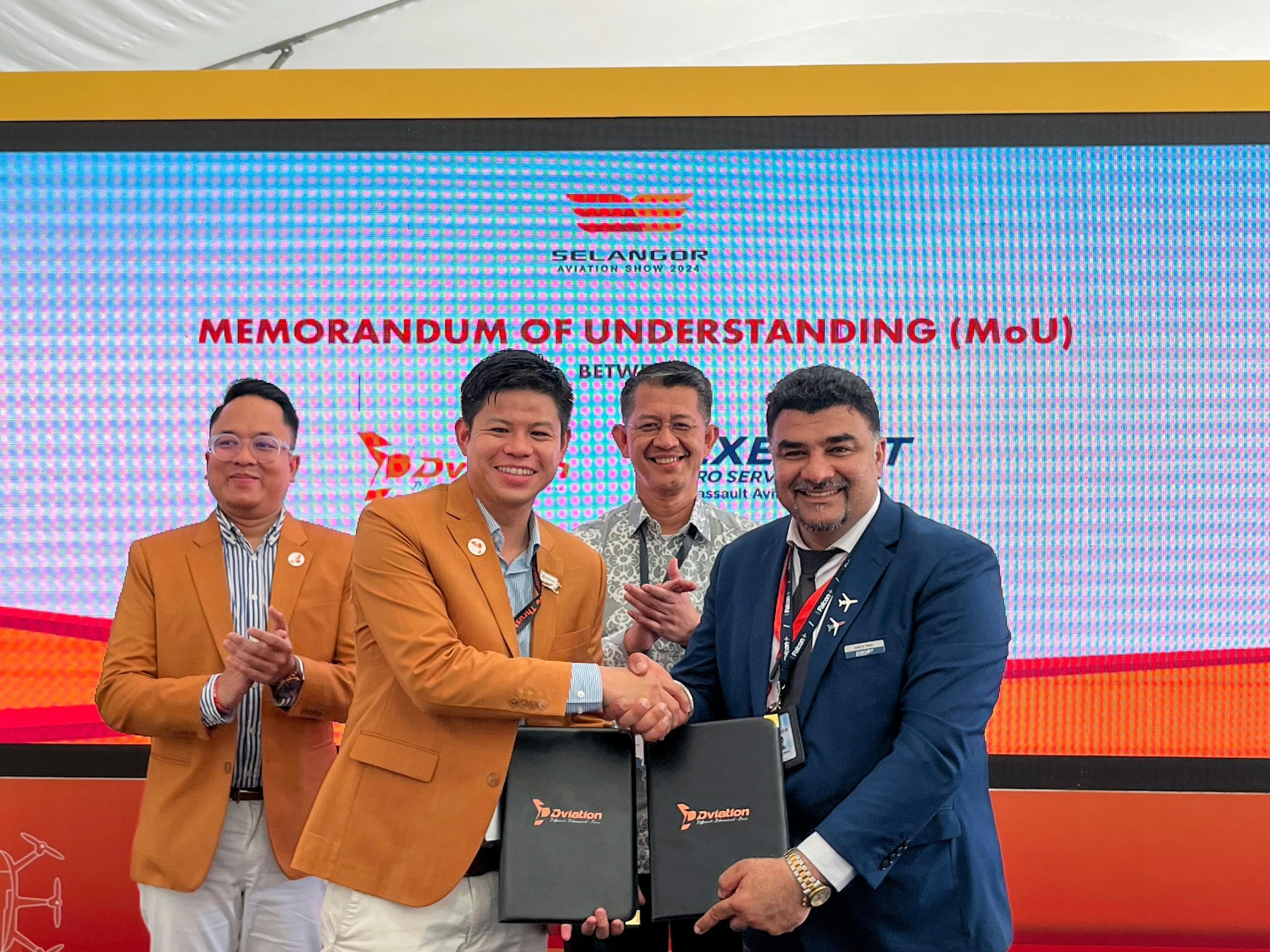
ExecuJet Malaysia Gains EASA and FAA Certifications to Enhance MRO Services

Italy’s ITA Airways Adopts Iris Technology to Enhance Flight Efficiency and Sustainability
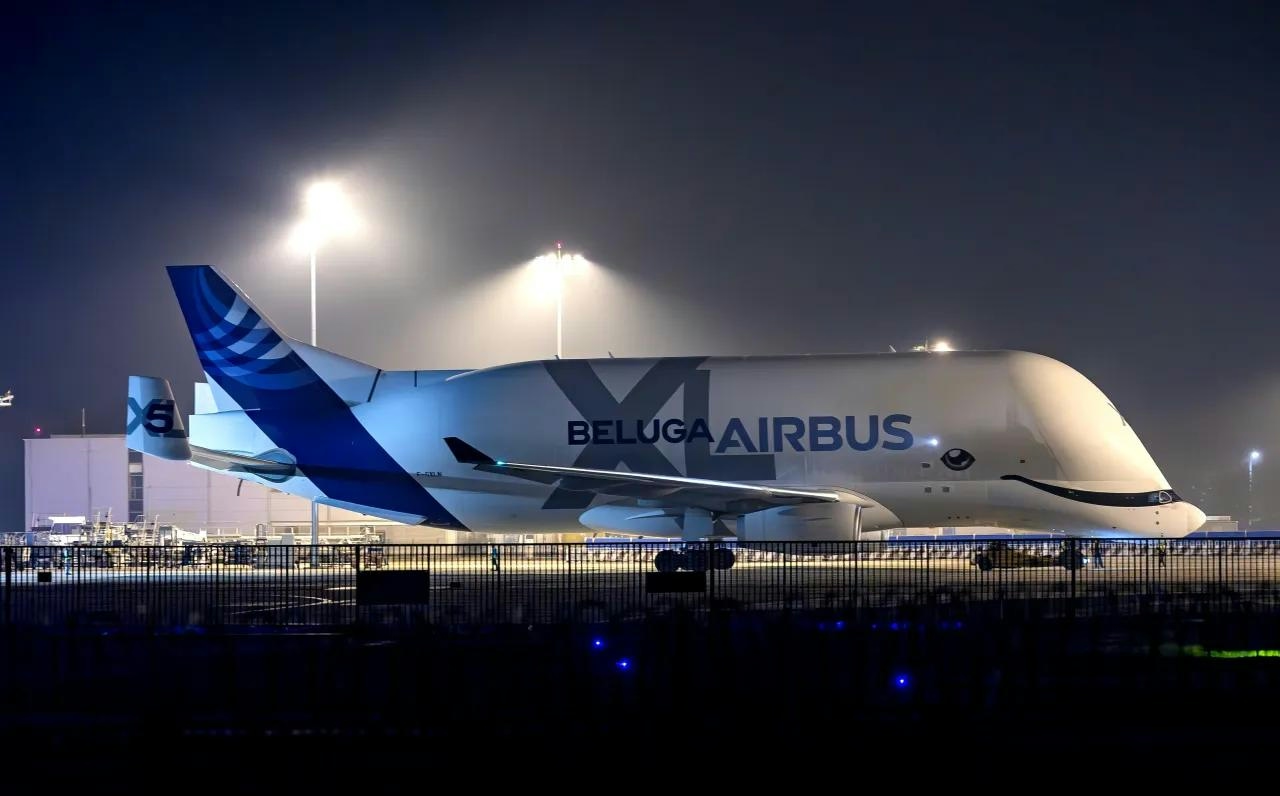
Airbus Shares Face Volatility Amid Market Uncertainty

Parachutists Review Software Following Jumper Snag Incident on Plane