
将人工智能洞察转化为可执行行动

热门趋势
Categories
Digital Transformation and Profitability in the Airline Industry
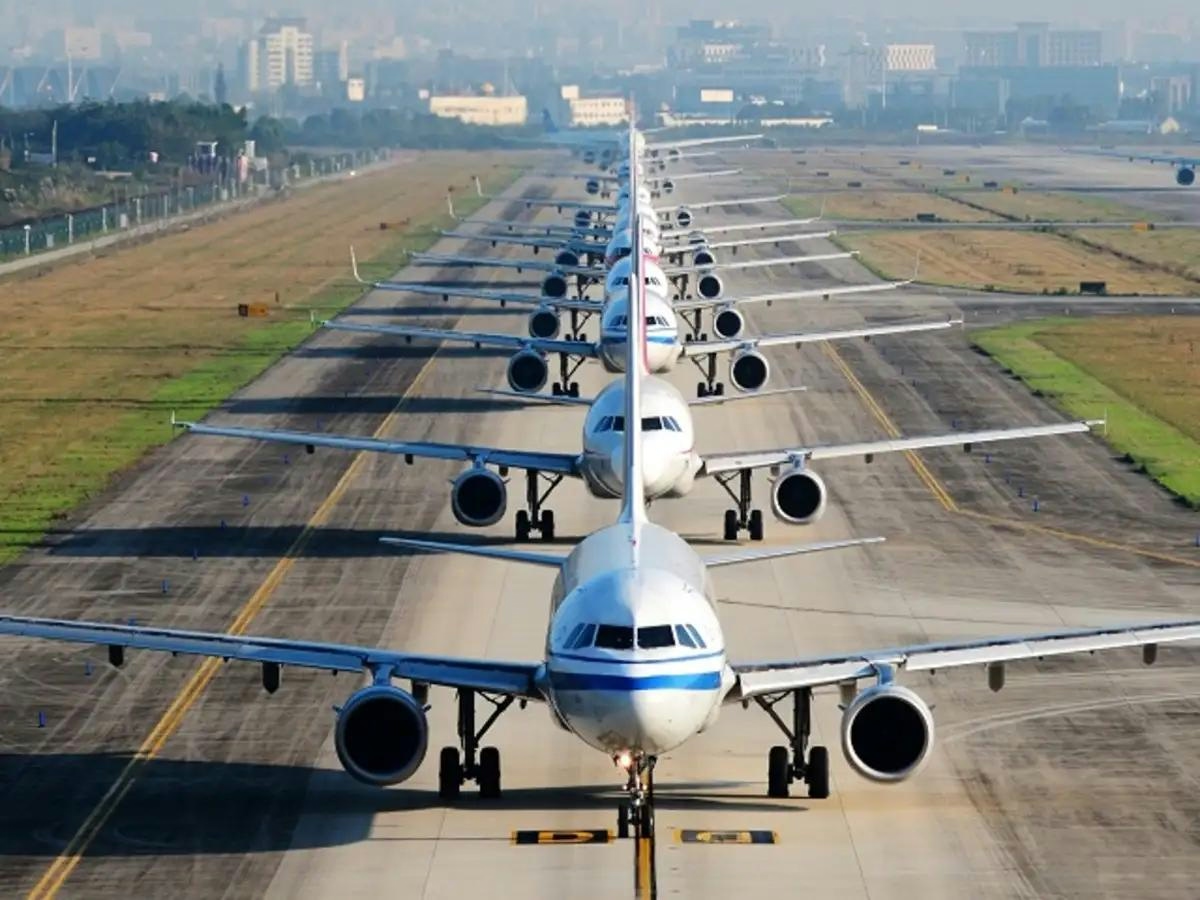
Digital Transformation and Profitability in the Airline Industry
The airline industry, much like other mature sectors, stands at a critical juncture. Legacy systems and fragmented technology infrastructures are impeding innovation, inflating operational costs, and generating inefficiencies that undermine performance. As technical debt accumulates, airlines face mounting difficulties in meeting the evolving expectations of travelers. This challenge lies at the core of the industry’s urgent need for digital transformation, which is essential for achieving sustainable and profitable growth.
Financial Outlook Amid Operational Challenges
Despite these technological obstacles, the financial prospects for the airline industry remain strong. The International Air Transport Association (IATA) projects that global airline profits will reach a record $41 billion by 2026, with European carriers contributing approximately $14 billion to this total. Nevertheless, the sector continues to grapple with significant challenges. Supply-chain disruptions have delayed aircraft deliveries and postponed the deployment of more fuel-efficient models. Operational setbacks, such as IndiGo’s recent schedule reductions in India, further emphasize the necessity for resilient and modernized infrastructure capable of withstanding such pressures.
Concurrently, the demographic profile of airline customers is undergoing rapid transformation. Deloitte forecasts that by 2030, Generation Z and millennials will constitute the majority of leisure travelers in the United States. These digitally native consumers demand fast, seamless, and intuitive interactions, favoring brands that provide consistent experiences across all touchpoints—from ticket purchasing and loyalty program engagement to in-flight transactions and branded retail offerings. Commerce now permeates every phase of the travel journey, requiring airlines to deliver unified and on-brand engagement at every moment.
The Imperative for Technological Modernization
Meeting these heightened customer expectations necessitates comprehensive technological modernization. Airlines must adopt platforms that lower total cost of ownership, unify commerce across multiple channels, and accelerate the pace of innovation. Without such advancements, even incremental improvements become slow, costly, and complex to implement. Those carriers that invest in modern technology platforms will be better positioned to reduce operational costs, enhance customer acquisition and retention, and unlock new revenue streams.
The core challenge confronting airlines is emblematic of issues faced by other complex, large-scale industries such as manufacturing and retail: consumer expectations are evolving more rapidly than legacy infrastructure can accommodate. Travelers today engage with brands through multiple channels—McKinsey reports that over half of consumers use three to five channels during a single purchase journey, with the average traveler switching between mobile and web platforms six times before completing a reservation. Fragmented systems that fail to unify these interactions result in disjointed and frustrating experiences, ultimately hindering growth.
With global travel activity expected to increase by 85% between 2016 and 2030, the opportunity for expansion is substantial. However, scaling operations to meet this demand requires infrastructure designed for speed, flexibility, and seamless integration. Legacy systems not only obstruct innovation but also become increasingly costly to maintain. Supporting new features often requires significant resources, and as digital needs evolve—such as enabling in-flight mobile purchases—airlines are compelled to implement expensive workarounds. Maintenance costs escalate, technical debt deepens, and valuable talent is diverted to sustaining outdated systems.
Recent incidents within the industry underscore the vulnerabilities of legacy technology. For instance, Southwest Airlines was forced to cancel thousands of flights due to system failures, highlighting the operational risks associated with aging infrastructure.
As the airline industry anticipates record profitability, the imperative is unequivocal: modernization of technology systems is essential to deliver the seamless, connected experiences that travelers demand, improve operational efficiency, and sustain growth in an increasingly competitive environment.
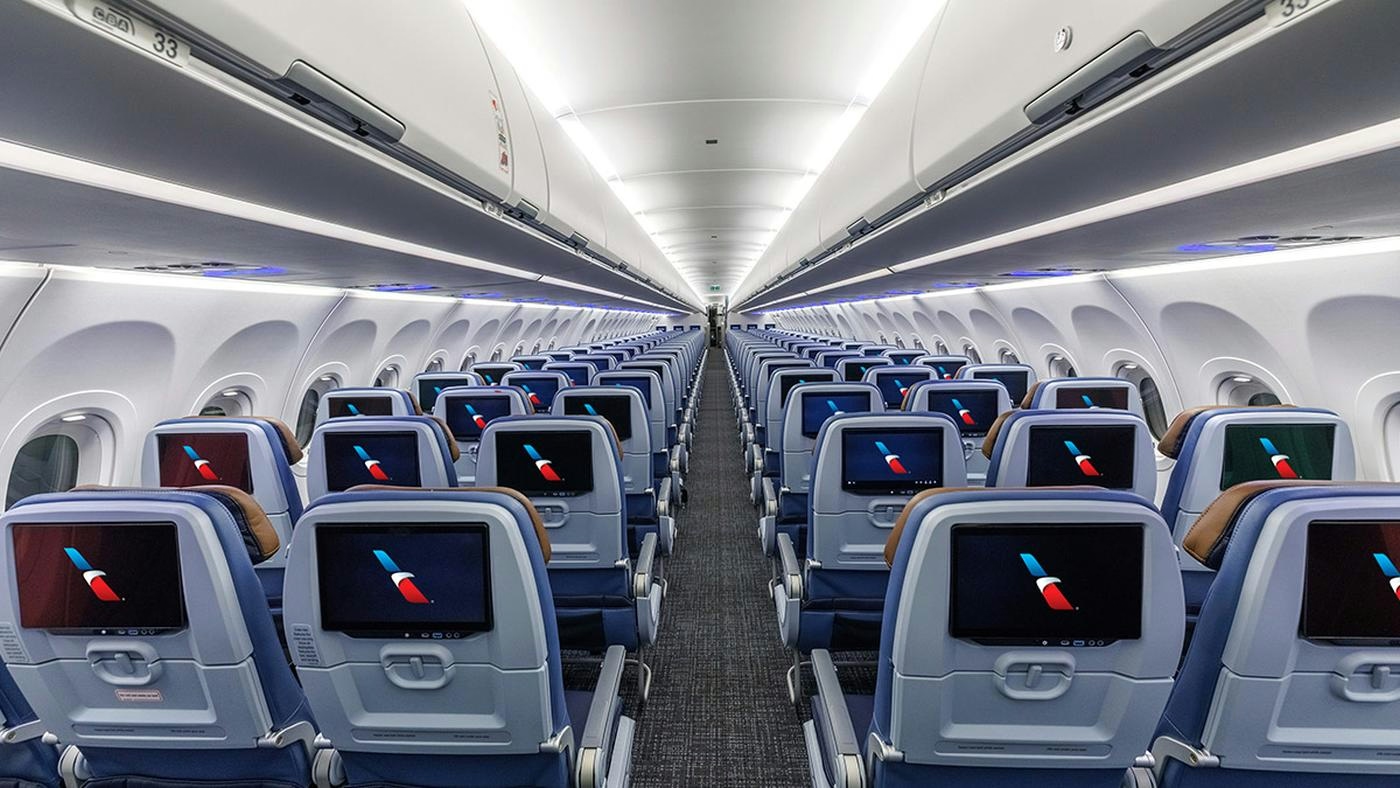
American Airlines Plans to Receive New Aircraft Deliveries in 2026
Delta Flight Returns to Atlanta Airport Due to Engine Trouble

Samoa Airways Recovers Damaged DHC-6-300 Aircraft
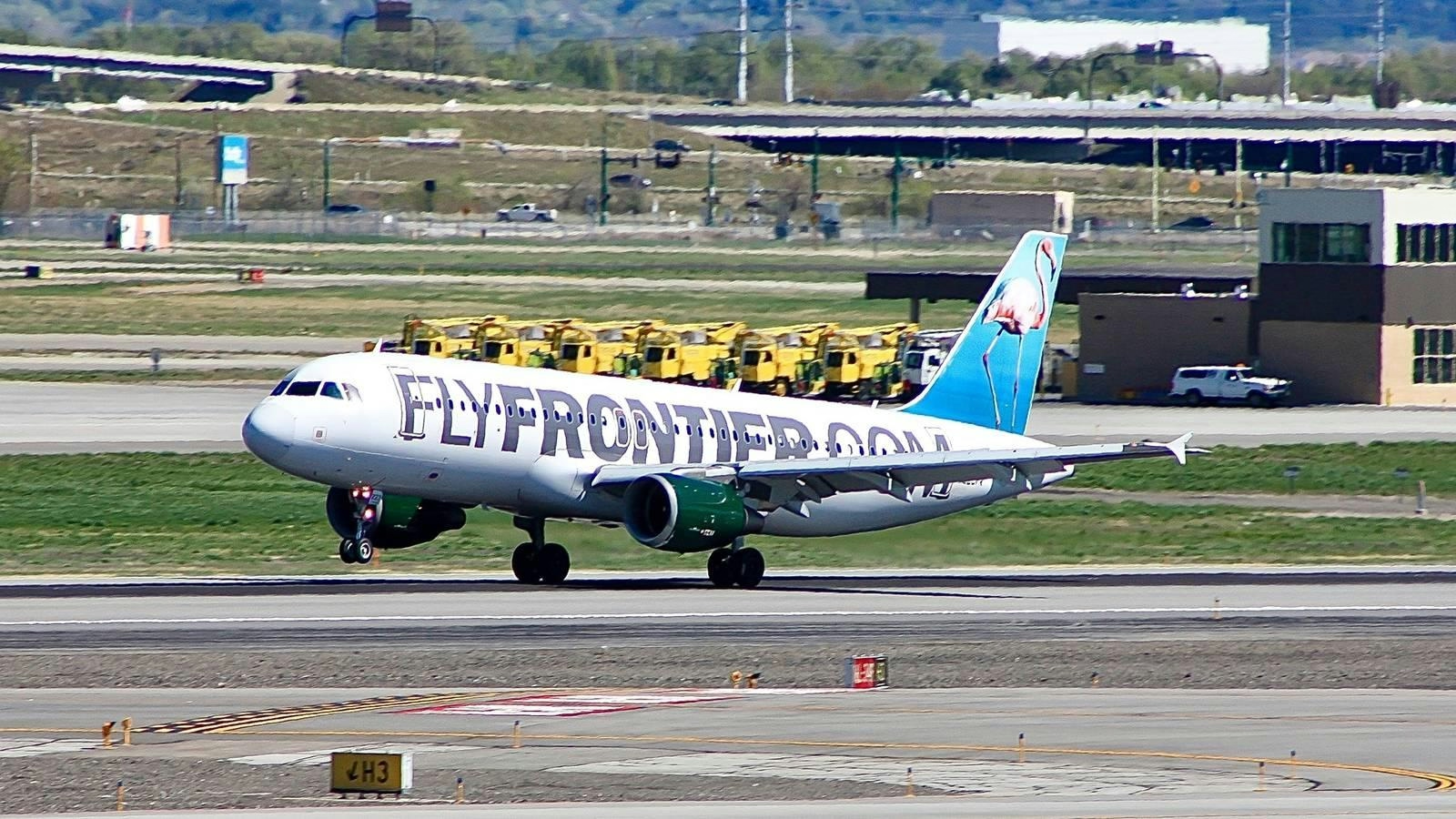
Man Ingested by Frontier Airlines Engine Marks Denver’s Sixth Airfield Security Breach in Three Years
The Advantages and Disadvantages of Owning Versus Leasing a Private Jet
Former Spirit Employees Express Concerns Over AI Partnership With Google
China Certifies Pilotless Air Taxi for Export; Sri Lanka First Buyer
US Pilot Hourly Pay Ranges from $90 for Regional to $465 for Widebody Flights
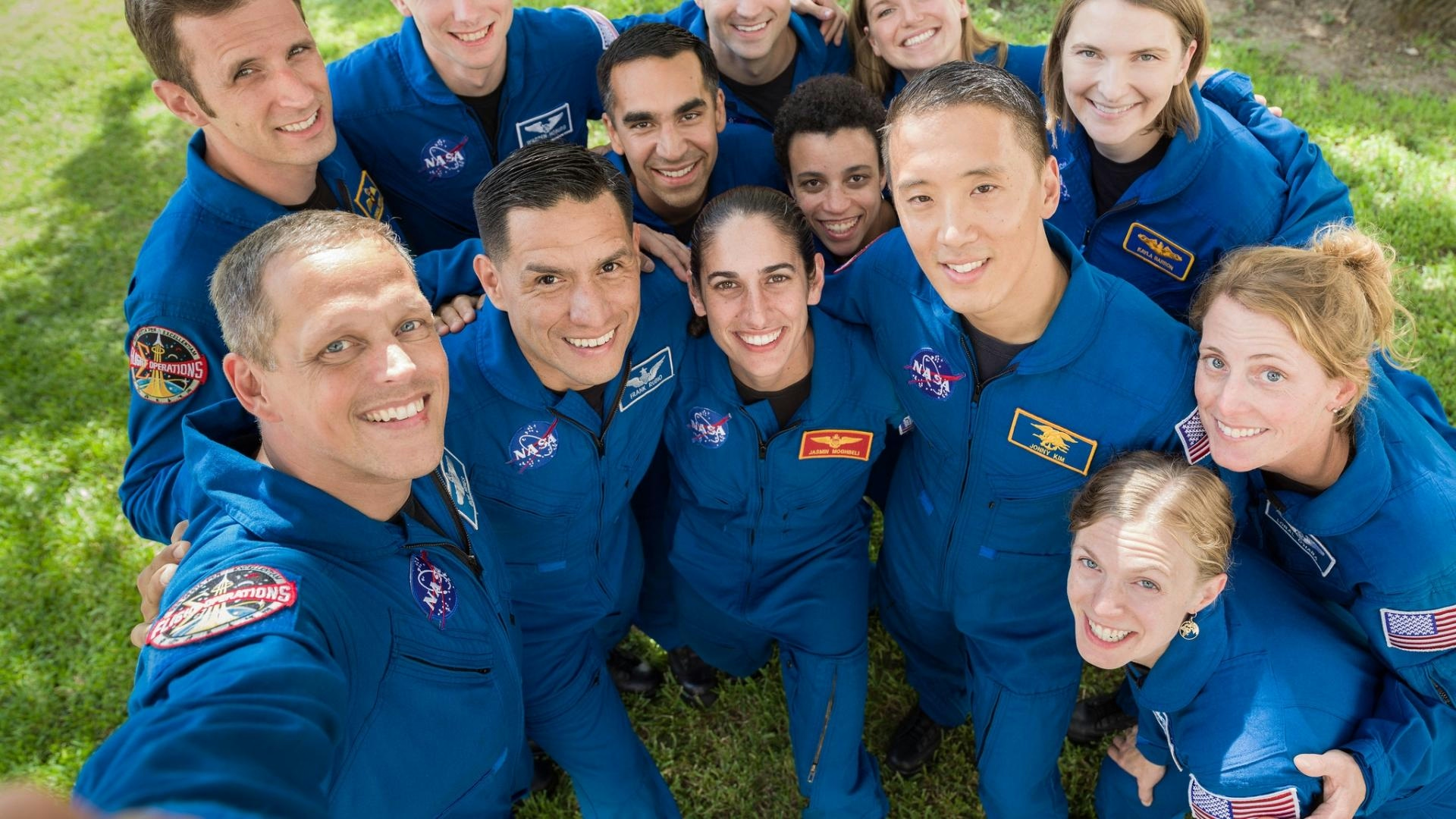
NASA Chooses University Teams to Support Aviation Research
Airbus Conducts Freighter First Flight as Delivery Figures Influence Stock
