
Orquesta conocimientos de IA para convertirlos en acción

Tendencias
Categories
7 Airlines With The World’s Most Efficient Widebody Fleets
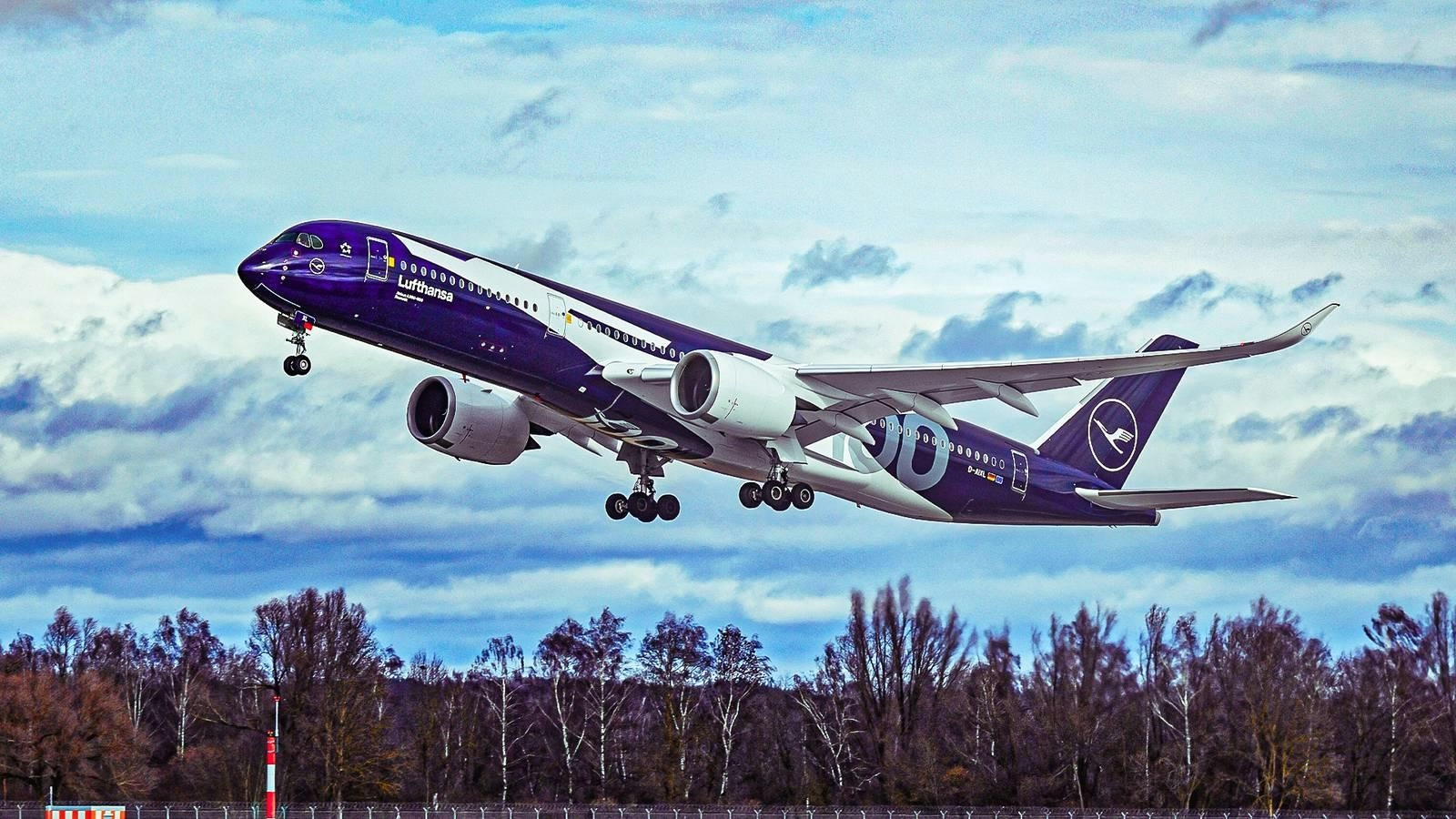
Airlines Leading the Charge in Widebody Fleet Efficiency
In recent years, the aviation industry has witnessed significant advancements in widebody aircraft efficiency. New models such as the Boeing 787 Dreamliner and Airbus A350 consume approximately 20% less fuel per seat compared to the older Boeing 777 and Airbus A330 aircraft they are replacing. Given that fuel expenses constitute roughly a quarter of an airline’s operating costs, these improvements are vital for carriers aiming to achieve net-zero emissions targets while maintaining competitiveness. However, the substantial investment required for these next-generation jets means that only airlines with considerable financial resources and strategic foresight can undertake fleet modernization on a large scale.
Seven global airlines stand out for their commitment to widebody efficiency, primarily through their adoption of modern aircraft like the A350 and 787, as well as their future orders for advanced models such as the Boeing 777X. These carriers include Lufthansa, Turkish Airlines, Delta Air Lines, Emirates, All Nippon Airways (ANA), Singapore Airlines, and Qatar Airways.
Lufthansa Group’s Fleet Transformation
Lufthansa is in the midst of a comprehensive widebody fleet renewal aimed at enhancing aircraft productivity by 10 to 15 percent and restoring profitability after several challenging years. The airline plans to retire a range of older aircraft—including the Airbus A340-600, A330-200, A340-300, and Boeing 767-300, 747-400, and 777-200—by 2028. This strategy will reduce fleet complexity while simultaneously increasing the total number of widebody aircraft by 20 percent through the delivery of over 230 new jets within the next four years. Lufthansa’s modernization hinges on the integration of both the Boeing 777X, with 20 units on order, and the Airbus A350. The 777X is intended to replace the aging 747-400s, while the A350 will succeed smaller widebody models, positioning the airline for improved operational efficiency and competitiveness.
Turkish Airlines’ Ambitious Expansion
Turkish Airlines has quietly developed one of the most ambitious next-generation widebody programs worldwide. Its fleet of 30 Airbus A350-900 aircraft is among the youngest globally, with an average age of just 2.5 years. The airline plans to expand this fleet substantially, with 110 additional A350s on order. Alongside Boeing widebody acquisitions, Turkish Airlines aims to operate a modern fleet of 250 widebody aircraft by 2030. This renewal effort is also accompanied by the introduction of enhanced premium cabin products, designed to increase revenue potential on long-haul routes and elevate the airline’s market position.
Market Dynamics and the Competitive Landscape
The competition to achieve fleet efficiency is intensifying across the industry. Delta Air Lines and United Airlines are aggressively expanding and upgrading their widebody fleets to capture a larger share of lucrative international markets. United, in particular, is investing not only in new aircraft but also in onboard connectivity enhancements such as Starlink, although it continues to grapple with rising fuel costs. Conversely, American Airlines risks losing ground due to its limited new widebody orders, potentially ceding market share to more proactive rivals in key long-haul sectors.
Geopolitical developments, including the ongoing conflict in Iran, have further influenced airline strategies by altering airspace access and shifting market dynamics. Middle Eastern carriers have experienced changes in market share as a result of these factors. Meanwhile, Airbus continues to report robust delivery figures, reflecting the intense competition among airlines to acquire the latest widebody jets.
Looking Ahead
As airlines continue to modernize their fleets, maintaining a competitive advantage will require not only investment in fuel-efficient aircraft but also strategic adaptability to evolving market conditions and global disruptions. The carriers currently leading in widebody efficiency are setting the industry’s trajectory, yet the race to optimize fleet performance remains ongoing.

Etihad Airways Suspends Airbus A380 Flights on Key Route

Aditya Birla Group Seeks Approval for Aircraft Leasing in GIFT City

Qatar Airways Highlights Innovation and Connectivity at Arabian Travel Market 2026

Hong Kong's Five-Year Plan Includes Andrew Fan's Aircraft Parts Processing Hub Proposal

ACIA Aero Leasing Delivers ATR72-600 to Air Nostrum

RTX Appoints Jill Albertelli as Head of Pratt & Whitney

TAT Technologies Joins Beyond Aero Hydrogen Aircraft Program

AURAK Study Highlights Barriers to Air Taxi Adoption in Emerging Economies

Xiamen Air Selects Altitude for 787 Maintenance at Heathrow

Etihad and Swissport Extend Global Partnership
