
Orquesta conocimientos de IA para convertirlos en acción

Tendencias
Categories
Air New Zealand Seeks to Delay Boeing 787 Deliveries Amid Cost-Cutting Efforts
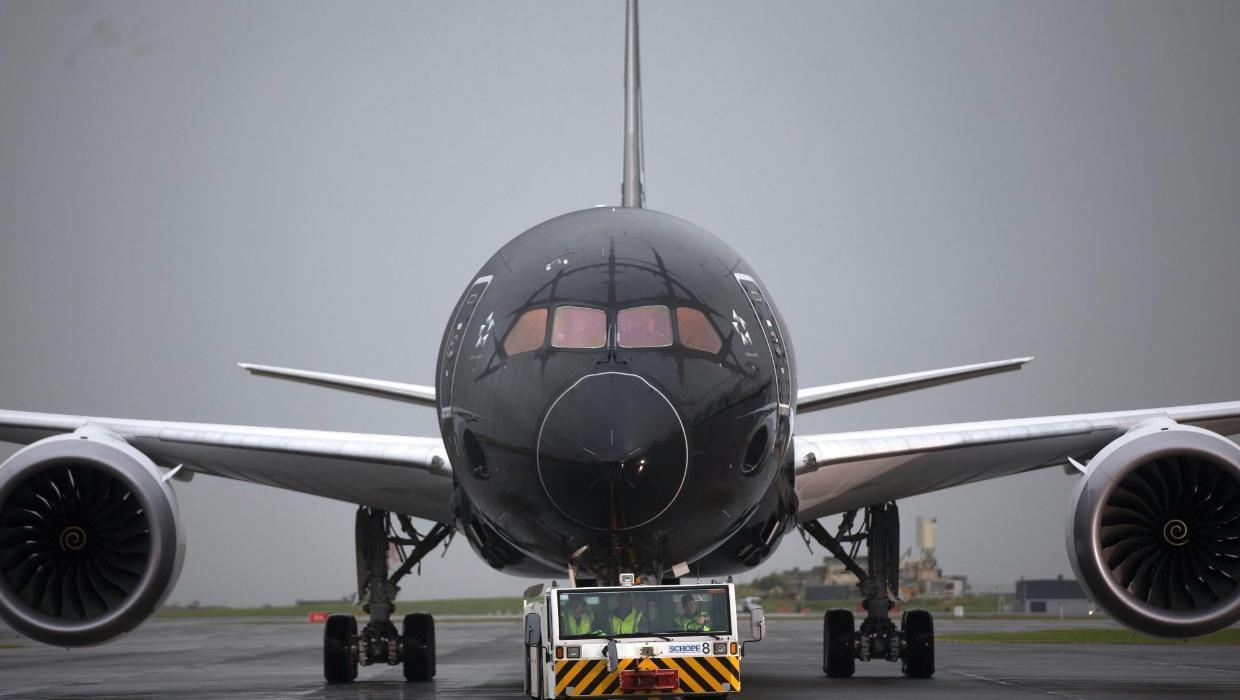
Air New Zealand Seeks to Delay Boeing 787 Deliveries Amid Cost-Cutting Drive
Air New Zealand is pursuing a postponement of Boeing 787 Dreamliner deliveries alongside intensified cost-cutting measures as part of a strategic effort to restore profitability within the next two years. This initiative arises amid escalating financial pressures driven by soaring fuel prices and persistent supply chain disruptions.
Delivery Delays and Industry Challenges
Outgoing Chief Financial Officer Richard Thomson informed investors that the delayed arrival of two Boeing 787 aircraft—initially scheduled for delivery by June 30 but now deferred due to manufacturing complications—has imposed an unsustainable capital expenditure burden for the fiscal year commencing July 1. Consequently, the airline is negotiating with Boeing to defer further aircraft deliveries. Boeing declined to comment, directing inquiries to Air New Zealand.
These delays are symptomatic of broader industry-wide challenges. Boeing’s 787 production has been hampered by GE Aerospace’s inability to supply GEnx engines on schedule, creating bottlenecks that affect multiple carriers. Air New Zealand has recently contended with engine issues and delivery setbacks that previously grounded up to 20% of its fleet. Similarly, competitors such as IndiGo have faced operational difficulties, including reductions in their European networks and downsizing of their 787-9 fleets, highlighting the widespread impact of engine delivery delays.
Currently, Air New Zealand has ten Boeing 787 aircraft on order. The airline’s cost-reduction efforts coincide with persistently high fuel prices, exacerbated by geopolitical tensions in the Middle East. The company has managed to offset only 25 to 40 percent of these fuel cost increases through hedging strategies and fare adjustments, with expectations that elevated prices will continue into 2027. In May, the airline projected its largest pre-tax annual loss in four years and implemented two rounds of fare increases.
Financial Outlook and Strategic Focus
On Tuesday, Air New Zealand cited significant operational and financial headwinds experienced in recent years, including constraints on aircraft and engine availability, rising aviation system costs, and a sluggish domestic economy. When questioned about the prospect of returning to profitability by the fiscal year ending June 30, 2027, Thomson characterized FY2027 as a “transitional year,” during which the airline aims to reduce costs by NZ$100 million (approximately US$56.45 million). The company’s guidance for a pre-tax loss ranging from NZ$340 million to NZ$390 million in FY2026 remains unchanged. Analysts, according to LSEG estimates, do not anticipate a return to pre-tax profitability until FY2028.
Chief Executive Nikhil Ravishankar highlighted that elevated fuel prices—partly driven by an unusual spike in refining margins linked to the conflict in Iran—have introduced volatility and uncertainty into the airline’s outlook. In response, Air New Zealand has begun hedging refining margins, a relatively uncommon practice among airlines prior to the conflict. The carrier is currently 76 percent hedged on Brent crude at prices in the high US$70s per barrel for the first half of the year and 20 percent hedged on refining margins at US$35 to US$40 per barrel.
Looking forward, Ravishankar emphasized the airline’s focus on attracting premium inbound leisure travelers, particularly long-haul visitors seeking a “bucket list” experience in New Zealand, who can connect through its domestic and regional networks.
Leadership Transition
The company also announced that Richard Thomson, who has served as CFO since early 2021, will be succeeded by Kris Cudmore, an executive with expertise in infrastructure, planning, and commercial operations. The transition will take effect on August 3.

Etihad and Swissport Extend Global Partnership
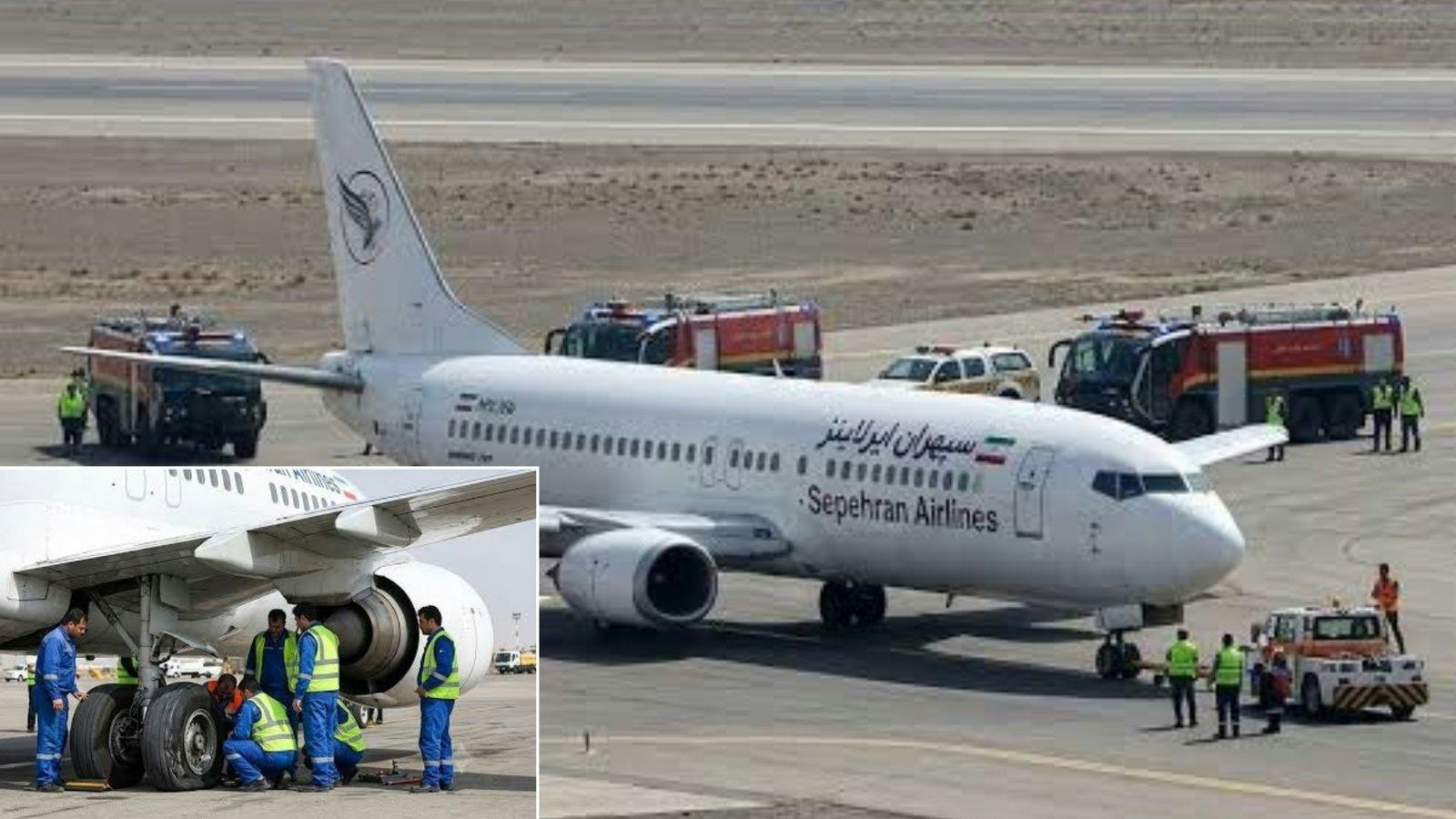
Sepehran Airlines B737 Returns to Mashhad After Tyre and Engine Issues

Etihad Deploys Widebody Fleet to Meet Strong Demand

Korean Air Finalizes $36.2 Billion Deal with Boeing

Australia’s RFDS Queensland Section Orders Six King Air 260Cs

Korean Air Finalizes Order for 103 Boeing Jets and Engines

Embraer E195-E2 Features Distinctive Engine Placement Among Regional Jets

What Passengers Can Expect on Boeing’s New 777X Jet

How Ethiopian Airlines Became Africa’s Leading Carrier Amid Gulf Competition

Joby Aviation Extends Autonomous Flight Capabilities with Cross-Country Tour
