
Orquesta conocimientos de IA para convertirlos en acción

Tendencias
Categories
Airbus Approved to Deliver Jets in China, Awaits New Orders
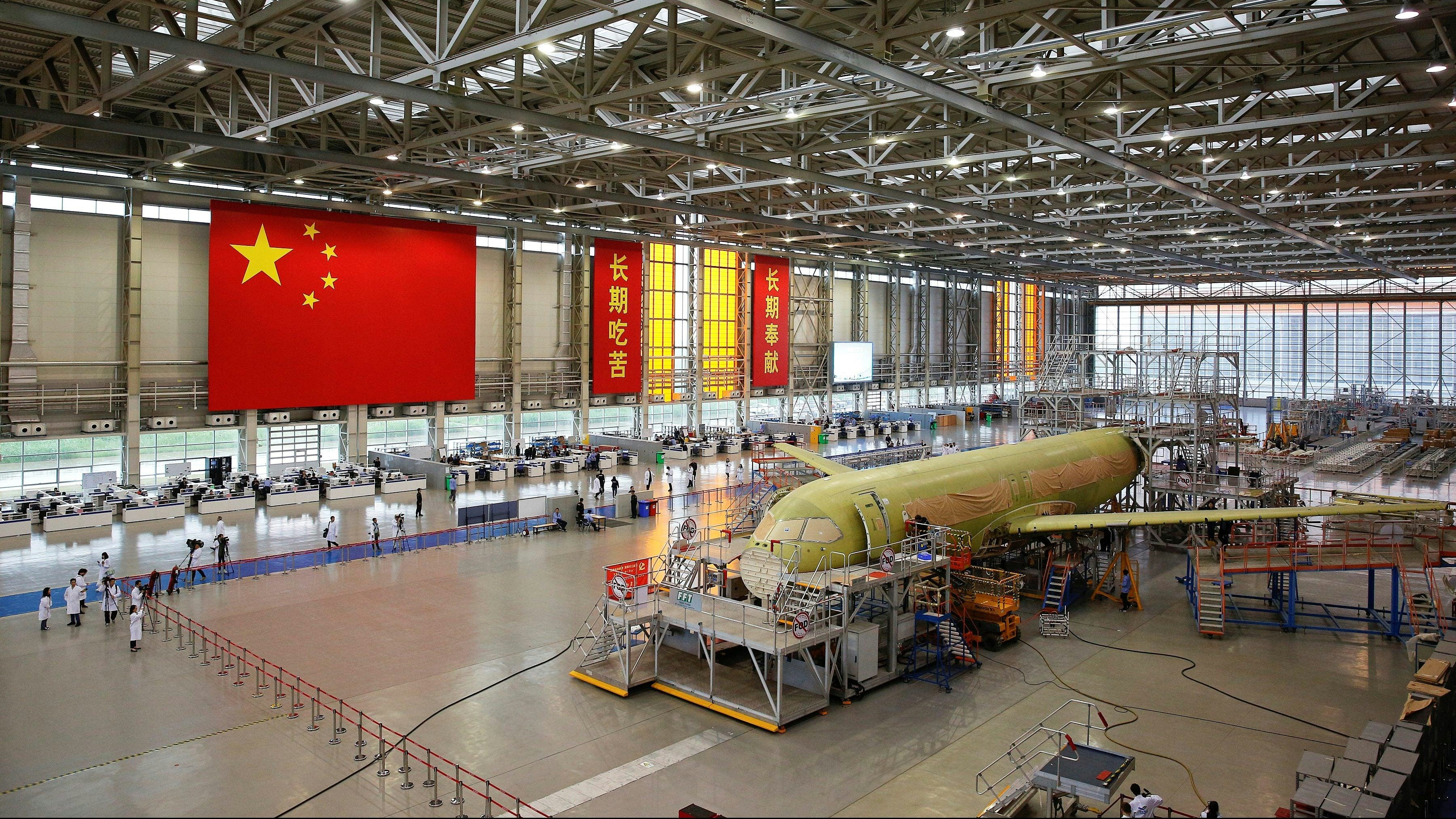
Airbus Receives Approval to Deliver Jets in China Amid Uncertainty Over New Orders
Airbus has secured official approval from Chinese authorities to proceed with the delivery of 120 aircraft previously ordered, the European aerospace manufacturer confirmed. This development allows the company to fulfill existing commitments but does not extend to new large-scale orders, which remain elusive amid ongoing geopolitical tensions.
Delivery Authorization and Geopolitical Context
The agreement, signed in Beijing, permits Airbus to deliver jets already recorded in its order book, a standard procedure for transactions involving Chinese customers, according to an Airbus spokesperson. China’s state purchasing agency has not issued any comment on the matter. This approval follows French President Emmanuel Macron’s recent visit to China, where discussions centered on geopolitics and trade. Despite high expectations, the visit did not result in announcements regarding the anticipated order for 500 new aircraft that Airbus has been pursuing for over a year. While some French media speculated about the possibility of 120 new orders, Airbus clarified that the current agreement pertains solely to existing orders.
Both Airbus and its American rival Boeing have been awaiting progress on significant Chinese orders, which have been delayed amid the broader geopolitical climate. Industry insiders note that China typically exercises caution with major purchases during periods of uncertainty, and there is little indication that either manufacturer will secure a substantial new order from Beijing within the current year.
Market Position and Operational Challenges
Airbus has engaged in intermittent negotiations since early 2024 to secure a 500-jet order, aiming to narrow the gap with Boeing in the annual order tally and to meet its internal target of approximately 1,200 aircraft deliveries. Through the first eleven months of the year, Airbus reported 700 net orders after cancellations, compared to Boeing’s 782 net orders by the end of October.
However, Airbus faces additional hurdles. The company recently identified a quality issue involving metal panels on certain A320 aircraft already in service, leading to a downward revision of its delivery forecasts and a notable decline in its share price. In contrast, Boeing’s stock rose following the company’s pledge of positive cash flow for 2026, despite a 17% month-on-month drop in November deliveries, with Boeing handing over 44 jets compared to Airbus’ 72.
Both manufacturers continue to grapple with supply chain disruptions. The head of the International Air Transport Association (IATA) remarked in Geneva that confidence in Airbus meeting its delivery targets has diminished, while Boeing’s performance has shown signs of improvement.
Outlook for Airbus
Looking forward, Airbus’ defense division remains optimistic, anticipating further sales of its A330 tanker and exploring the potential development of an A321-based airborne early warning and control (AEW&C) aircraft. Nevertheless, the commercial division’s wait for new Chinese orders persists, with no immediate breakthrough expected.

Etihad Airways Suspends Airbus A380 Flights on Key Route

Aditya Birla Group Seeks Approval for Aircraft Leasing in GIFT City

Qatar Airways Highlights Innovation and Connectivity at Arabian Travel Market 2026

Hong Kong's Five-Year Plan Includes Andrew Fan's Aircraft Parts Processing Hub Proposal

ACIA Aero Leasing Delivers ATR72-600 to Air Nostrum

RTX Appoints Jill Albertelli as Head of Pratt & Whitney

TAT Technologies Joins Beyond Aero Hydrogen Aircraft Program

AURAK Study Highlights Barriers to Air Taxi Adoption in Emerging Economies

Xiamen Air Selects Altitude for 787 Maintenance at Heathrow

Etihad and Swissport Extend Global Partnership
