
Orquesta conocimientos de IA para convertirlos en acción

Tendencias
Categories
Airbus Helicopters and GE to Continue Joint Research Collaboration
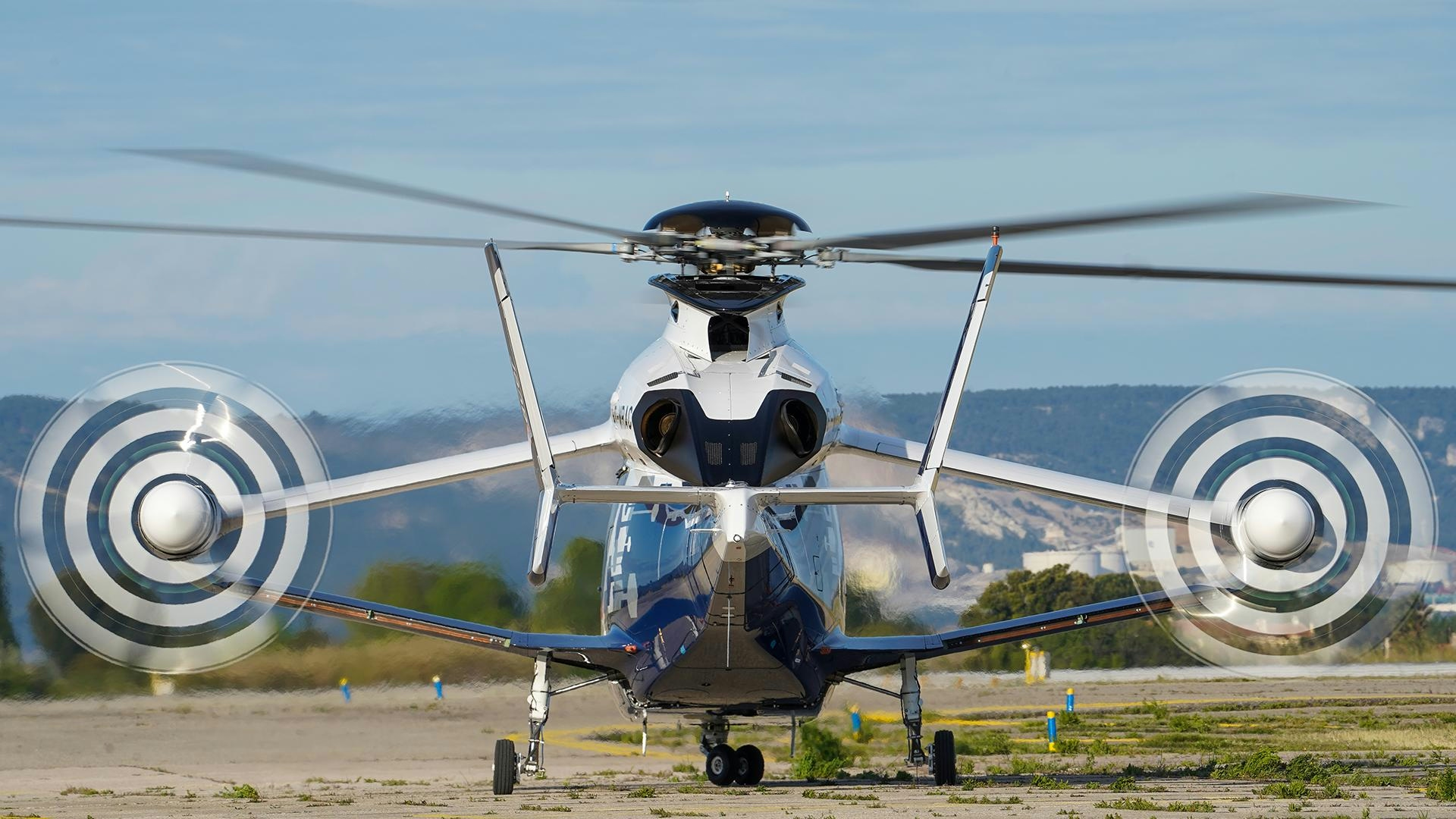
Airbus Helicopters and GE Aerospace Advance Joint Research on Next-Generation Rotorcraft Engines
Airbus Helicopters and GE Aerospace have announced the extension of their collaborative research aimed at developing a next-generation rotorcraft propulsion system. This initiative seeks to achieve a significant reduction in fuel consumption compared to existing engines. The partnership has now entered its second phase, which will concentrate on refining detailed engine design concepts and assessing efficiencies at the component level. The initial phase, launched in early 2024, focused primarily on foundational research.
Objectives and Challenges of the Collaboration
The joint effort aspires to produce an engine that establishes new standards in efficiency, reliability, and environmental performance. According to a joint statement from the companies, the ongoing study will explore opportunities to substantially reduce fuel consumption and carbon dioxide emissions while preserving the performance, durability, and reliability required by next-generation rotorcraft. However, specific technical details such as the engine’s power class or targeted fuel-burn reductions have not been disclosed.
Elissa Lee, executive director of commercial turboshaft engines at GE Aerospace, highlighted the critical balance between sustainability and operational requirements. She noted that the collaboration is focused on understanding the necessary steps to deliver meaningful gains in sustainability and efficiency without compromising the demanding mission profiles of helicopter operators.
The project faces considerable challenges, including meeting stringent mission requirements alongside ambitious environmental and efficiency goals. Industry observers are closely monitoring the anticipated improvements in performance and emissions, which could have significant implications for the rotorcraft market. The initiative is also expected to intensify competition, prompting rival manufacturers to accelerate their own next-generation engine development programs. For instance, Korea Aerospace Industries is actively marketing its Surion helicopter internationally, while Safran’s Aneto engine is powering new Bell 214ST models, underscoring the competitive environment.
Strategic Implications for Airbus Helicopters
Historically, Airbus Helicopters has sourced propulsion systems primarily from France-based Safran Helicopter Engines and Pratt & Whitney Canada. Among its current production platforms, only the NH Industries NH90 is equipped with GE engines. The deepening collaboration with GE may indicate a strategic shift in Airbus Helicopters’ approach to propulsion, particularly as the company participates in NATO’s Next Generation Rotorcraft Capabilities study. This involvement could further position Airbus Helicopters at the forefront of advanced rotorcraft technology and influence future market dynamics.
As the project progresses into its next phase, the aerospace industry will be closely observing how Airbus Helicopters and GE address the technical and environmental challenges inherent in developing next-generation rotorcraft engines, and how their partnership may shape the future of rotorcraft propulsion.

Etihad Airways Suspends Airbus A380 Flights on Key Route

Aditya Birla Group Seeks Approval for Aircraft Leasing in GIFT City

Qatar Airways Highlights Innovation and Connectivity at Arabian Travel Market 2026

Hong Kong's Five-Year Plan Includes Andrew Fan's Aircraft Parts Processing Hub Proposal

ACIA Aero Leasing Delivers ATR72-600 to Air Nostrum

RTX Appoints Jill Albertelli as Head of Pratt & Whitney

TAT Technologies Joins Beyond Aero Hydrogen Aircraft Program

AURAK Study Highlights Barriers to Air Taxi Adoption in Emerging Economies

Xiamen Air Selects Altitude for 787 Maintenance at Heathrow

Etihad and Swissport Extend Global Partnership
