
Orquesta conocimientos de IA para convertirlos en acción

Tendencias
Categories
Airbus Shares Face Volatility Amid Market Uncertainty
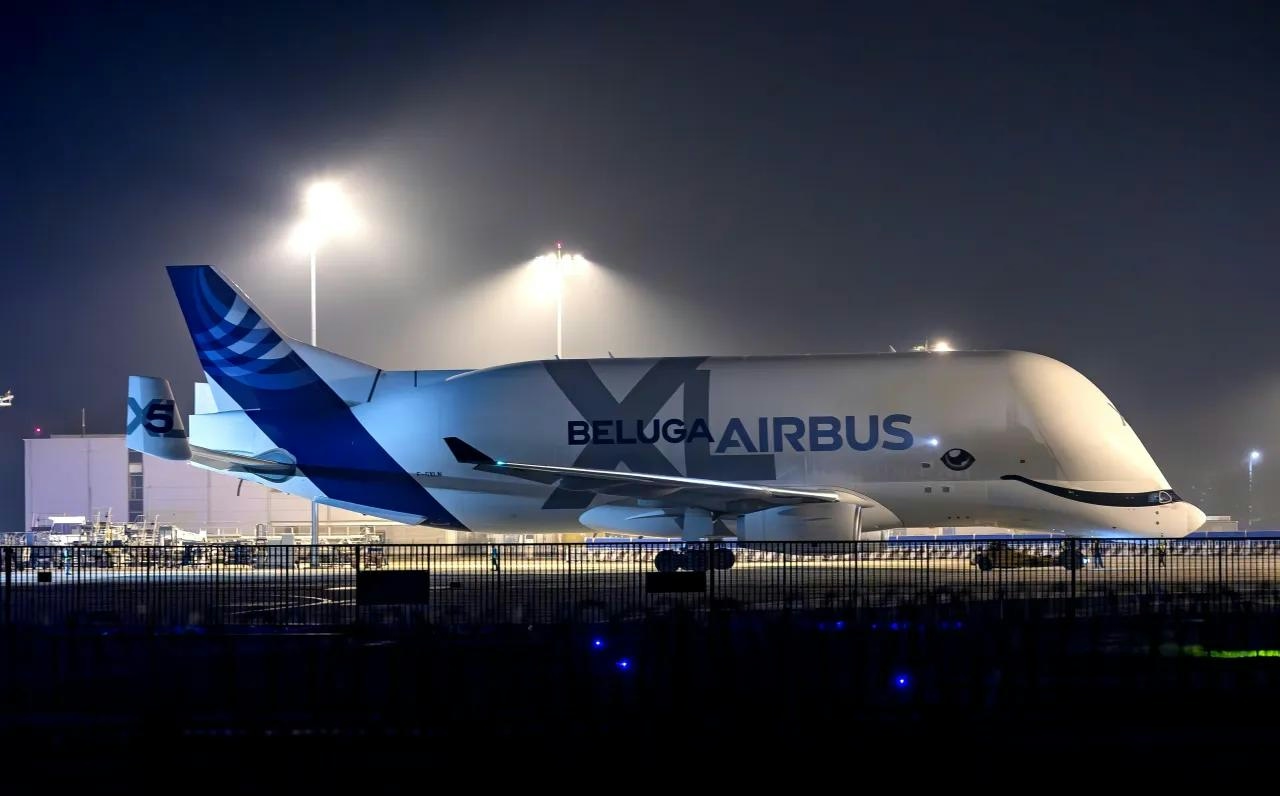
Airbus Shares Face Volatility Amid Market Uncertainty
Airbus, the European aerospace leader, is currently navigating a challenging landscape characterized by intensified competition, operational difficulties, and increased market volatility. Although the company continues to surpass its American rival Boeing in aircraft deliveries, recent setbacks—including a significant software recall and ongoing supply chain disruptions—have introduced uncertainty regarding its short-term performance.
Revised Targets and Competitive Dynamics
A pivotal development for investors has been Airbus’s decision to lower its delivery forecast for 2025. The company now anticipates delivering approximately 790 commercial aircraft, down from an earlier target exceeding 800. This revision stems primarily from quality issues affecting fuselage sections for the A320 family, which have delayed the production of up to 100 jets. In addition, Airbus is contending with a large-scale software recall impacting around 6,000 A320 family aircraft. This recall has disrupted airline operations worldwide and raised questions about the robustness of Airbus’s software systems, thereby exerting further pressure on both operational performance and investor confidence.
In contrast, Boeing appears poised to gain momentum in net new orders for the first time since 2019. By November, Boeing’s net order count had reached 908, surpassing Airbus’s 700. Airbus CEO Guillaume Faury has acknowledged that U.S. trade policies have accelerated orders for Boeing’s 787 Dreamliner, contributing to this shift in market dynamics. Boeing’s stock has responded favorably, supported by a 2026 cash-flow commitment and a perception of operational progress, standing in stark contrast to Airbus’s lowered delivery targets and recent technical challenges.
Operational Performance and Backlog Resilience
Despite these challenges, Airbus retains a clear operational edge. In November alone, the company delivered 72 aircraft, significantly outpacing Boeing’s 44. Year-to-date figures show Airbus has delivered 657 jets compared to Boeing’s 537. Airbus’s substantial order backlog, totaling 8,695 aircraft—equivalent to roughly eleven years of production at current rates—provides a solid foundation of stability, exceeding Boeing’s backlog of 6,609 jets.
A notable positive development has occurred in the critical Chinese market, where Airbus recently secured regulatory approval to deliver 120 previously ordered aircraft. This clearance is expected to bolster cash flow and streamline logistics, even as new orders from the region remain subdued.
Market Outlook and Investor Considerations
As Airbus approaches the year-end delivery period, the company faces the demanding task of delivering approximately 133 aircraft in December to meet its revised annual target—a potentially record-setting achievement. However, the ongoing software recall has compelled airlines worldwide to adjust their schedules. Some carriers, such as American Airlines, have managed to mitigate disruptions and maintain a constructive market outlook.
Looking forward, attention is also focused on Airbus’s defense division, particularly the ongoing negotiations among Germany, France, and Spain concerning the Future Combat Air System (FCAS). This next-generation program could significantly influence the company’s long-term strategic trajectory.
Currently, Airbus’s share price reflects a company with operational strengths but confronting near-term constraints stemming from supplier challenges, software reliability issues, and evolving geopolitical trade factors. The critical question for investors remains whether these obstacles will be contained within the coming quarters or if they will impede Airbus’s planned production expansion in 2026.

Etihad Airways Suspends Airbus A380 Flights on Key Route

Aditya Birla Group Seeks Approval for Aircraft Leasing in GIFT City

Qatar Airways Highlights Innovation and Connectivity at Arabian Travel Market 2026

Hong Kong's Five-Year Plan Includes Andrew Fan's Aircraft Parts Processing Hub Proposal

ACIA Aero Leasing Delivers ATR72-600 to Air Nostrum

RTX Appoints Jill Albertelli as Head of Pratt & Whitney

TAT Technologies Joins Beyond Aero Hydrogen Aircraft Program

AURAK Study Highlights Barriers to Air Taxi Adoption in Emerging Economies

Xiamen Air Selects Altitude for 787 Maintenance at Heathrow

Etihad and Swissport Extend Global Partnership
